It’s been almost exactly a week since I did anything strenuous. But it was a lovely week with the family. Getting outside, looking at things, doing normal life, and just being together.
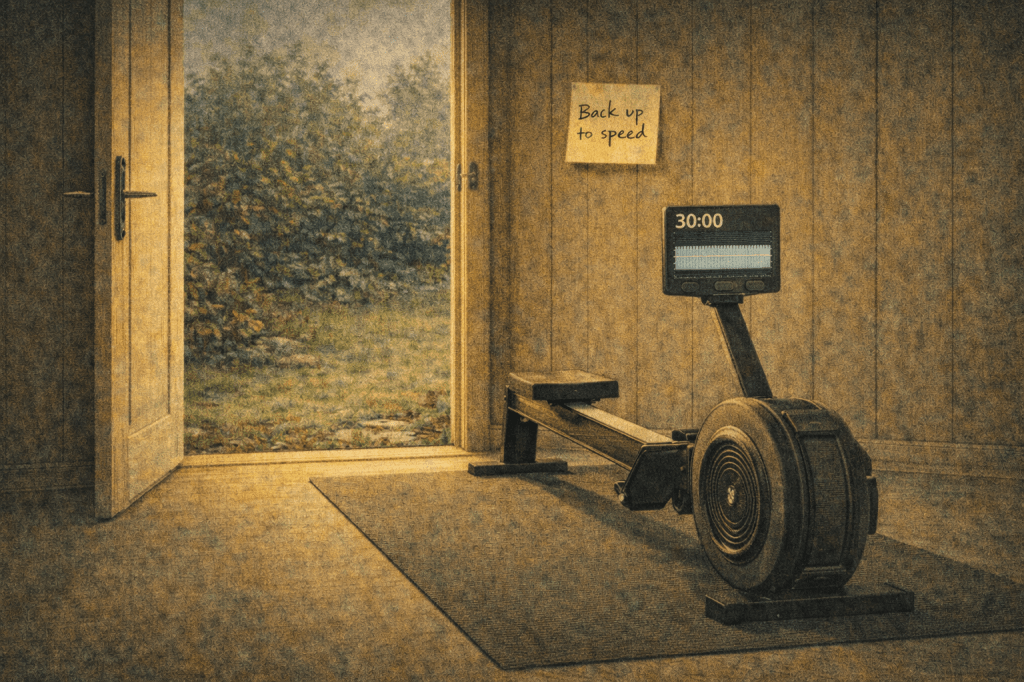
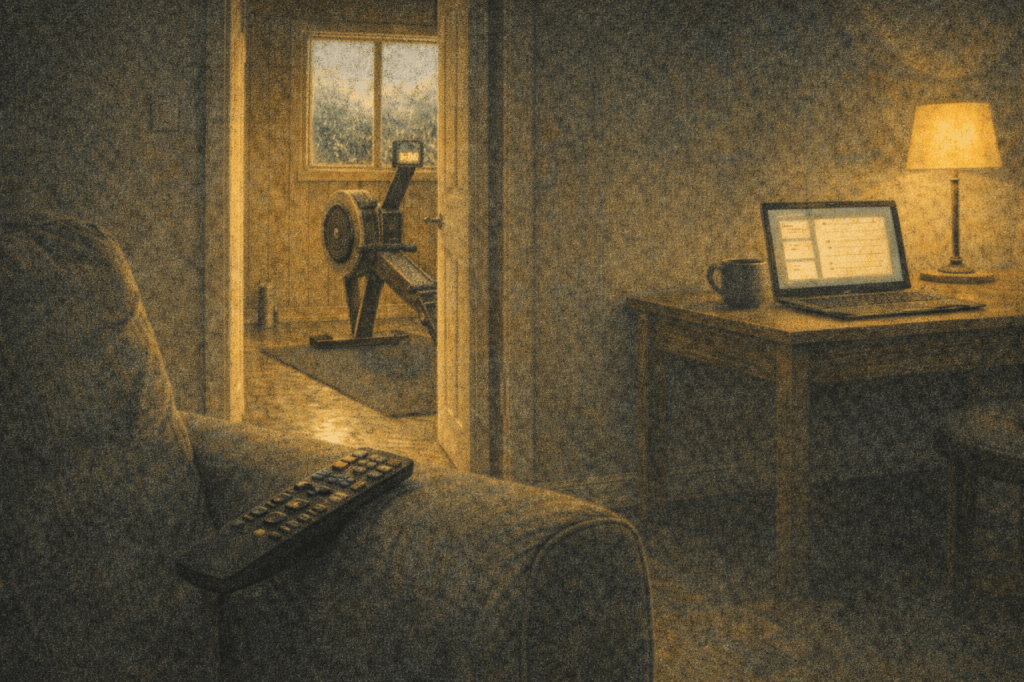
Back at it today. Not in the gym, but out in the shed on the rower.
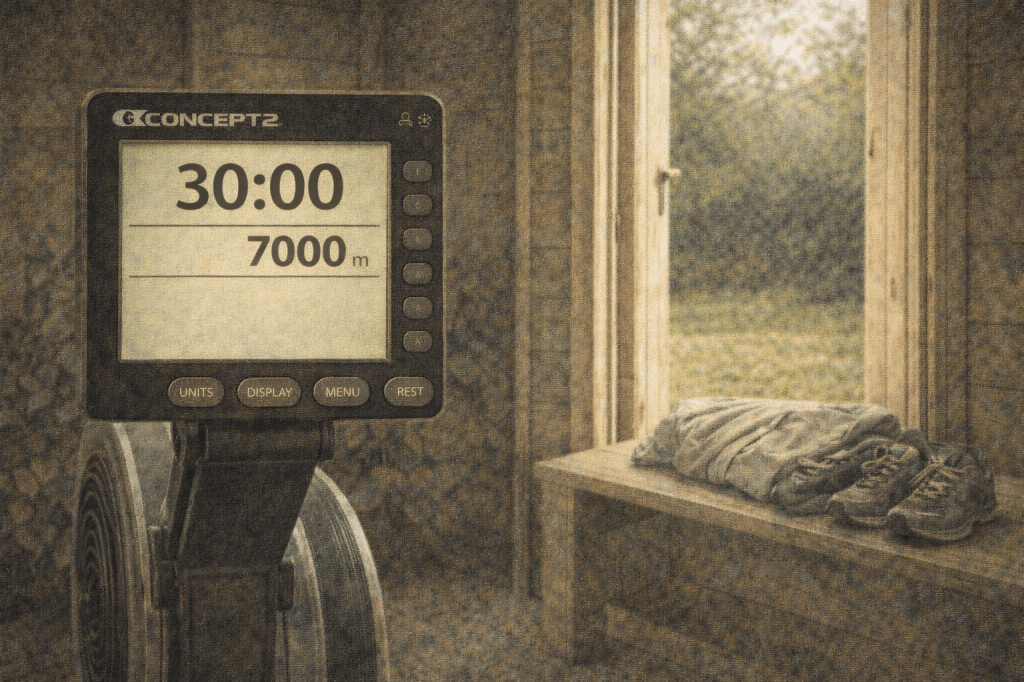
Nothing hectic. Just a fairly cruisy 7,000 metres in 30 minutes.
It’s funny how I’m now calling that “cruisy,” because it used to be the max. That’s probably the simplest sign that progress is happening. I’ve come a long way, and I’ve still got further to go, but I’m pleased with it.
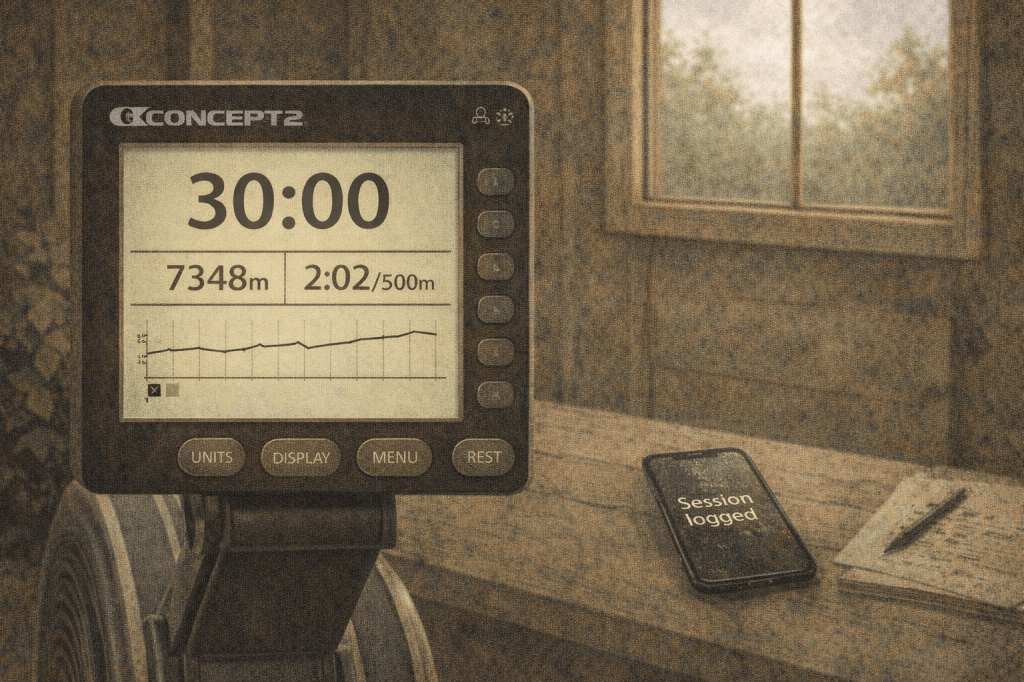
It’s Tuesday and I’ve just finished another 30-minute row.
Nothing major to report, and that’s kind of the point. The pace is there, and it’s growing. The strength is growing too. It all feels like it’s moving in the right direction.
The big thing I’m noticing is controlled power. When I need to turn it on, it’s there, and it doesn’t feel messy.
The pacing was there or thereabouts where Coach GPT asked me to be. I had a little focus wobble around the 15-minute mark, but I pulled it back in and finished stronger.
Quiet progress. Controlled effort. Another good session.
I had a presentation on Wednesday. The topic itself wasn’t massive. It was simply to talk about something I’ve been doing at work. But the way I wanted to do it was new. Different. And I wasn’t 100% sure how it would be received.
I’d adapted a PechaKucha-style format: fast-moving slides, short bursts of speaking, and a hard limit on how long you can linger. The whole point is to avoid death by PowerPoint and keep the energy up.
What I really wanted to do, though, was tell a story about a deal I’ve been working on. Not the technology. Not the bits and bytes. The human side of it. And that’s why I was nervous, because that’s not the default setting in a room full of tech people.
So I used the week properly.
Monday I did a row to clear my head. Tuesday was the main prep day, even though I’ve been thinking about it for weeks, and I also got out for a walk to keep myself moving. Wednesday I delivered it.
And it went down a storm.
I absolutely loved it. The audience really liked it too, and I got loads of great feedback afterwards. I spent the rest of Wednesday riding that wave of euphoria and adrenaline.
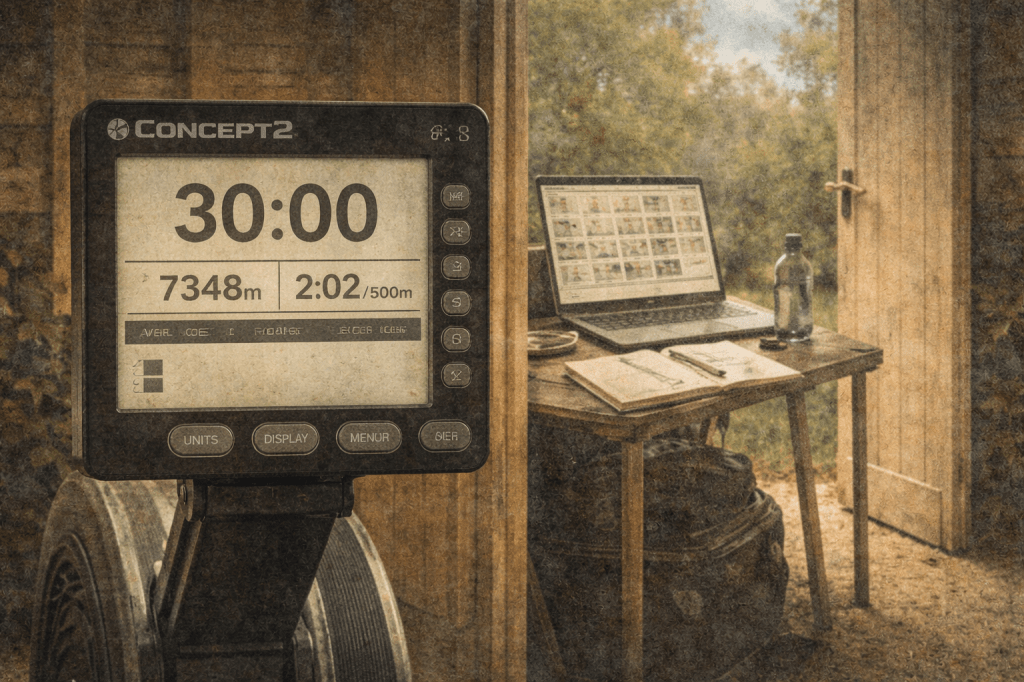
So here we are on Thursday. Back to normal. I’ve just done 30 minutes on the rowing machine at a reasonable pace. Enough to make me sweat and puff a bit. Just to settle the system again.
This is The Sub-7 Experiment: trying new things at work, and still rowing away in the background to keep my head right.
It’s been a fairly quiet week on the rowing front. I did a big row at the weekend and then kept things calmer through the week — a few walks, nothing massively strenuous.
Yesterday I went for my second bike fitting and it was a great afternoon. BikeFit Barry did a brilliant job as always. It’s nice to feel the cycling side getting dialled in again too.
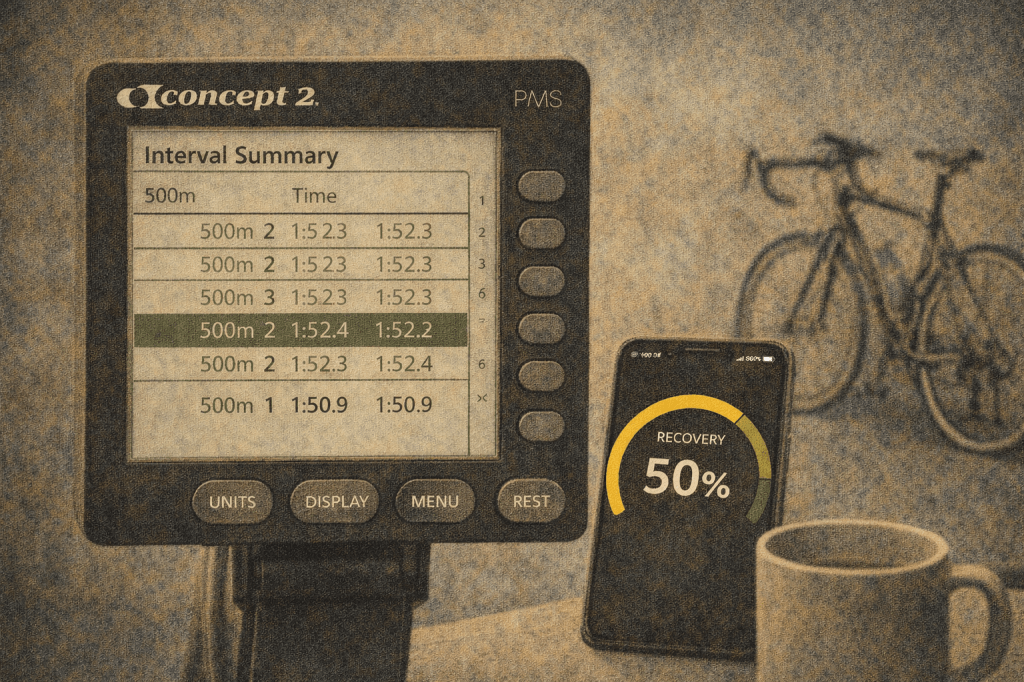
Then today, WHOOP had my recovery in the yellow. A “go” day, but not a flat-out day.
Coach GPT put 5x 500-metre intervals into the plan at a target pace of 1:52/500m and a stroke rate of 24–26. My first reaction when I saw it was: that’s a bit much.
But I’ve just completed it.
I did the five 500s and it felt good. It felt strong. More importantly, it felt like these are the pieces that begin to sew the whole Sub-7 thing together. I’ve still got a fair way to go, but I can see how the jigsaw is starting to make a picture.
What struck me today is that the speed and power were controlled. Rhythmic. Consistent. Sustained. A while back that kind of pace would have been something I’d either dream about or attempt while flailing around. Today it was work, but it was managed work.
I even did a sixth 500m a bit faster, and yes, it was still controlled.
So, it’s coming together. I can see it now. Maybe six to nine months away, but the direction is right: more gym work, more strength work, and more controlled rowing at the speeds that matter.
Right. Time to go and do some work.
This is The Sub-7 Experiment — and I can see it now.
I genuinely didn’t know where my head was at today. It was all over the place. I wasn’t feeling the gym. I wasn’t feeling the rower. I wasn’t feeling anything.
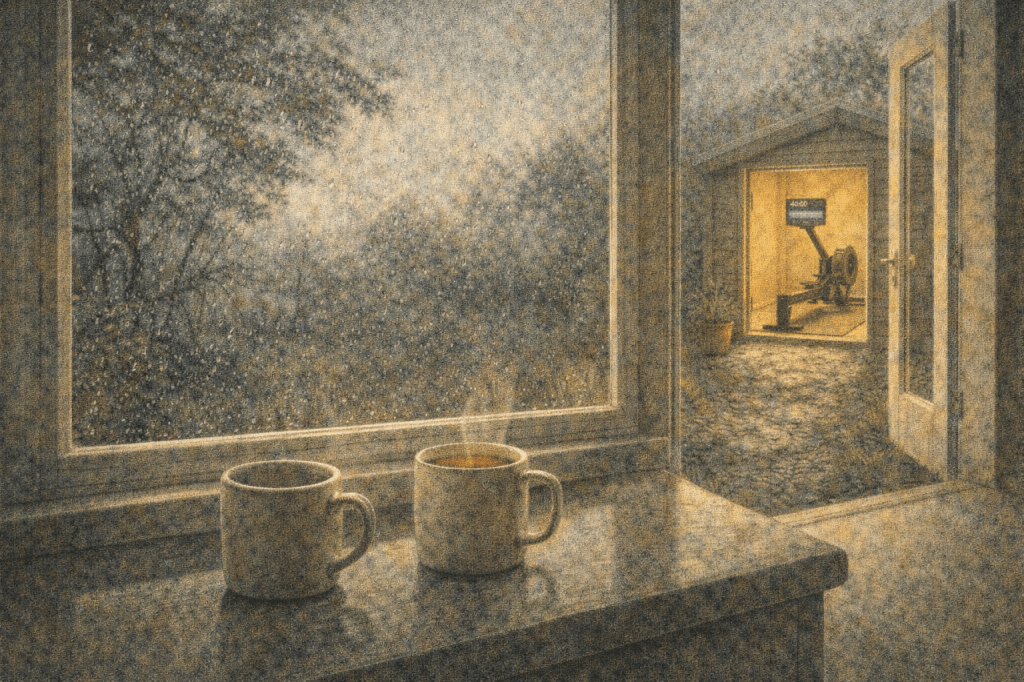
I did that thing where you’re not doing anything, but you’re also not resting. Up and down the stairs. Round and round the house. Looking out the window. Rain. Wind. Sit in front of the TV for a bit. Make a cup of tea. Walk again. Another cup of tea. More pacing.
I even told Coach GPT I wasn’t going to train today, that I’d just go for a walk, but I was talking myself out of that as well. The truth is, I knew I needed to do something.
And then the voices started. The men in my head.
“What’s the point?” “What’s the point of any of this exercise stuff?” “You’re not getting anywhere.” “Just go back and watch TV.”
I battled it and battled it. Right up to the point where I was pulling my gear out of the wardrobe. Shorts on — still fighting it. T-shirt on — still fighting it. Shoes on — still fighting it.
Then I went out to the shed, sat on the rower, and started.
I did 15 minutes, and every five minutes I got faster. By the last five I was holding sub-1:57 pace.
Then I stopped and did two 250m sprints , pretty much flat out, but controlled. Controlled frustration release. Controlled anger release. The kind where you’re emptying the pressure without blowing up.
It didn’t solve everything. I still feel like there’s a lot going on and a lot to do. But it released the valve.
And I am genuinely grateful I have a rower in the shed, because if I’d had to get in the car and drive to the gym this morning, I don’t think it would have happened at all.
This is The Sub-7 Experiment — as much for mental health as physical health.
I wasn’t really feeling it today, if I’m honest. But I still turned up. I talked to ChatGPT about what the session should look like and started with ten minutes on the rowing machine.
That ten minutes actually confirmed it: I wasn’t quite there today.
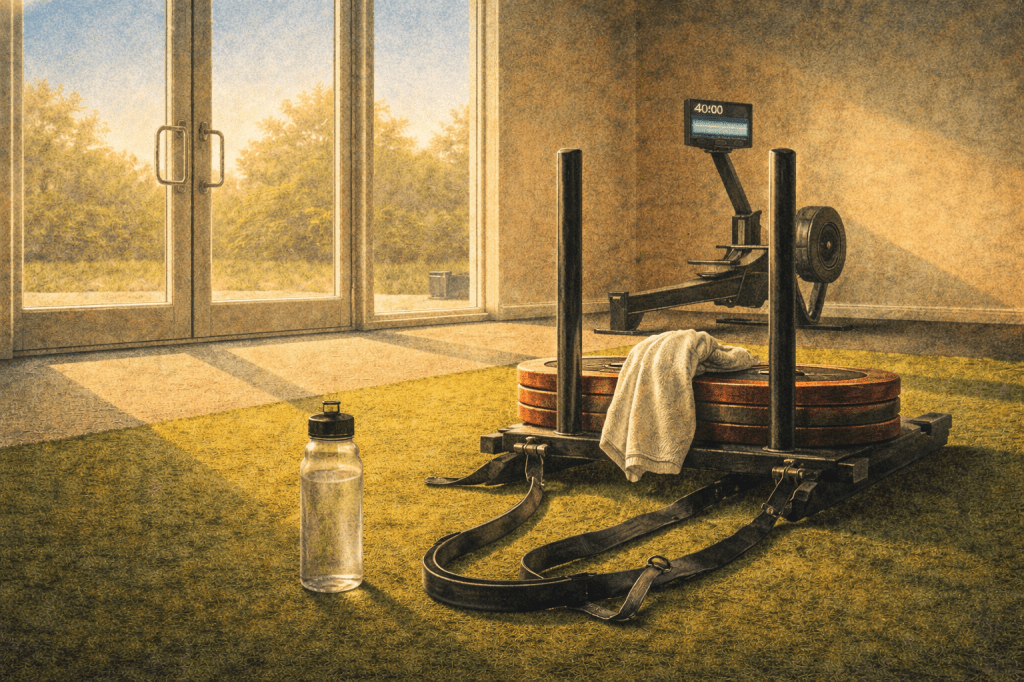
So instead of forcing a full rowing workout or walking out, I pivoted. I went and did sled work instead — pushing, pulling, lifting, carrying — the stuff I enjoy and the kind of work I can always get something out of.
After that I finished with another five minutes on the rower, just to close the loop and leave feeling like I’d done a complete session.
On the way out I had a proper “of course” moment: the little key in my key fob wouldn’t work, so I had to break into my own car. Thankfully there’s an old-school mechanical key hidden in the fob, so I got it sorted without too much drama.
I feel a bit better now. And it’s actually a nice day outside — blue sky, sun shining — even if my head and legs weren’t totally on board this morning.
This is The Sub-7 Experiment: turning up, adjusting, and getting it done anyway.
I did my regular hour route — about 23k in just under an hour — basically up a hill and down the other side. It was the first time I’ve been on the bike since September and it felt really good to be back on it.
Monday was a “day off,” but not a dead day. I walked 6k, which was perfect active recovery.
Then this morning, Tuesday, I wasn’t really feeling it. If I’m honest, I could still feel Sunday’s cycling in my legs when I was going up and down the stairs. I also had a couple of early calls, which is another easy excuse to write the morning off.
But I’m a lucky boy — I’ve got a rowing machine in the shed.
So I put my gear on, went out, sat down, and did 40 minutes. Easy pace, nothing too hectic, but I wound it up for the last five minutes just to finish with a bit of intent.
And I feel great.
This is what progress looks like at the moment: keep turning up, keep it sensible, and use the rower as the reliable reset button.
It was short and sharp today – 30 minutes – and I can still feel a lot of yesterday’s strength work in me. The backs of my legs and my lower back are talking to me, but that’s okay. Those are exactly the bits that are going to drive a Sub-7 2K, so I’m fine with them being awake.
I made it out to the shed and got moving. The pace over the 30 minutes was pretty quick, back up around the speeds I was hitting last year. That feels good. It’s a solid marker that things are heading the right way again.
One thing I keep noticing is how much smoother my technique feels. The torque graph on the rower’s display is the right kind of shape now, not spiky and messy, and that efficiency in the stroke is only going to help when it comes time to actually go for Sub-7.
So yes, good session. Short and sharp, but that’s fine. I’ve got work to do now.
It is a few days into this phase of remembering what it feels like to look after myself, and it is actually pretty good.
It is Sunday today. I got up, had some breakfast and watched a bit of telly. I have a presentation first thing tomorrow morning, so I knew I had to do some work today as well.
It would have been very easy to sit on the sofa all day. It is raining outside, the rest of the house are happily relaxing and doing their own thing, and the path of least resistance was right there.
Instead, I reminded myself what it feels like to look after myself properly.
I went out to the shed and did 45 minutes on the rower. Now I am set to sit down and do a couple of hours on the presentation so I am ready for nine o’clock on Monday morning.
All checked in, all good. I am rowing well, cruising well, pulling decent speeds at a low stroke rate and generally getting faster with better technique. The Sub-7 goal is still there, and it is coming along. It is probably time to do a 2K test soon and see where things are.
For today, though, I am just glad I did not spend the whole day on the sofa. I moved first, then I worked. That feels like the right order.
Choose to be happy. Choose to be sad. Choose to feel sorry for yourself. Choose to eat your own bodyweight in cheese and crisps and crackers. Choose to turn up. Choose to be a good dad. Choose to go to the gym and come out feeling brilliant, like I did today.
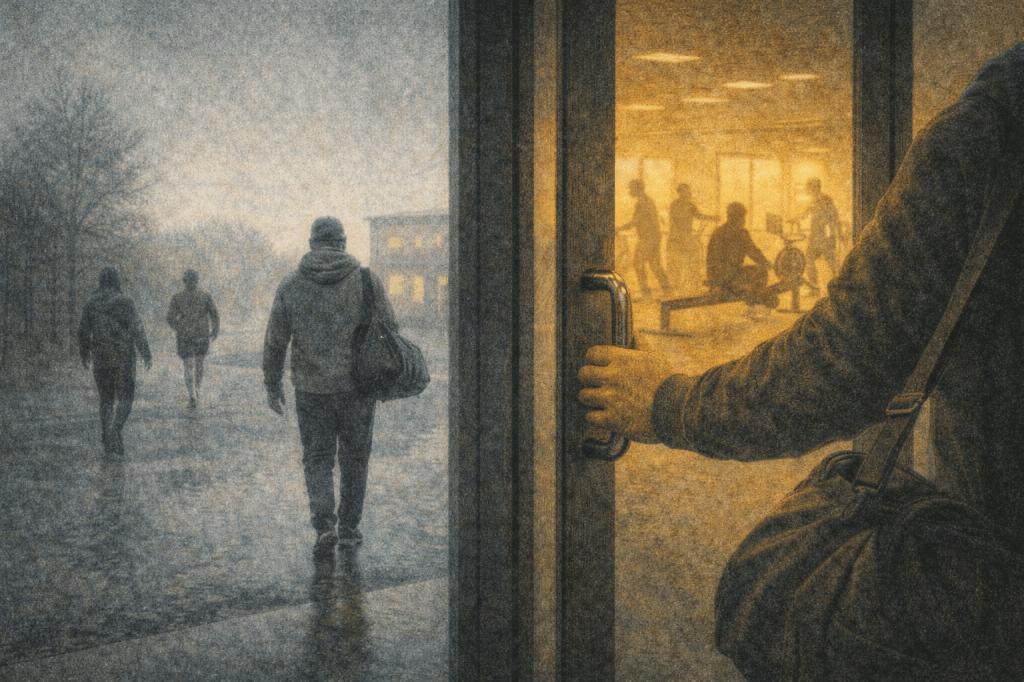
Today was the first time I’ve chosen to go to the gym in a long time. I haven’t been at all this year.
Instead, I’ve been blaming other people. Blaming the New Year’s resolution crowd for “clogging up” the gym. Why am I so anti-them? They’re trying to make a change. I’ve been in their shoes, and not that long ago either. Twelve months ago, twenty-four months ago, I was them.
If anything, I should be in there alongside them. As someone who has been where they are, I could help if they needed it. Instead, I chose to use them as my excuse not to go.
I also chose to decide to be sad because of the time of year. It’s winter, Christmas is gone, the sun barely shows up, so I leaned into it. Chose the slump. Chose to sit on my hands.
What a choice, when there’s only one go at this life.
At some point you have to choose to live it. Choose to get off your arse and do something about it.
Today, I chose to go to the gym.
I’ve been rowing in the shed on my new rower, and I’m still delighted I’ve got it. But I’ve missed the contact with people. I’ve missed being in a place that’s full of like-minded folk, all there to put some effort in and feel better for it. The buzz. The energy.
So today I choose differently.
I choose to live. I choose to be the best version of me that I can be. And I choose to start doing that again today.