Choose to be happy. Choose to be sad. Choose to feel sorry for yourself. Choose to eat your own bodyweight in cheese and crisps and crackers. Choose to turn up. Choose to be a good dad. Choose to go to the gym and come out feeling brilliant, like I did today.
Today was the first time I’ve chosen to go to the gym in a long time. I haven’t been at all this year.
Instead, I’ve been blaming other people. Blaming the New Year’s resolution crowd for “clogging up” the gym. Why am I so anti-them? They’re trying to make a change. I’ve been in their shoes, and not that long ago either. Twelve months ago, twenty-four months ago, I was them.
If anything, I should be in there alongside them. As someone who has been where they are, I could help if they needed it. Instead, I chose to use them as my excuse not to go.
I also chose to decide to be sad because of the time of year. It’s winter, Christmas is gone, the sun barely shows up, so I leaned into it. Chose the slump. Chose to sit on my hands.
What a choice, when there’s only one go at this life.
At some point you have to choose to live it. Choose to get off your arse and do something about it.
Today, I chose to go to the gym.
I’ve been rowing in the shed on my new rower, and I’m still delighted I’ve got it. But I’ve missed the contact with people. I’ve missed being in a place that’s full of like-minded folk, all there to put some effort in and feel better for it. The buzz. The energy.
So today I choose differently.
I choose to live. I choose to be the best version of me that I can be. And I choose to start doing that again today.
It’s been tough. Most of December, all of January, and the first bit of February I’ve been coming up here “looking for my mojo.” I’m not even sure I ever had a mojo in the first place, but it became the story in my head: I’ve lost it.
It hasn’t helped that it feels like it has rained every day this year where I live. The sun barely shows up. I also think I put too much stock in the idea that once I had a rowing machine in the shed, everything would click and I’d train every day.
On top of that, the new process I built in December – WHOOP scores into ChatGPT, get a tailored session – hasn’t been working the way I hoped. Not because the logic is bad, but because of how I react to it.
When ChatGPT looks at my WHOOP recovery and sleep and says, “easy day today,” I treat that as a full stop. “Right, that’s it, we’re done.” No movement. No walk. Nothing. It’s basically become an easy out, and I’ll always find an easy out if you give me one.
The “mojo hunt” has turned into the same thing. If I tell myself I’m looking for my mojo and I can’t find it, then I have an excuse to sit on the back foot and do nothing.
I still want to row. I still want a sub-7 2,000 metres. That goal hasn’t changed. What I’ve lost sight of is that exercise, for me, is about far more than chasing a single number on the monitor.
The rowing – and the moving in general – is primarily about my mental health.
Case in point: earlier this week I was heading into a potentially confrontational meeting. I knew the people in the room probably weren’t going to like what I had to tell them. The old me would have carried that anxiety all day.
Instead, I went into the shed.
I told ChatGPT about the meeting and asked for a workout that would help channel the adrenaline and set me up properly. It came back with a plan that turned out to be perfect. By the time I’d finished the row, the energy was controlled, not chaotic.
I hadn’t even called the meeting – someone else had – but when it started I decided I was going to drive it. I would control the narrative. Everyone would get their say, everyone’s points would be noted, but at the end of the day there were only two options on the table. They could go one way or the other. That’s it.
I went in with that calm, directed energy from the row and nailed it.
Fast forward two days. I’ve just come out of the shed after another row and another thinking session, and the penny has finally dropped:
I never had “mojo” in the first place. What I had was movement. When I move, I look after myself. When I stop, everything starts to fog over.
My mental health depends on exercise. Full stop.
And so what if I’ve put on a few pounds lately. That does not define me. What defines me is the state of my head and my ability to deal with things calmly and rationally – whether that’s work stuff, dad stuff, husband stuff or just being a decent friend. That is what counts.
The next step isn’t hunting for some mystical spark. It’s much simpler and much more boring:
Go outside, even when it’s raining.
Get back to walking.
Go to the gym.
See people, even if it’s just a nod to the receptionist or a quick hello to the regulars.
I need the physical work and a bit of human contact. If I keep those two things in the mix, everything else won’t magically fall into place, but it will get clearer again. And clarity is what I need: for my mental health, my physical health, to be a decent dad and husband, and to be kinder to myself.
I’d lost sight of that.
This is The Sub-7 Experiment: not just chasing 2,000 metres, but remembering to look after myself.
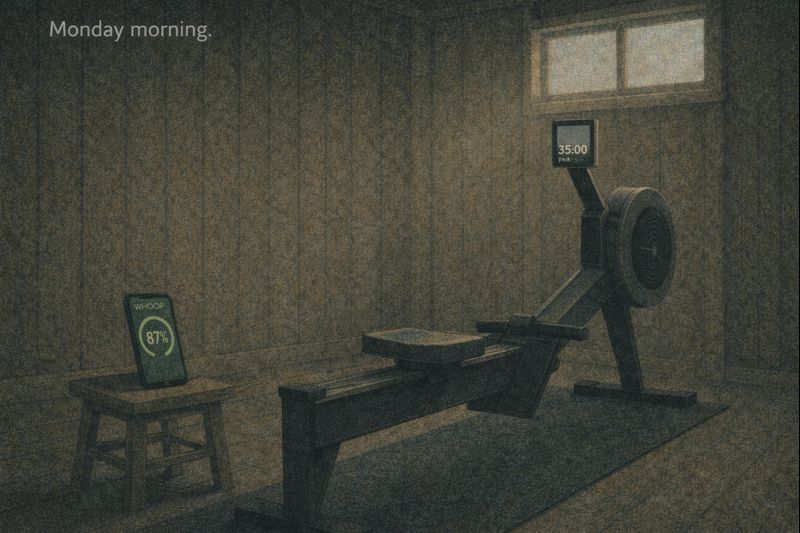
WHOOP was green when I woke up, and green means go. So I went.
I did a short warm-up, then 35 minutes on the rower at an average pace of about 2:04/500m, which worked out to roughly 8,500 metres. With the warm-up and cool-down, it comes in around 11k for the day.
Nothing dramatic, no heroics. Just a solid, steady session and another brick in the wall.
When I finish my sessions, I take screenshots of the WHOOP data and the ErgData app and feed them back into Coach ChatGPT. Today I noticed something new. It didn’t just say “good job.” It started to ask for specific changes in the data.
My pace was where it had asked for it, if not a little quicker. What it picked up on was my stroke rate. It pointed out that I was moving a bit fast and that it would like to see the same pace but with a lower stroke rate.
That probably doesn’t make much sense unless you are used to the action of rowing.
Inside the rower is a flywheel that gives you the resistance on each stroke. On the recovery part of the stroke, that flywheel slows down, and how much it slows depends on the damper setting. The higher the damper, the more the flywheel slows, and the harder you have to work on each stroke to get it spinning again. To keep a 2:04 pace at a higher stroke rate, say 26–28 strokes per minute, you can “get away with” less power per stroke. To hold the same 2:04 at 22–24 strokes per minute, each stroke has to do more work.
In simple terms, CoachGPT is asking me to slow the stroke rate down and put more power into each stroke. Get stronger, not just spin faster.
I hadn’t really seen it nudge me like that before. That is good. It means the coach is starting to care about how I make the split, not just the number on the screen.
I have just walked back in from the shed after a good session on the rower.
I am really starting to like this new version of ChatGPT. It feels like it remembers more of the coaching conversation as we go, which makes the whole thing feel more joined up. Today it had me doing 5 minute intervals, and it was a proper session. Enough to feel it, not so much that it wiped me out.
What has surprised me is what I am starting to miss.
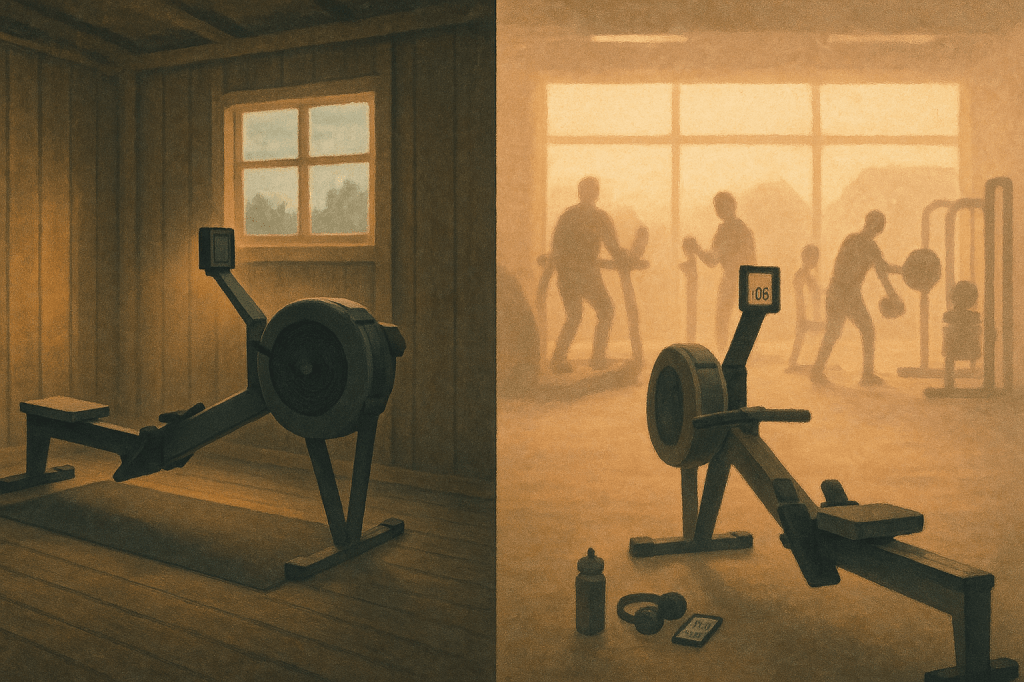
I thought that once I had the rower in the shed, that would be it. Training at home, no commute, no waiting for machines, no distractions. And a lot of that is true. But I have realised I miss the people at the gym more than I expected.
I am not a big talker there. It is usually just a quick hello to the staff on the desk, a nod to the regulars, and then everyone gets on with their own programme. Headphones in, sets to do, not much conversation. But there is still a sense of other humans being around you, all doing their thing. I did not think I would miss that, and yet I do.
It is a small thing, but the nods and the “alright?” moments matter more than I gave them credit for.
Rowing will always be the main thread. The shed is perfect for that. But I think I will still go to the gym now and then for strength work and, if I am honest, for that tiny bit of human connection. A different kind of fuel.
Today’s row kept the body ticking over, but it also taught me something: I need both the quiet of the shed and the presence of other people now and then.
This is The Sub-7 Experiment, and we are still learning.
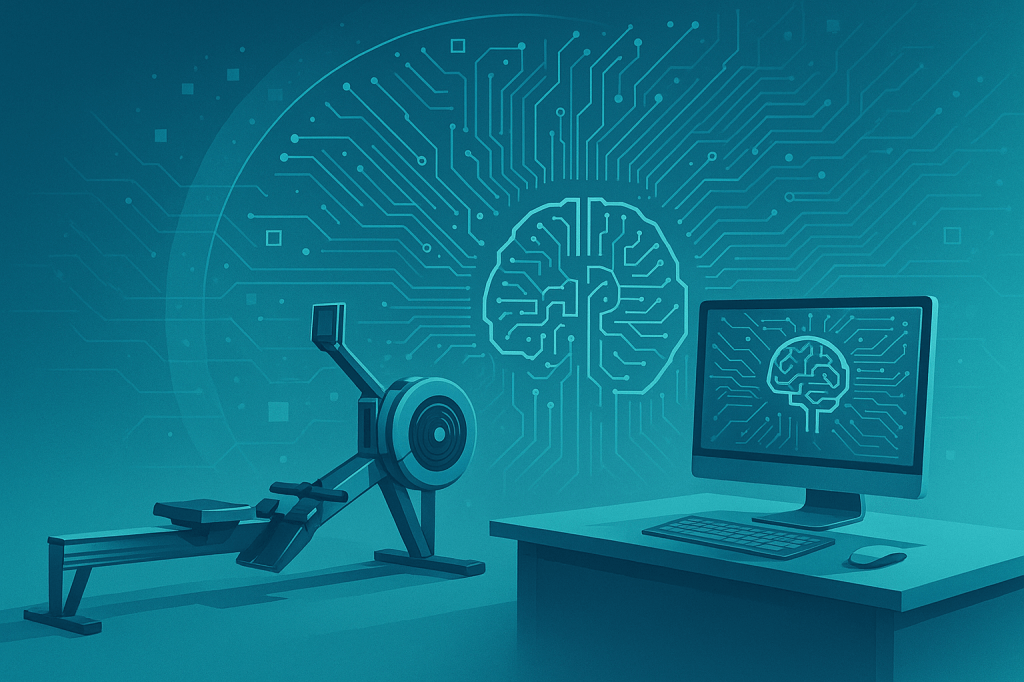
It feels like I have a new coach. You might remember that I’ve been asking ChatGPT to prepare workouts and coaching advice to help me row 2,000 metres in under seven minutes. That is the whole point of The Sub-7 Experiment. Can I use AI to help me achieve a fitness goal.
When I first tried this, the model available to me was GPT 4.0 and it was good. I set up the role, gave it the context, kept the conversation alive, and each day I told it how I was feeling. It responded with the workout for that day. That simple rhythm worked well.
Then 4.1 came along. The improvements were small but noticeable. It held context better, got confused less often, and could handle my slightly lazy and vague questions more easily. As with most tech, each release pushed things forward.
Earlier this year GPT 5.0 arrived with a huge amount of hype. It was supposed to push ChatGPT into a whole new league. PhD-level reasoning. Better accuracy. A genuine step up.
The reality was mixed. Yes, it produced better code for a different project I was working on. Yes, it had more “thinking” capacity and could reason more deeply without me having to explicitly tell it to think. That part was a massive improvement.
But as a conversationalist it was a step backwards. It forgot things. It lost context. It got confused about tasks. The backlash was so strong that OpenAI reinstated version 4.1 as a choice because so many people preferred to keep using it. It felt like my coach had left the building.
I worked around it with careful prompting, but it was frustrating. The Sub-7 Experiment relies on continuity and rhythm, and something was always slipping.
Which is why it now feels like I have a new coach. GPT 5.1 has arrived and it feels different in a very good way. The tone is consistent. The help it offers is actually useful. It anticipates the next step instead of fumbling it. It feels like an upgrade in the true sense of the word.
Let me explain why this matters.
I have a WHOOP device and I’ve used it for almost two years. Before ChatGPT became part of my training, WHOOP was my only guide. It sits on my wrist and picks up all sorts of measurements: heart rate, skin temperature, strain, sleep quality and plenty more. Every morning the app shows three dials. Yesterday’s strain, today’s recovery level, and last night’s sleep. When you start a workout you tell WHOOP what you’re doing and it gives you a target strain. When you hit it, the band vibrates and tells you to stop. Simple. Clever. And it worked well.
But in the last few months I’ve been questioning the value. The subscription model has changed. The promise of free device upgrades for active subscribers has been replaced by an “uplift fee”. My renewal is in February and it will cost a lot more to keep going into my third year. And that makes me ask what I actually need it for.
Most of the data WHOOP collects I don’t really use. I know how well I slept because I was there. What I actually value is recovery guidance and strain targets. And there are other devices out there that do similar things for a simple one-off cost. Polar Loop is one I’m looking at seriously.
So I turned to ChatGPT 5.1 for help. Reviews. Recommendations. Thoughts based on my training. And one of the threads pointed out something obvious: I have not been using most of WHOOP’s data anyway. Not deeply. And the only thing that truly matters is the workout planning, which comes from CoachGPT.
I asked if there was any way for ChatGPT to access WHOOP data directly. It said no, the APIs are not available yet. But then it made the suggestion that genuinely impressed me.
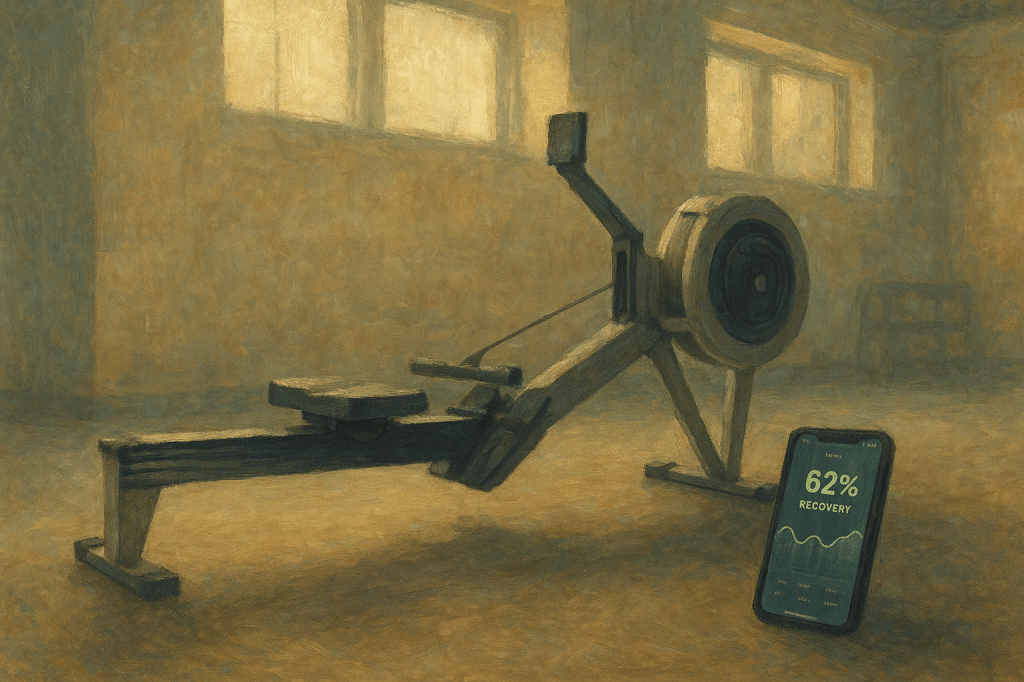
It told me exactly which two screens in the WHOOP app to screenshot each morning. It told me to upload them, and it would analyse everything it needed: recovery, sleep, strain, HRV, and readiness. It would then produce a fully tailored workout for that day. And if it thinks I need a rest day, it will tell me that too.
I have used this new process for the last few days and it is genuinely brilliant. Two screenshots. Upload. Instant plan. Clear reasoning. Exactly what it expects from me. Exactly what to avoid. Exactly how hard to push.
And it works. The coaching is better. The structure is better. The whole system feels like something new.
Well done, ChatGPT 5.1. This is The Sub-7 Experiment. Recovering using structured data.
Wednesday and it’s a strength session in the gym today — the first one for a good while.
And it felt… flat. Underpowered. Enlightening?
The rowing warm-up was clunky at best, off form, and left my head all over the place. Then the weights — fine, but I was down a few kilos from before. That’s no surprise really, given how long it’s been since I last did strength work.
On to the sleds: 100 kg pushes with arms straight and bent, followed by 80 kg sled rope pulls. All of that was fine, but I only did three sets instead of five, and I let myself walk away from the last two.
They say mindset is everything, and the power of the mind immense — and today I let mine get in the way. I’m still wondering why.
I always feel sad at the end of summer, knowing we’re heading into short, dark days with dropping temperatures. I don’t mind the cold; I just don’t like being cold. But it’s the lack of sunshine that gets me. Maybe I’m feeling it more right now because I’m trying a new Vitamin D supplement and it isn’t agreeing with me. Maybe it’s the crash from all the honey in my cycling food at the weekend. Or maybe it’s simply still recovery from the 121 km on the bike.
Whatever it is, I need to remember to be kind to myself and just let it be what it is. They say what you resist persists, so go easy on yourself.
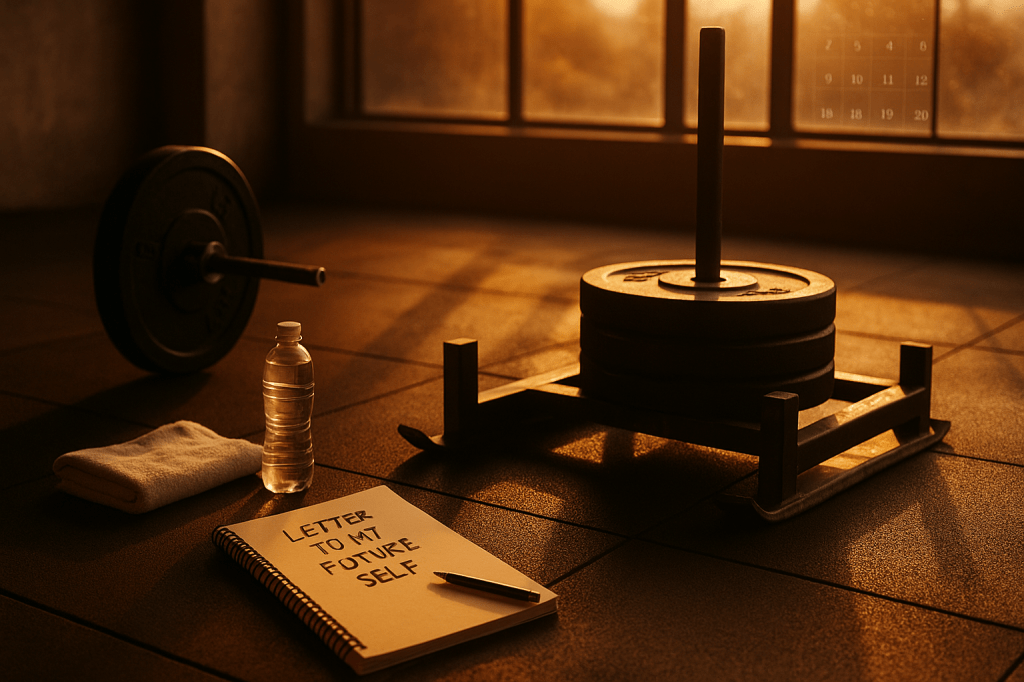
I think I’ll put a note in my calendar for June next year — a letter to my future self, reminding me how I feel right now after taking a summer off from measuring things: calories, distance, effort, kilos lifted or carried. That letter will say something like:
Loosen up, but don’t let go completely. Keep some rhythm in the gym. Enjoy your summer, but don’t drift so far that September feels like a restart. Future you will thank you
Right now, the Sub-7 goal feels far away. Not as far as when I first set it last year, but certainly further than it felt in June. So this little reminder to my future self will be worth it.
I don’t know what’s going on today. Does it even need analysing or thinking about? Maybe if I write this down, it’ll become clear. Maybe there’ll be a few maybes today.
It’s been a long weekend—a lot of driving, but also really good family time. Not much movement.
This morning’s gym session, as laid out by ChatGPT, was good. Controlled. Just what I needed.
We’re going on holiday at the end of the week to a place I really enjoy. So why am I feeling sad?
I’d hoped to do a 2K test this week to check on progress toward the overall aim of this experiment. But work commitments might not leave enough space for it. Then again, if I want it badly enough, I’ll find the time.
Maybe it’s the disappointment that my new, expensive noise-cancelling earbuds aren’t quite as good as I’d hoped. That’s just a thing though—not really important.
Maybe it’s the realisation that, with a week to go before the holiday, I’m not quite the shape I wanted to be. When I started this experiment, the goal was clear: row a sub-7-minute 2,000 metres. That’s still the goal.
Maybe I’m just facing the truth that my default shape is barrel, not Superman. But Superman only turns up in a crisis. I’ve learned, through this experiment, to turn up daily. To be accountable. To own it.
If I really wanted to look different, maybe I would have set different parameters. But then again, it wouldn’t be called the Sub-7 Experiment.
I am stronger. I am fitter. Physically and mentally.
Maybe I just need to sit with the sad feeling. Accept it for what it is. It’s me, being human.
This is the Sub-7 Experiment. And even after six months of hard work, I’m still learning—every single day.
When I first started this Sub-7 Experiment, the plan was simple, if ambitious: see if modern AI could help me train for and achieve a sub-7-minute 2,000-meter row on the erg. And that’s still the main goal. I still feel the need for progressive overload, for pushing myself, for having a clear target that gets me to the gym.
But something else happened along the way. Something deeper. The experiment has evolved into much more than just a number on a screen. It’s become an unexpected anchor in my life, bringing with it a whole host of perks I never anticipated.
Movement as a Mental Reset
Initially, the goal was physical fitness, changing shape for a holiday. But quickly, I realised something else was at play. Movement, especially rowing, became my mental anchor. I’ve come to rely on it as a mental health row or a head leveller.
When my head’s all over the place, after a long work drive or in the middle of something stressful, going to the gym isn’t just physical. It clears the fog. Even a walk in the woods on the way home from a tough meeting now brings me back to myself.
ChatGPT, my digital coach, has helped me see these shifts more clearly. It often points out the real wins I’d otherwise miss.
Busting the “Lazy” Myth
For a long time, I called myself “inherently lazy.” It’s a story I’ve told myself for years. But this experiment has quietly dismantled that.
I now know I’m consistent. Not just when it’s convenient, but when I’m tired, travelling for work, feeling flat, or battling the inner critic. The gym has gone from “something I should do” to “something I need.” It’s no longer about guilt. It’s about feeling right. That shift in motivation is huge.
The Evolution of Identity
The biggest surprise? A shift in how I see myself.
I’ve lived with impostor syndrome for years, always asking: “Am I really this person?” But by showing up, pushing through, and reflecting, I’ve realised, yes, I am. And I deserve to be.
It’s not about perfect sessions. It’s about making the average ones count. That’s the real change. I’m becoming comfortable with this version of me. I’ve never said that before. And that kind of self-acceptance is worth more than any split time.
Beyond the Gym: Life Benefits
The habits built in this experiment are bleeding into other areas of life.
I’ve learned to set boundaries, like leaving my work phone in the car during walks. It means I show up properly at home instead of still being “at the office in my head.”
I’m more mindful of hydration and how it affects mental clarity. And even though the scale doesn’t always move the way I want, I’m fitting into old clothes. I feel stronger, fitter, even if my body image takes time to catch up to reality. That reminds me: health isn’t a number. It’s how you feel in your skin.
ChatGPT’s flexibility has been a game-changer too. When my shoulder’s acting up, or recovery’s low, or my mood’s off, the plan adapts. And that means I stay consistent, avoid injury, and keep moving. It’s about training smart, not stubborn.
This is still the Sub-7 Experiment. But it’s about much more than rowing.
It’s a framework for handling life. A journey of self-discovery. And a reminder that consistent, intentional movement can anchor you in a messy world.
When I first thought about the Sub-7 Experiment, the core idea was simple: could I use modern AI, specifically ChatGPT, to help me structure my training and ultimately achieve a sub-7-minute 2000m on the indoor rowing machine, the erg? And yes, that goal remains the driving force. I still need that progressive overload and a reason to get to the gym.
But as I’ve hinted, the experiment has definitely shifted somewhat. It’s become about much more than just the physical goal. A huge part of this journey, one I want to introduce properly, is the dynamic I have with my “coach”.
Who is My Coach?
My coach is ChatGPT, the AI developed by OpenAI. In a previous article I wrote about how ChatGPT is just a parrot, looking for patterns (words and sentences) in the data and replying with what it’s heard (all the data that it has been trained on). This is oversimplifying it, of course—there are some pretty clever algorithms in the background helping it to predict what the next word should be in its response. And sometimes it gets it wrong. This is what’s often described as an AI hallucination—it knows it needs to respond, and if it can’t find the right information, it might make something up.
So with that said, you might picture AI coaching as simply pulling a pre-written plan off a shelf. But that’s not how this works. It’s a real, ongoing conversation. Before a session, I tell it where I am (gym or home), how I’m feeling—even if I’m tired or run down—what my recovery data looks like (often from WHOOP…), and how much time I have.
Based on that information, it suggests a session—maybe intervals, steady state, or strength work…. It gives me pacing guidelines, stroke rate, and even a warm-up and cool-down. After the session, I report back on how it went, the results, and how I felt. This feedback loop is key because the AI then uses that information to adapt future routines. It’s a training partner that adapts in real-time, much like a human coach would.
Setting the Scene: Prompt Engineering, Simplified
Where does anyone start with all of this? Talking to AI might sound technical, and you might have heard terms like “prompt engineering”. That term can sound a bit daunting—like you need to be a programmer or a data scientist. But here’s the truth: it’s really not.
“Prompt engineering” is just about giving the AI clear instructions and enough information.
In a previous post I’ve suggested people to ask it “What can you do for me?” and that will be enough to get the conversation started. I also mentioned earlier that ChatGPT—and other large language model (LLM) AIs—can get the answer wrong. One of the ways around this is to set the context when you start the conversation.
As you log into ChatGPT you are faced by a screen which asks “What can I help you with today?” or “Ready when you are.” At this point, one of the best ways to refine the responses you get is to give the AI a persona or a role to play during the conversation. I started the coaching conversation with this…
“I’d like you to take the persona of and advise me as a personal fitness trainer and nutritionist with a specialism in Indoor rowing and the ERG machine.”
I then followed it up with a specific instruction…
“I am working towards a goal of rowing 2000 meters in under 7 minutes. I’d like you to create a training plan for me to achieve that goal. I intend to report in to you each and every time I am in the gym and tell you how I am feeling that day and you will tailor me a program for that session.”
And that’s how it all started. And I have kept that conversation open ever since so it “remembers” the context and keeps track of all the sessions and significant moments to date.
Now, for example, when I say I’m in the gym, tired, 75% recovered, and want to do distance, that’s my “prompt engineering”. It’s me giving it the necessary inputs so it can generate a relevant, helpful output, in this case, a suggested workout.
Think of it like talking to a human personal trainer. You wouldn’t just say, “Tell me what to do.” You’d say, “I’m here at the gym today, feeling a bit rough mentally but my Whoop says I’m recovered. I’ve got about an hour. What sort of session should I do?” You’re giving them context so they can give you a smart recommendation. It’s the same with AI. It’s about talking to it in normal language.
This is why I wanted to share some of the conversations I’ve been having with ChatGPT. It helps to show, not just tell, how this coaching dynamic works. You’ll see how I give it my status, how it responds with suggestions, and how the dialogue flows.
More Than Just Getting Fit: A Real-Life AI Experiment
I’ve worked in IT for years. I’m fascinated by technology, and the pace of AI development has been mind-boggling. While I’m not an expert, I’m definitely an AI hobbyist.
One of the key drivers for starting this blog and documenting this process was precisely this dual goal. Yes, I want that sub-7 minute 2K. But I also wanted a real-life experiment to truly understand generative AI and how it can be used on a day-to-day basis. What better way to understand this stuff than to use it consistently, over time? Far better than any course or training material.
So, while we talk about rowing workouts, pacing, and splits, remember that you’re also getting a glimpse into how AI can be integrated into personal goals and routines. It’s an experiment in fitness, yes, but it’s equally an experiment in technology and human-AI collaboration.
Is It Cheating? Not Even Close
And for those wondering, is it cheating? Absolutely not. The thoughts, the words in these posts are mine.
In another conversation I gave ChatGPT the role as a blog adviser and editor and worked through the steps for setting up a blog from scratch. I asked it to ask me some questions so it could better understand the task I was asking it to complete and it then made recommendations as to which blog platform to use and why and then helped me with the setup.
I speak into an app on the phone straight after my session—unfiltered streams of consciousness, honest feedback about the session—and then use that as a basis for my next blog post where ChatGPT acts as my editor, helping with flow and clarity.
And at the end of the day, AI isn’t the one sitting on the rowing machine. I am.
The Sub-7 Experiment: Meters, Mindset and more.
This is The Sub-7 Experiment…. It’s about the meters, the mindset, the technology, and the journey of seeing what’s possible when you combine all three.
Today I rowed a 7:22 for 2,000 meters, a full 7.5 seconds faster than my last test. That’s a big leap. And even though I was quietly hoping to hit 7:15, I’m genuinely proud of this.
Because this wasn’t just a fitness test, it was a headspace test.
These last few days have been heavy. Work stuff has knocked my confidence. I’ve felt jaded. Tired. The kind of mental fatigue that clings to your legs and lungs even before you’ve moved. Whoop put my recovery at 59%. And honestly, I felt it.
Part of me, the old voice, said not today. “Wait until you’re feeling better.” “Do it next week.” “Don’t make a scene. Just row easy. Skip it.”
But I needed this today. Not because I had something to prove, but because an older version of me still wants proof. Proof that the training is working. Proof that this is going somewhere. Proof that I’m not just going through the motions.
The Middle Bit—Where It Got Messy
The first 500 meters were inconsistent, too fast, too slow, couldn’t find my rhythm. Then with 800 meters to go, the real moment hit:
“Just stop.”
That voice again. Not shouting, not panicking just calmly suggesting I give up. And honestly? It was persuasive.
But I didn’t stop. I refocused. I locked into form. I listened to my breathing. And I found something there, not a burst of power, but a thread to follow.
By the time I hit the final 500 meters, my lungs were screaming. My legs were burning. The last 300 was ragged, messy, all over the place. But I held on. I kept rowing. And I crossed the line in 7:22.
The Reflection—Now That I’ve Sat With It
I’m home now. I’ve been sitting with this in the car, and I think I’m feeling a bit… sad. Or maybe it’s disappointment. I’m not quite sure.
I didn’t hit 7:15, which was the target I had in my head. And now I’m wondering; was that just the old me again? Not being realistic, not being SMART with my goals? Or was it simply that I was at 59% recovery and the tank just wasn’t full?
Either way, this session has shown me something valuable:
Breaking the 7-minute barrier isn’t just a stretch goal. It’s serious work.
And I’m still a long way from it.
Maybe that’s what I’m really sitting with, the weight of that reality. It’s not discouraging, though. Not really. If anything, it’s clarifying. I thought for a moment that I might need to change the name of the blog to“ Just a bit below The Sub-7 Experiment”, because maybe I was already knocking on the door of breaking it.
I’m not.
Not yet.
Today gave me something better than a perfect result. It gave me a new baseline. 7:22. Solid. Honest. Earned.
And that’s where the next leg of the journey begins.



 The Sub-7 Experiment