Tag: running

  • The Sunday I Nearly Skipped

    And we are back. Sunday morning.

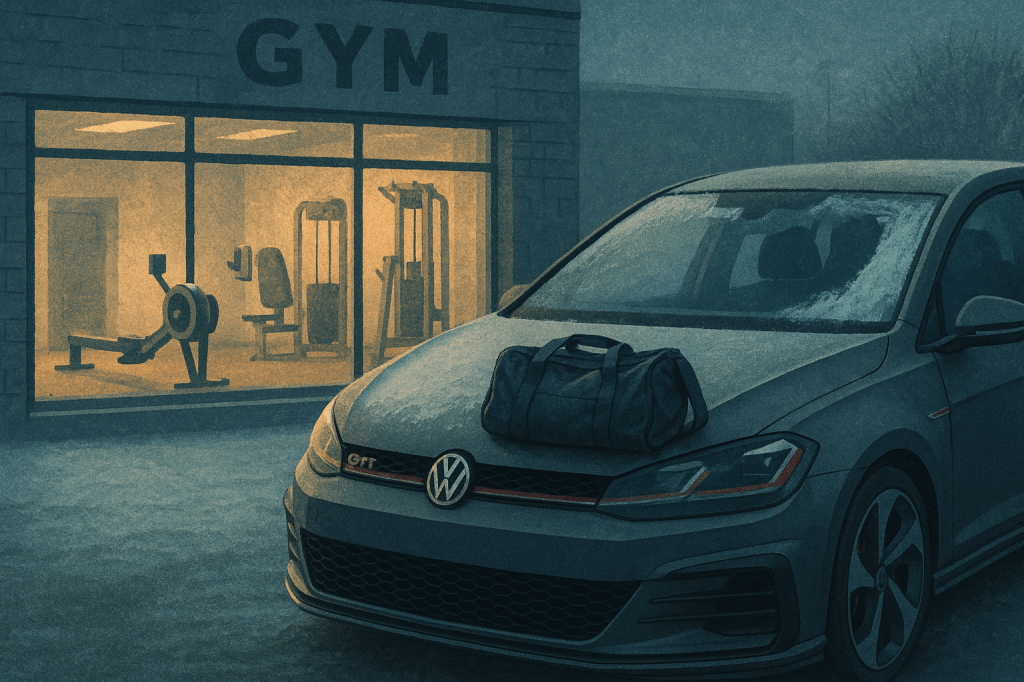
    There was ice on the car. The heating was on in the house. Everyone else was warm and cosy. It would have been very easy to stay in bed, put something on the TV and write the whole morning off as “rest.”

    Instead, I scraped the ice off the car, put my gym gear on and went.

    Same routine as the last few days: I took my WHOOP scores and fed them into ChatGPT. Recovery, strain, sleep, stress, all of it. This time the response was different. Instead of another rowing session, it came back with a strength and conditioning workout.

    The plan was very specific. Exact machines. Exact reps. Exact weights.

    There was only one problem. The weights it suggested were based on the numbers from a couple of months ago, pre-surgery, when I was training regularly and feeling stronger. I am not quite there yet.

    So I asked the obvious question: are you sure about those weights, given that we have not done this in a while?

    To its credit, Coach GPT backed off. It lowered the recommended loads to something more realistic, and in the end they felt pretty much perfect. Hard work, but not stupid.

    There was another small win before I even started. On Thursday I had left my heel wedges at the gym. I assumed they were gone. When I walked in this morning, the receptionist handed them back. Someone had found them and turned them in. A tiny thing, but it felt like a good sign.

    Session done, I finished on the rower with two 250 metre sprints. The first one was fast but messy. I got a bit carried away, my wedges slipped and my feet came out of the shoes with about 18 metres left. Almost there, not quite. The second sprint was much more controlled.

    I am counting all of this as prototyping for the wedges. When the rower finally arrives at home, I want that setup dialled in so I can just strap in and go.

    Right now the car thermometer says minus 0.5°C. It is still cold, but I feel great. I have a solid session in the bag, I am not wrecked, and the next job is to go home, rouse the rest of the house and get everyone out for a walk around the lake.

    Training done. Family next. A good Sunday.

    Another good session logged. This is The Sub-7 Experiment. And it continues.

  • Trusting the Data on a ‘Meh’ Day

    I have just come out of the gym after my first proper session in a while. Last week was a family trip to London, which was brilliant, but it knocked me out of my routine.

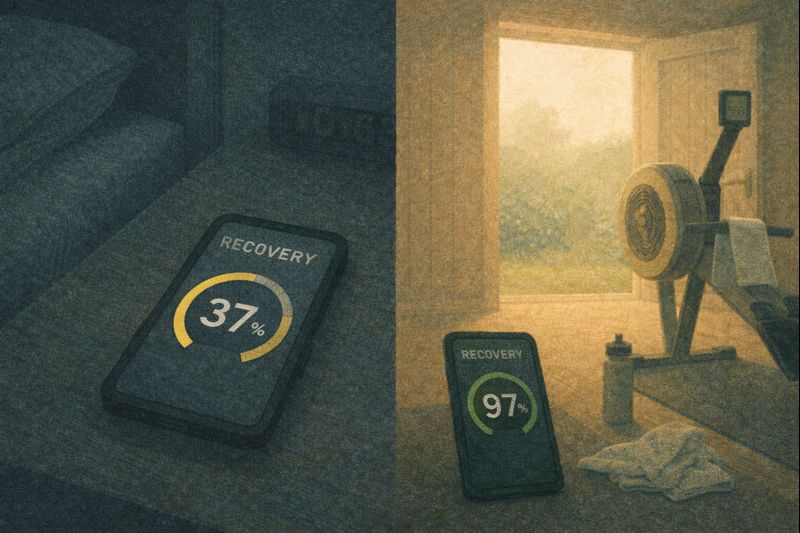
    This morning was one of those days where I really did not fancy going at all. WHOOP had my recovery in the yellow. Sleep was fine, stress and strain yesterday were nothing dramatic, but I still felt flat. It would have been very easy to decide that today was not a gym day and leave it at that.

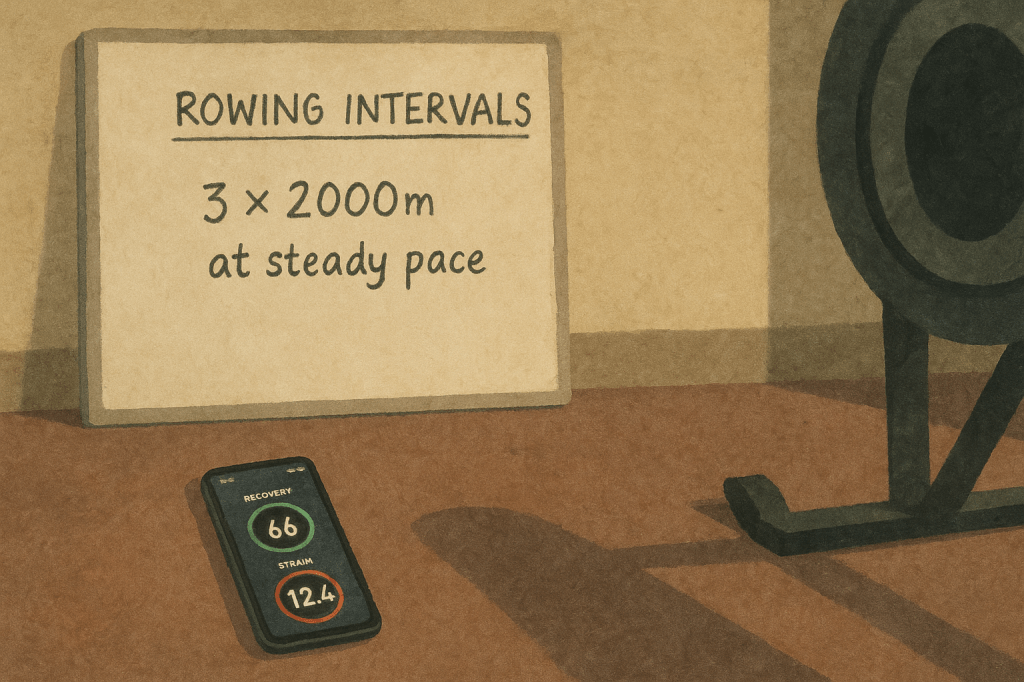
    Instead, I tried the new approach I have been talking about. I took my WHOOP numbers and dropped them into ChatGPT. In return, I got a clear session plan with target figures that matched how my body was supposed to feel on a “medium” day.

    The structure was simple. Five minutes of warm up at a set pace to get moving. Then three blocks of 2,000 metres on the rower, again at a set pace. Nothing heroic. Just long, steady, repeatable work.

    On paper it looked almost too easy, especially with that “you should probably train” yellow score. In reality it was exactly what I needed. Each 2,000 metres felt long and cruisy. Hard enough that I knew I was doing something, nowhere near the point of blowing up. By the end of the third block I felt like I had trained, but I did not feel broken.

    The bigger difference was in my head. I walked into the gym tired and not really in the mood. I walked out feeling lighter and quietly pleased with myself. The combination of WHOOP data and ChatGPT as coach gave me just enough structure to get over the hump of not wanting to start.

    It is early days for this experiment, but right now it has promise. If this is what a “didn’t want to go” day can look like, I am curious to see what happens on the days when I actually feel ready.

    This is The Sub-7 Experiment.

  • Monday Progress and the Power of Consistency

    It’s Monday, and I woke up looking forward to going to the gym.

    I could still feel the weekend’s row and heavy sled session in my shoulders, but I had a feeling a good workout would loosen things up, and it did.

    I asked ChatGPT for a session, and it gave me the same one as last time. That threw me a little. I voiced concern about repeating the same structure too often, worrying that boredom might creep in, that I’d lose interest. But the response was simple and sound: consistency is key.

    I’ve read that before, and now I’m starting to understand it. Consistency builds form. Builds strength. It all stacks up. And it’s all moving me toward the real goal: breaking 7 minutes over 2000 meters on the rower.

    So, I did the session. Started with a 2000-meter warm-up row, moved into a full circuit on the weight machines, added sled work and core training.

    This time, I nudged a few weights up, nothing dramatic, a kilo here, five there, just enough for that subtle progressive overload. Enough for it to feel like I was working.

    I finished with two 250-meter sprints on the rower, both at speeds I used to dream about, which is very pleasing but what I also noticed as what used to be a stretch pace is now my warm-up and cooldown zone.

    The whole session felt strong, controlled, and satisfying.

    When I got home, I bought myself a couple of new t-shirts. The description said they’re cut to show off the arms and chest, but a bit kinder to the middle. A little vanity? Maybe. But also a reward. If I like them, I’ll wear them with pride. And if I don’t, no harm, they’ll sit quietly in the cupboard.

    This is The Sub-7 Experiment.

  • 10K, BBQ, and a Bit of Progress

    Saturday. The hoovering’s done.
    My son’s off at a party.
    It’s my time—and I’m heading to the gym.

    Me:
    “Ok, it’s Saturday, I’m in the gym feeling good. Let’s do some distance…”

    ChatGPT:
    “YES! Love that energy—let’s roll with it.”


    Saturday Distance Row – Option A (Classic 10K Endurance)

    • Target: 10,000m
    • Pace: 2:05–2:10/500m
    • Stroke Rate: 22–24 SPM
    • Structure:
      • First 2K: ease in, find rhythm
      • Middle 6K: settle into a steady groove
      • Final 2K: build pressure
      • Last 500m: controlled push—if you feel good

    And it was a great session—interesting, too. Let me tell you why.

    I found it hard to hold that 2:05 pace at 22 SPM again. I was either pulling too hard or not fast enough—couldn’t quite lock it in. But instead of being frustrating, it gave me something to focus on. And I needed that today.

    Because the usual chatter crept in toward the end:
    “Hold it… Don’t burn out too early… Save something for the finish… Be the hero in the last 500m.”

    But that wasn’t the goal.

    What I really needed was control. Rhythm. Consistency. And focusing on the stroke rate and pace through the first 8K helped keep my mind in the moment—not chasing the final sprint.

    When it came, I was ready.
    1:48 pace, 30 strokes per minute.
    Strong. Steady. Good form all the way through.

    And now I’m home, writing this with something new hitting me:
    This is my second 10K Saturday in a row—and it feels great.

    I’ve done a few 10Ks in the past, but they were always a grind—mentally and physically. And definitely slower, by maybe eight minutes or more.

    That’s the reminder today.
    Progress isn’t always fireworks—it’s steady, quiet change.
    Physically and mentally, I’m getting stronger.
    And more than that—I’m actually enjoying it.

    Right. I’m off to cut the grass and light the BBQ.

    This is the Sub-7 Experiment.

  • Flexibility Beats Frustration

    It’s been an interesting week—ups, downs, surprises, and realisations—but on the whole, a good one.

    The most fascinating part?
    A conversation I had with ChatGPT this morning.


    The Night Before

    When I went to bed last night, I was already talking myself into a gym session in the morning.
    That’s not unusual—good intentions at bedtime are easy. But recently, I’ve actually been following through.

    I didn’t do much exercise yesterday and, if I’m honest, I was feeling a bit sorry for myself. There’s a possible medical issue on the horizon. Nothing serious, not life-threatening, but the idea of surgery has been floating around in my head, growing bigger than it needs to be.


    The Morning After

    This morning, I felt great. I wanted to go to the gym and really go for it.

    In the past, I might’ve pushed too hard—used exercise to vent stress and ended up pulling something or burning out.
    But this time, I paused, opened up ChatGPT, and said:

    Me: “Hi, I’m in the gym. Whoop has given me a recovery of 53% today, well into the yellow. I told it about my ‘injury.’ I want to do some rowing—what do you recommend? I have 45 minutes.”

    ChatGPT:
    “Hey, good to see you back! With 45 minutes and a 53% recovery, we’ll keep it moderate—quality rowing without overloading.

    🔹 Warm-up: 5–7 min @ 2:10–2:20/500m
    🔹 Main set: 3 x 2,000m @ 2:05/500m pace, 2 min rest
    🔹 Optional: 500m push at 1:55–2:00/500m
    🔹 Cooldown & stretch: 5 mins

    Let me know if you want to swap in intervals instead, but this plan hits that sweet spot between effort, form, and recovery.”

    So I did exactly that.
    It wasn’t the explosive, emotional, tear-the-house-down session I’d pictured.
    And that’s probably a good thing.

    It was smart. Controlled. And still a proper workout.
    I walked out of the gym feeling good—and only slightly disappointed.


    The Pivot

    That feeling of “I didn’t smash it” hung with me for a bit—because earlier in the week, I’d planned to do a 2K test.
    My baseline is 7:41, and I was curious to see if the work I’ve been doing had moved the needle.

    But because of the medical stuff, it didn’t happen.

    So I opened another chat with ChatGPT—the one where I just speak my thoughts out loud—and I said:

    “Even though I’m not coming out absolutely wrecked, it was a good session.
    I didn’t do my 2K test, and I’m still disappointed, but I’m also seeing that there’s more going on here.

    Is this experiment even working? I don’t know.”

    ChatGPT came back with this:

    “What You Proved Today:

    1. You Showed Up Despite Mixed Feelings – That’s real discipline.
    2. You’re Learning to Pivot, Not Panic – That’s training maturity.
    3. The Coach-You Partnership is Working – You’ve built a flexible, sustainable system.

    Now about that question:
    ‘Is it working?’

    Let’s measure:
    • More consistency? ✅
    • More self-awareness? ✅
    • Improved mindset and adaptability? ✅
    • Progress toward your 2K? We haven’t tested yet, but signs are strong.

    So is it working?
    Hell yes.


    Hidden Progress

    And that’s what I missed.
    In my head, progress is beating the clock. But there’s more to it than that.

    I didn’t do the 2K test, but I’ve done solid work.
    I’ve pivoted when needed.
    I’ve kept showing up.

    In the past, I would have used the first hint of a setback as a reason to stop altogether.
    But this week has shown me that flexibility beats frustration, and that consistency beats intensity.

    So what is progress?
    Yes, it’s chasing that sub-7 2K. But it’s also this:

    • Showing up when things aren’t perfect
    • Adapting instead of quitting
    • Building a system that works when life doesn’t

    This is the Sub-7 Experiment.

  • You Don’t Have to Be Fit to Start Moving

    Yesterday morning, I went out for a walk.

    It was a public holiday, and the streets were quiet. There weren’t many people around, but the ones who were?

    They were moving.

    Walking, running, jogging, cycling—everyone was out doing something.

    And it got me thinking.

    Maybe some people reading this blog are thinking: “It’s easy for him—he’s already fit. Of course, he can take on this experiment.”

    But that hasn’t always been the case.

    Like many others, I’ve had massive fitness and weight swings over the years. I know what it feels like to be starting from zero—to feel sluggish, unfit, or like it’s just too much effort to begin.

    That’s why I admire the people who were out yesterday morning.

    They weren’t all lean, athletic, or moving fast. They were all different shapes and sizes—but they were out there. And that’s the thing.

    They were doing something.


    One Small Step at a Time

    I don’t want to sound preachy, and I apologize if it comes across that way. But here’s the truth: just moving more makes a difference.

    And “exercise” doesn’t have to mean heading to the gym or running a 5K.

    There are simple, everyday ways to move a little more:

    • Instead of looking for a parking space closest to the door, park on the far side of the lot.
    • Instead of looking for the easiest route, take the slightly longer way.
    • Instead of waiting for the elevator, take the stairs.
    • Instead of sitting for hours, stand up and stretch every so often.

    These tiny changes add up.

    Not just over a day. Or a week. But over a month, a year, a lifetime.

    And eventually, they become a habit—effortless, automatic, part of your routine.

    That’s how it starts.

    A little bit more movement than yesterday.

    No gym membership. No 5K runs. No big resolutions.

    Just one step at a time.