Choose to be happy. Choose to be sad. Choose to feel sorry for yourself. Choose to eat your own bodyweight in cheese and crisps and crackers. Choose to turn up. Choose to be a good dad. Choose to go to the gym and come out feeling brilliant, like I did today.
Today was the first time I’ve chosen to go to the gym in a long time. I haven’t been at all this year.
Instead, I’ve been blaming other people. Blaming the New Year’s resolution crowd for “clogging up” the gym. Why am I so anti-them? They’re trying to make a change. I’ve been in their shoes, and not that long ago either. Twelve months ago, twenty-four months ago, I was them.
If anything, I should be in there alongside them. As someone who has been where they are, I could help if they needed it. Instead, I chose to use them as my excuse not to go.
I also chose to decide to be sad because of the time of year. It’s winter, Christmas is gone, the sun barely shows up, so I leaned into it. Chose the slump. Chose to sit on my hands.
What a choice, when there’s only one go at this life.
At some point you have to choose to live it. Choose to get off your arse and do something about it.
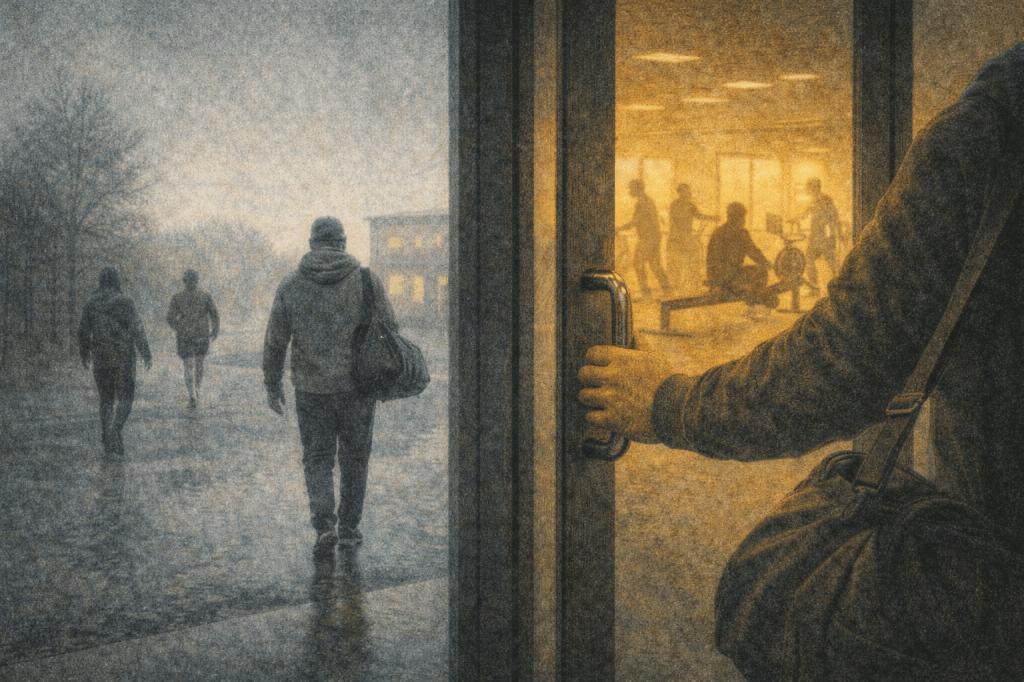
Today, I chose to go to the gym.
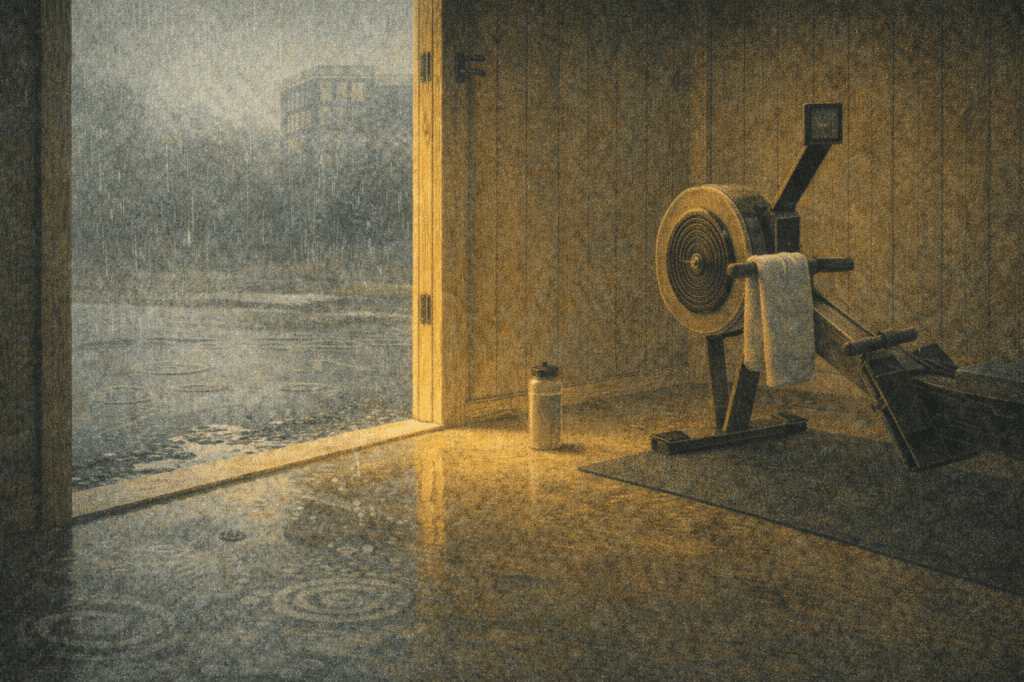
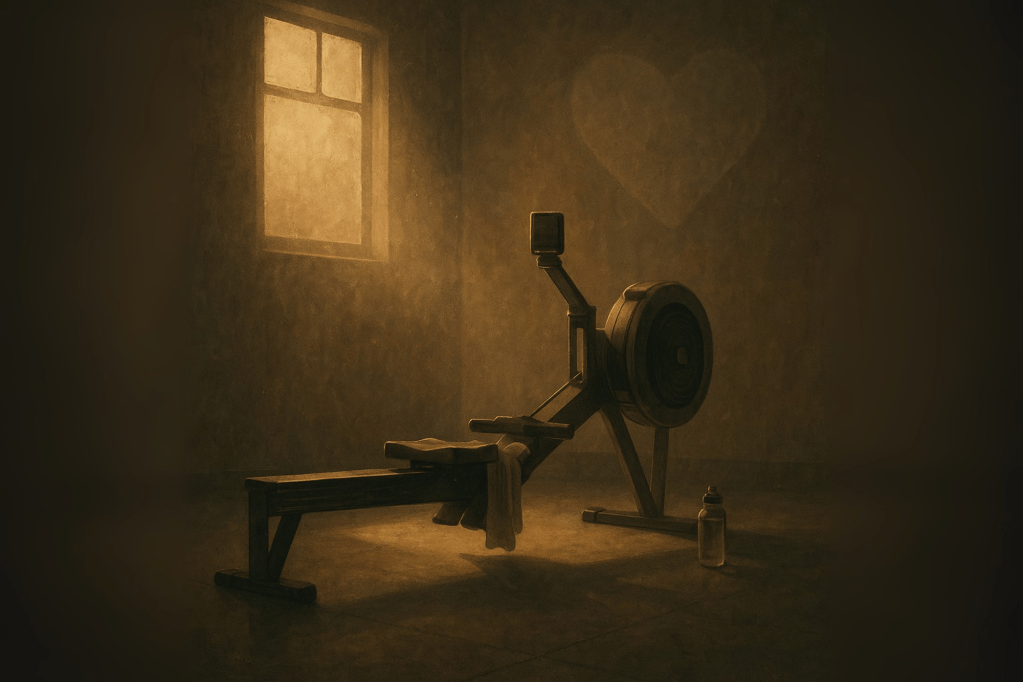
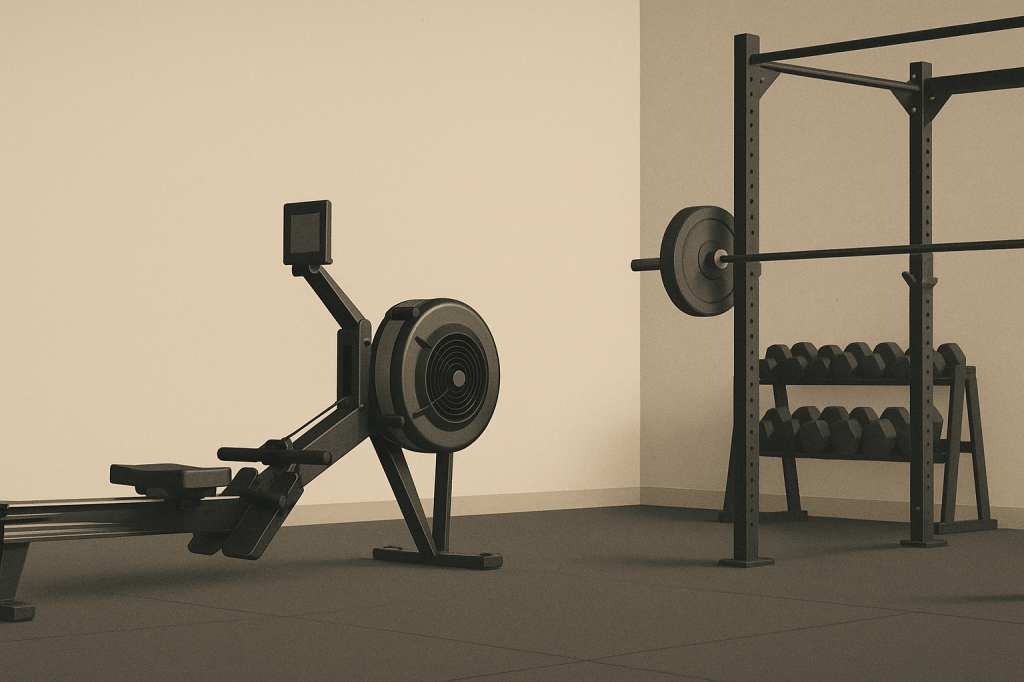
I’ve been rowing in the shed on my new rower, and I’m still delighted I’ve got it. But I’ve missed the contact with people. I’ve missed being in a place that’s full of like-minded folk, all there to put some effort in and feel better for it. The buzz. The energy.
So today I choose differently.
I choose to live. I choose to be the best version of me that I can be. And I choose to start doing that again today.
It’s been tough. Most of December, all of January, and the first bit of February I’ve been coming up here “looking for my mojo.” I’m not even sure I ever had a mojo in the first place, but it became the story in my head: I’ve lost it.
It hasn’t helped that it feels like it has rained every day this year where I live. The sun barely shows up. I also think I put too much stock in the idea that once I had a rowing machine in the shed, everything would click and I’d train every day.
On top of that, the new process I built in December – WHOOP scores into ChatGPT, get a tailored session – hasn’t been working the way I hoped. Not because the logic is bad, but because of how I react to it.
When ChatGPT looks at my WHOOP recovery and sleep and says, “easy day today,” I treat that as a full stop. “Right, that’s it, we’re done.” No movement. No walk. Nothing. It’s basically become an easy out, and I’ll always find an easy out if you give me one.
The “mojo hunt” has turned into the same thing. If I tell myself I’m looking for my mojo and I can’t find it, then I have an excuse to sit on the back foot and do nothing.
I still want to row. I still want a sub-7 2,000 metres. That goal hasn’t changed. What I’ve lost sight of is that exercise, for me, is about far more than chasing a single number on the monitor.
The rowing – and the moving in general – is primarily about my mental health.
Case in point: earlier this week I was heading into a potentially confrontational meeting. I knew the people in the room probably weren’t going to like what I had to tell them. The old me would have carried that anxiety all day.
Instead, I went into the shed.
I told ChatGPT about the meeting and asked for a workout that would help channel the adrenaline and set me up properly. It came back with a plan that turned out to be perfect. By the time I’d finished the row, the energy was controlled, not chaotic.
I hadn’t even called the meeting – someone else had – but when it started I decided I was going to drive it. I would control the narrative. Everyone would get their say, everyone’s points would be noted, but at the end of the day there were only two options on the table. They could go one way or the other. That’s it.
I went in with that calm, directed energy from the row and nailed it.
Fast forward two days. I’ve just come out of the shed after another row and another thinking session, and the penny has finally dropped:
I never had “mojo” in the first place. What I had was movement. When I move, I look after myself. When I stop, everything starts to fog over.
My mental health depends on exercise. Full stop.
And so what if I’ve put on a few pounds lately. That does not define me. What defines me is the state of my head and my ability to deal with things calmly and rationally – whether that’s work stuff, dad stuff, husband stuff or just being a decent friend. That is what counts.
The next step isn’t hunting for some mystical spark. It’s much simpler and much more boring:
Go outside, even when it’s raining.
Get back to walking.
Go to the gym.
See people, even if it’s just a nod to the receptionist or a quick hello to the regulars.
I need the physical work and a bit of human contact. If I keep those two things in the mix, everything else won’t magically fall into place, but it will get clearer again. And clarity is what I need: for my mental health, my physical health, to be a decent dad and husband, and to be kinder to myself.
I’d lost sight of that.
This is The Sub-7 Experiment: not just chasing 2,000 metres, but remembering to look after myself.
I have just walked back in from the shed after a good session on the rower.
I am really starting to like this new version of ChatGPT. It feels like it remembers more of the coaching conversation as we go, which makes the whole thing feel more joined up. Today it had me doing 5 minute intervals, and it was a proper session. Enough to feel it, not so much that it wiped me out.
What has surprised me is what I am starting to miss.
I thought that once I had the rower in the shed, that would be it. Training at home, no commute, no waiting for machines, no distractions. And a lot of that is true. But I have realised I miss the people at the gym more than I expected.
I am not a big talker there. It is usually just a quick hello to the staff on the desk, a nod to the regulars, and then everyone gets on with their own programme. Headphones in, sets to do, not much conversation. But there is still a sense of other humans being around you, all doing their thing. I did not think I would miss that, and yet I do.
It is a small thing, but the nods and the “alright?” moments matter more than I gave them credit for.
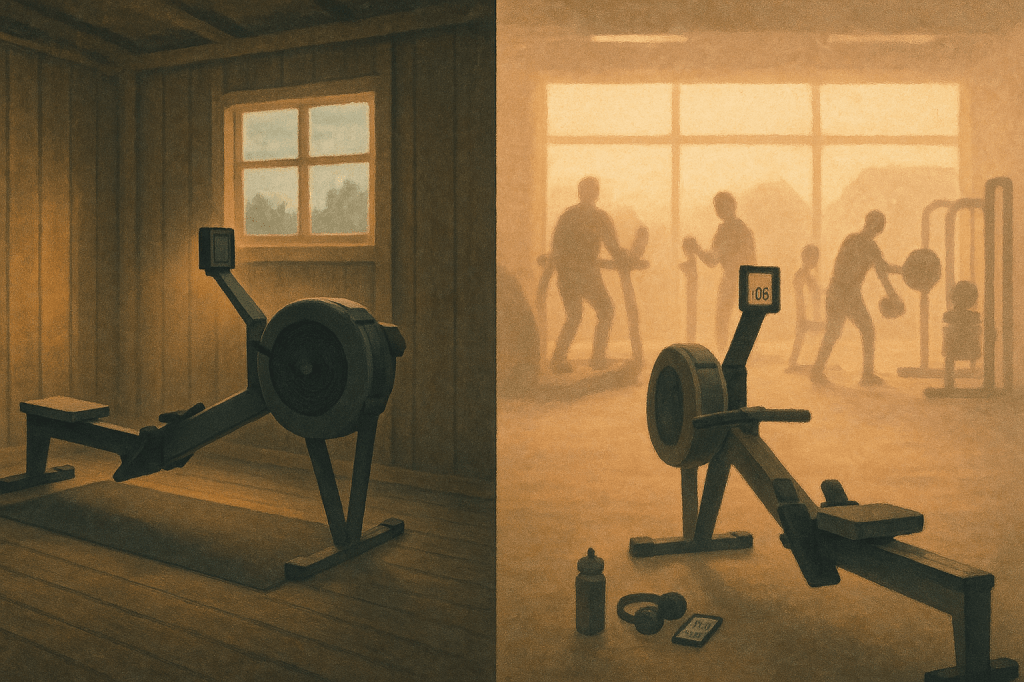
Rowing will always be the main thread. The shed is perfect for that. But I think I will still go to the gym now and then for strength work and, if I am honest, for that tiny bit of human connection. A different kind of fuel.
Today’s row kept the body ticking over, but it also taught me something: I need both the quiet of the shed and the presence of other people now and then.
This is The Sub-7 Experiment, and we are still learning.
Wednesday and it’s a strength session in the gym today — the first one for a good while.
And it felt… flat. Underpowered. Enlightening?
The rowing warm-up was clunky at best, off form, and left my head all over the place. Then the weights — fine, but I was down a few kilos from before. That’s no surprise really, given how long it’s been since I last did strength work.
On to the sleds: 100 kg pushes with arms straight and bent, followed by 80 kg sled rope pulls. All of that was fine, but I only did three sets instead of five, and I let myself walk away from the last two.
They say mindset is everything, and the power of the mind immense — and today I let mine get in the way. I’m still wondering why.
I always feel sad at the end of summer, knowing we’re heading into short, dark days with dropping temperatures. I don’t mind the cold; I just don’t like being cold. But it’s the lack of sunshine that gets me. Maybe I’m feeling it more right now because I’m trying a new Vitamin D supplement and it isn’t agreeing with me. Maybe it’s the crash from all the honey in my cycling food at the weekend. Or maybe it’s simply still recovery from the 121 km on the bike.
Whatever it is, I need to remember to be kind to myself and just let it be what it is. They say what you resist persists, so go easy on yourself.
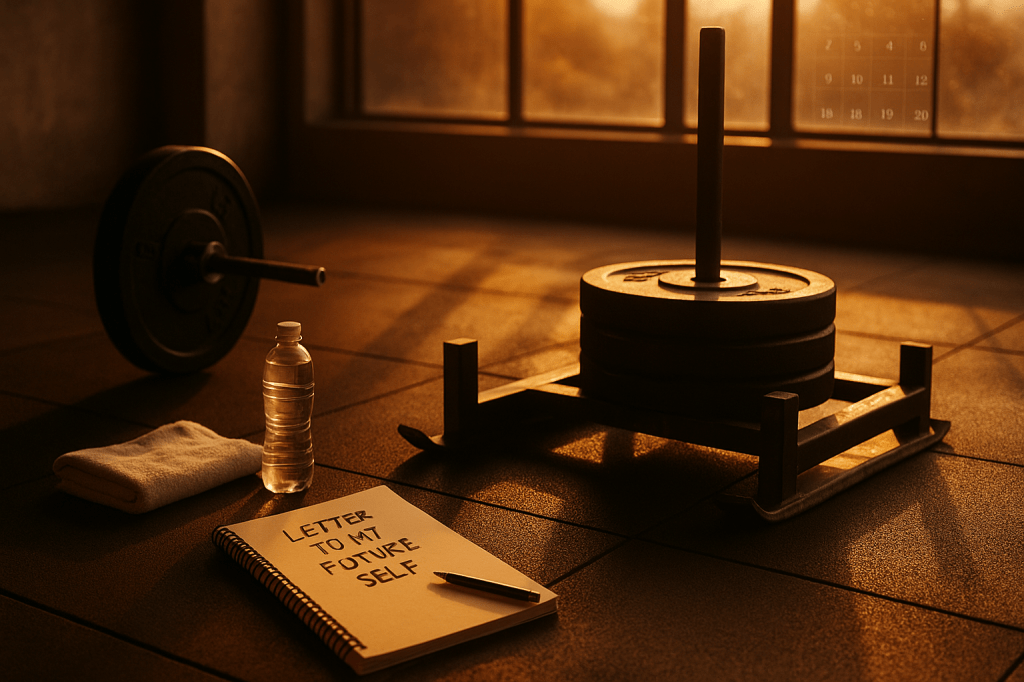
I think I’ll put a note in my calendar for June next year — a letter to my future self, reminding me how I feel right now after taking a summer off from measuring things: calories, distance, effort, kilos lifted or carried. That letter will say something like:
Loosen up, but don’t let go completely. Keep some rhythm in the gym. Enjoy your summer, but don’t drift so far that September feels like a restart. Future you will thank you
Right now, the Sub-7 goal feels far away. Not as far as when I first set it last year, but certainly further than it felt in June. So this little reminder to my future self will be worth it.
I don’t know what’s going on today. Does it even need analysing or thinking about? Maybe if I write this down, it’ll become clear. Maybe there’ll be a few maybes today.
It’s been a long weekend—a lot of driving, but also really good family time. Not much movement.
This morning’s gym session, as laid out by ChatGPT, was good. Controlled. Just what I needed.
We’re going on holiday at the end of the week to a place I really enjoy. So why am I feeling sad?
I’d hoped to do a 2K test this week to check on progress toward the overall aim of this experiment. But work commitments might not leave enough space for it. Then again, if I want it badly enough, I’ll find the time.
Maybe it’s the disappointment that my new, expensive noise-cancelling earbuds aren’t quite as good as I’d hoped. That’s just a thing though—not really important.
Maybe it’s the realisation that, with a week to go before the holiday, I’m not quite the shape I wanted to be. When I started this experiment, the goal was clear: row a sub-7-minute 2,000 metres. That’s still the goal.
Maybe I’m just facing the truth that my default shape is barrel, not Superman. But Superman only turns up in a crisis. I’ve learned, through this experiment, to turn up daily. To be accountable. To own it.
If I really wanted to look different, maybe I would have set different parameters. But then again, it wouldn’t be called the Sub-7 Experiment.
I am stronger. I am fitter. Physically and mentally.
Maybe I just need to sit with the sad feeling. Accept it for what it is. It’s me, being human.
This is the Sub-7 Experiment. And even after six months of hard work, I’m still learning—every single day.
When I first started this Sub-7 Experiment, the plan was simple, if ambitious: see if modern AI could help me train for and achieve a sub-7-minute 2,000-meter row on the erg. And that’s still the main goal. I still feel the need for progressive overload, for pushing myself, for having a clear target that gets me to the gym.
But something else happened along the way. Something deeper. The experiment has evolved into much more than just a number on a screen. It’s become an unexpected anchor in my life, bringing with it a whole host of perks I never anticipated.
Movement as a Mental Reset
Initially, the goal was physical fitness, changing shape for a holiday. But quickly, I realised something else was at play. Movement, especially rowing, became my mental anchor. I’ve come to rely on it as a mental health row or a head leveller.
When my head’s all over the place, after a long work drive or in the middle of something stressful, going to the gym isn’t just physical. It clears the fog. Even a walk in the woods on the way home from a tough meeting now brings me back to myself.
ChatGPT, my digital coach, has helped me see these shifts more clearly. It often points out the real wins I’d otherwise miss.
Busting the “Lazy” Myth
For a long time, I called myself “inherently lazy.” It’s a story I’ve told myself for years. But this experiment has quietly dismantled that.
I now know I’m consistent. Not just when it’s convenient, but when I’m tired, travelling for work, feeling flat, or battling the inner critic. The gym has gone from “something I should do” to “something I need.” It’s no longer about guilt. It’s about feeling right. That shift in motivation is huge.
The Evolution of Identity
The biggest surprise? A shift in how I see myself.
I’ve lived with impostor syndrome for years, always asking: “Am I really this person?” But by showing up, pushing through, and reflecting, I’ve realised, yes, I am. And I deserve to be.
It’s not about perfect sessions. It’s about making the average ones count. That’s the real change. I’m becoming comfortable with this version of me. I’ve never said that before. And that kind of self-acceptance is worth more than any split time.
Beyond the Gym: Life Benefits
The habits built in this experiment are bleeding into other areas of life.
I’ve learned to set boundaries, like leaving my work phone in the car during walks. It means I show up properly at home instead of still being “at the office in my head.”
I’m more mindful of hydration and how it affects mental clarity. And even though the scale doesn’t always move the way I want, I’m fitting into old clothes. I feel stronger, fitter, even if my body image takes time to catch up to reality. That reminds me: health isn’t a number. It’s how you feel in your skin.
ChatGPT’s flexibility has been a game-changer too. When my shoulder’s acting up, or recovery’s low, or my mood’s off, the plan adapts. And that means I stay consistent, avoid injury, and keep moving. It’s about training smart, not stubborn.
This is still the Sub-7 Experiment. But it’s about much more than rowing.
It’s a framework for handling life. A journey of self-discovery. And a reminder that consistent, intentional movement can anchor you in a messy world.
Just out of the gym—had a really good session. I’m well-pleased with myself after last week’s 17,000-metre row on Saturday (that’s 10.5 miles, by the way!) and my 7:22 2K test on Monday.
I thought it was time to switch things up a bit, since I’m going on holiday in a month. Still keeping an eye on rowing and that sub-seven goal, but I’m adding more weights now. I’m in the gym every day, and I’m getting so much out of it—not just physically, but mentally. That’s honestly the biggest takeaway so far: how much more grounded I feel, and how much better I am at dealing with things that used to derail me. The little things still pop up, but they don’t spin me out anymore.
So yeah, still rowing—but now the weights are for me. Really for me. Why not work towards looking and feeling better by the pool, having a bit more confidence? I’m 55, not old, not saggy—still got plenty of life left. I refuse to be old. That’s not delusional, it’s just that I see too many people just stop, and I’m not going to be one of them.
I’m particularly proud today because I went to the gym much later than usual—missed my normal window between the early and midday crowds. I was already half-talking myself out of doing anything except the rower (the “big dark cave” of the weights area is still intimidating). But today, I went in. Other people were there, but I still did it. I’m a long way from feeling at home in there, but it’s getting better.
Honestly, I’m delighted. This is the next phase. It started today. ChatGPT came up with a brilliant plan and I executed it. I’m chuffed to bits.
Now: time for lunch and back to work. Just wanted to share that with you—hopefully you’re as excited as I am, because I feel great.
Today I rowed a 7:22 for 2,000 meters, a full 7.5 seconds faster than my last test. That’s a big leap. And even though I was quietly hoping to hit 7:15, I’m genuinely proud of this.
Because this wasn’t just a fitness test, it was a headspace test.
These last few days have been heavy. Work stuff has knocked my confidence. I’ve felt jaded. Tired. The kind of mental fatigue that clings to your legs and lungs even before you’ve moved. Whoop put my recovery at 59%. And honestly, I felt it.
Part of me, the old voice, said not today. “Wait until you’re feeling better.” “Do it next week.” “Don’t make a scene. Just row easy. Skip it.”
But I needed this today. Not because I had something to prove, but because an older version of me still wants proof. Proof that the training is working. Proof that this is going somewhere. Proof that I’m not just going through the motions.
The Middle Bit—Where It Got Messy
The first 500 meters were inconsistent, too fast, too slow, couldn’t find my rhythm. Then with 800 meters to go, the real moment hit:
“Just stop.”
That voice again. Not shouting, not panicking just calmly suggesting I give up. And honestly? It was persuasive.
But I didn’t stop. I refocused. I locked into form. I listened to my breathing. And I found something there, not a burst of power, but a thread to follow.
By the time I hit the final 500 meters, my lungs were screaming. My legs were burning. The last 300 was ragged, messy, all over the place. But I held on. I kept rowing. And I crossed the line in 7:22.
The Reflection—Now That I’ve Sat With It
I’m home now. I’ve been sitting with this in the car, and I think I’m feeling a bit… sad. Or maybe it’s disappointment. I’m not quite sure.
I didn’t hit 7:15, which was the target I had in my head. And now I’m wondering; was that just the old me again? Not being realistic, not being SMART with my goals? Or was it simply that I was at 59% recovery and the tank just wasn’t full?
Either way, this session has shown me something valuable:
Breaking the 7-minute barrier isn’t just a stretch goal. It’s serious work.
And I’m still a long way from it.
Maybe that’s what I’m really sitting with, the weight of that reality. It’s not discouraging, though. Not really. If anything, it’s clarifying. I thought for a moment that I might need to change the name of the blog to“ Just a bit below The Sub-7 Experiment”, because maybe I was already knocking on the door of breaking it.
I’m not.
Not yet.
Today gave me something better than a perfect result. It gave me a new baseline. 7:22. Solid. Honest. Earned.
And that’s where the next leg of the journey begins.
It’s Friday. It’s been a long week. My WHOOP says 49% recovery. My brain says, “you’re behind.”
So I asked ChatGPT for a smart session—and it delivered: 500m rowing intervals, sled pushes, farmer’s carries. Solid, focused work.
And I enjoyed it. I really did.
But there’s something gnawing at me—and I need to write it down.
I haven’t done the core work I said I would. Holiday’s coming up in a few weeks. And the truth is… when I look down, I still see the belly. The tyre. The thing I was hoping would be gone by now.
I’ve been consistent. I’ve been disciplined. I’m rowing faster. Pulling harder. Lifting heavier. I’m wearing trousers I couldn’t fit into a while back. My shirts hug in the right places again.
I know I’m fitter. I know I’m stronger. I feel it every session.
But… I don’t see it. Not in the way I’d hoped.
And it’s messing with my head.
I think part of it is stress. Work’s intense right now. And I feel like I’m slipping into old habits—being hard on myself. Impatient. Frustrated. Beating myself up when I should be backing myself up.
I kind of thought this other work—this training, this structure—would sort everything out. That I’d look down one day and think, “There he is. That’s the guy I was aiming for.” But instead, I look down and think, “Still the same.”
The truth? That’s not true.
It’s not the same. I’m not the same.
But body image is a funny thing. It lags behind the progress. It rewrites the story. And sometimes… it just lies.
A Thought from the Shower
This morning, standing under the water, something hit me:
Is this the part of the experiment where a human coach would make a difference?
Would a real-life coach have pointed to the mat and said, “Go. Now. Do the core work.” And would I have done it—just because someone was watching?
It’s easy to ignore words on a screen. Even when those words are spot on.
But the whole point of the Sub-7 Experiment is to see if I can close that gap.
The AI can suggest the work. But I still have to choose to do it.
This isn’t failure. It’s a data point. A moment in the experiment where the mental friction is more important than the reps.
And here’s the realisation:
Consistency is easy when it’s comfortable. The real test is doing the things I’d rather avoid.
It’s Friday. The sky is blue. The sun is shining. My people are healthy. I’m healthy.
I’m making real progress—even if I can’t always see it in the mirror.
This is still the Sub-7 Experiment. And it’s about much more than rowing.
First: my back was a little sore when I woke up, but I still wanted to get to the gym. I know I probably won’t get another session in this weekend, so I asked ChatGPT for a distance row. The plan was smart: a gentle 1,000m warm-up, then three blocks of 3,000m, gradually building the pace. After each 3K, I’d check in with my back and decide whether to continue or stop.
And I did exactly that.
That’s what stood out to me first—not the workout itself, but the fact I actually listened. I followed the advice instead of charging ahead like I might have in the past and avoided turning a sore back into something worse.
The second thing? A subtle but surprising mindset shift.
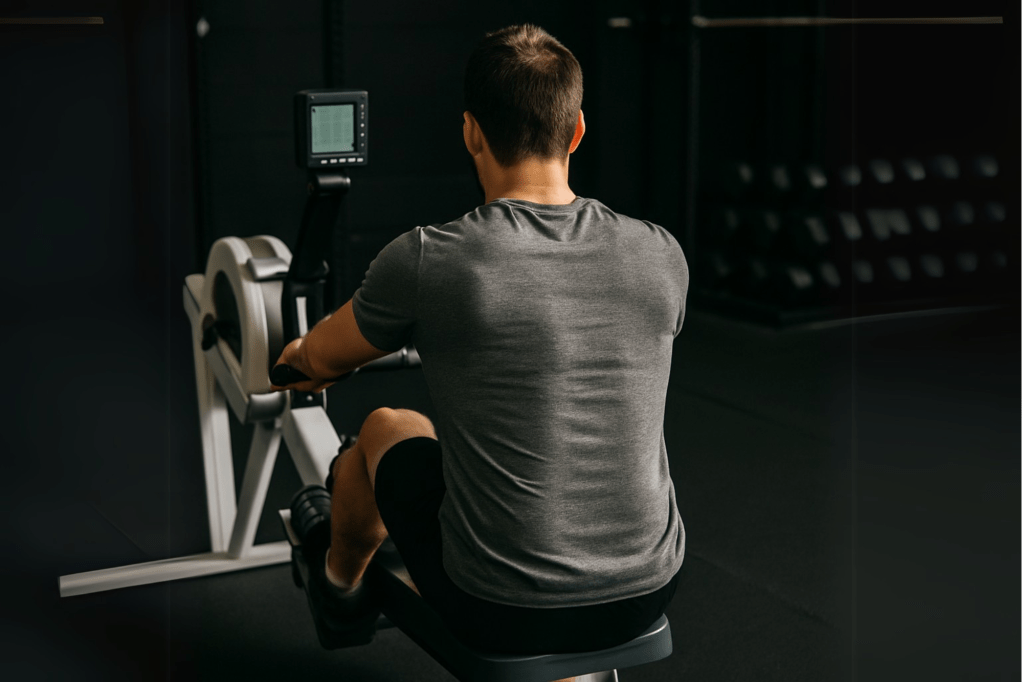
At my gym, there are two rowers side by side. I always use the one on the right. Midway through my first 3K, I noticed a guy eyeing the rowers from the static bike. No problem—he disappeared somewhere else.
But just as I was about to start my final 3K, he came back. He sat down next to me with a bit of a flourish, cranked the damper to 10, and launched into it.
Old me? I’d have taken that as a challenge. Tried to match him stroke for stroke. Maybe even tried to bury him.
New me? I had a plan. And I stuck to it.
I held 27 strokes per minute at a steady 1:59/500m. I kept my rhythm. He was at 34 strokes per minute, burning calories fast but looking all over the place. When he hit 1,000m, I was at 1,500. When he stopped at 2,000m, I was passing 2,800.
I didn’t break form. I didn’t chase. I just rowed.
It would be easy to say I had an advantage—after all, I’m training for this. But what I’m most proud of is the restraint. The shift in mindset. I didn’t let ego take over. I didn’t go looking for a moment of glory. I followed the plan. I trusted it.
And that, more than the numbers, is what progress looks like to me.


 The Sub-7 Experiment