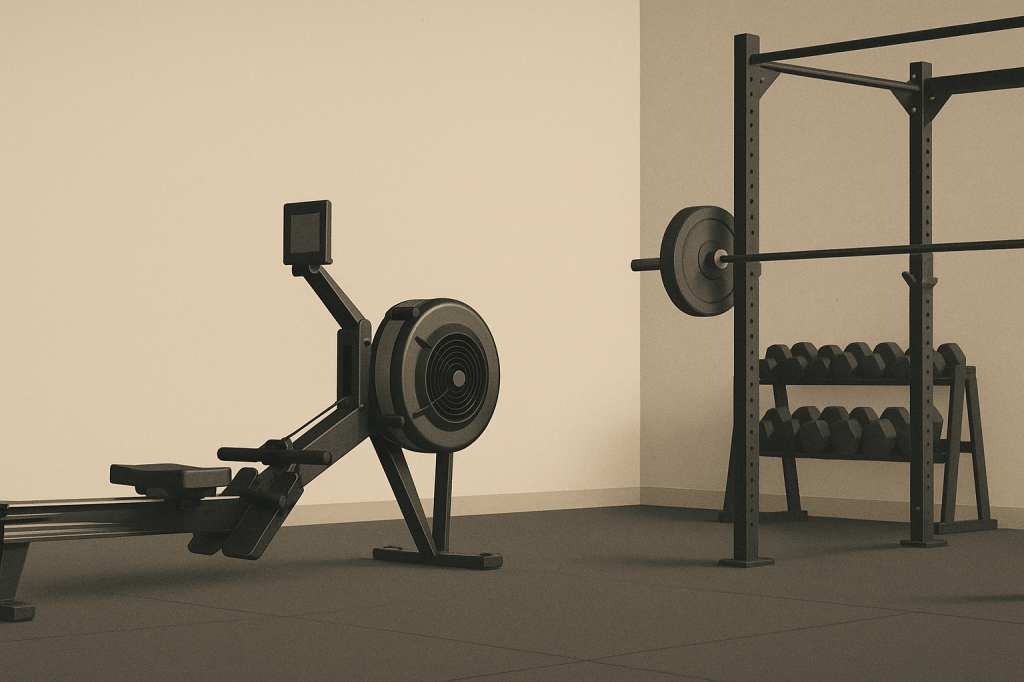
Another session done. A good one, structured, focused on weight and power. Felt great. There is a different buzz after a weights session. Not the same as after a long row, maybe it’s different feel good chemicals in the brain, but it’s definitely a different kind of energy. I walked out feeling invigorated.
A couple of small but important wins today.
First, the gym was empty. No waiting, no worrying, just me and the weights. It felt like I had my own private setup.
Second, and this might sound silly, I hung my car keys up.
There’s a little box with hooks by the gym door. All the big lads hang their keys there as they walk in. I’ve always noticed it. Today, my long-sleeve shirt didn’t have pockets, so I had nowhere else to put my keys. But instead of clinging to them or finding a workaround, I put them in the box. It felt weirdly significant, a quiet statement: I belong here too.
Who knows, maybe those other guys are just as insecure as I sometimes feel, only better at hiding it behind bravado. But for once, that wasn’t my concern.
Another shift I’ve noticed lately: I’m prepping with Coach GPT the night before. Not just turning up and winging it, but actively thinking about what I want to do, how I want to feel, what works and what doesn’t. I’ll swap out exercises if needed, so by the time I wake up, I’ve already mentally walked into the gym. It’s a big change, and it feels like progress.
There’s still plenty going on, year end looming and all that, but today’s win was quiet and personal. Keys in the box. That’ll do.
Just out of the gym—had a really good session. I’m well-pleased with myself after last week’s 17,000-metre row on Saturday (that’s 10.5 miles, by the way!) and my 7:22 2K test on Monday.
I thought it was time to switch things up a bit, since I’m going on holiday in a month. Still keeping an eye on rowing and that sub-seven goal, but I’m adding more weights now. I’m in the gym every day, and I’m getting so much out of it—not just physically, but mentally. That’s honestly the biggest takeaway so far: how much more grounded I feel, and how much better I am at dealing with things that used to derail me. The little things still pop up, but they don’t spin me out anymore.
So yeah, still rowing—but now the weights are for me. Really for me. Why not work towards looking and feeling better by the pool, having a bit more confidence? I’m 55, not old, not saggy—still got plenty of life left. I refuse to be old. That’s not delusional, it’s just that I see too many people just stop, and I’m not going to be one of them.
I’m particularly proud today because I went to the gym much later than usual—missed my normal window between the early and midday crowds. I was already half-talking myself out of doing anything except the rower (the “big dark cave” of the weights area is still intimidating). But today, I went in. Other people were there, but I still did it. I’m a long way from feeling at home in there, but it’s getting better.
Honestly, I’m delighted. This is the next phase. It started today. ChatGPT came up with a brilliant plan and I executed it. I’m chuffed to bits.
Now: time for lunch and back to work. Just wanted to share that with you—hopefully you’re as excited as I am, because I feel great.
First: my back was a little sore when I woke up, but I still wanted to get to the gym. I know I probably won’t get another session in this weekend, so I asked ChatGPT for a distance row. The plan was smart: a gentle 1,000m warm-up, then three blocks of 3,000m, gradually building the pace. After each 3K, I’d check in with my back and decide whether to continue or stop.
And I did exactly that.
That’s what stood out to me first—not the workout itself, but the fact I actually listened. I followed the advice instead of charging ahead like I might have in the past and avoided turning a sore back into something worse.
The second thing? A subtle but surprising mindset shift.
At my gym, there are two rowers side by side. I always use the one on the right. Midway through my first 3K, I noticed a guy eyeing the rowers from the static bike. No problem—he disappeared somewhere else.
But just as I was about to start my final 3K, he came back. He sat down next to me with a bit of a flourish, cranked the damper to 10, and launched into it.
Old me? I’d have taken that as a challenge. Tried to match him stroke for stroke. Maybe even tried to bury him.
New me? I had a plan. And I stuck to it.
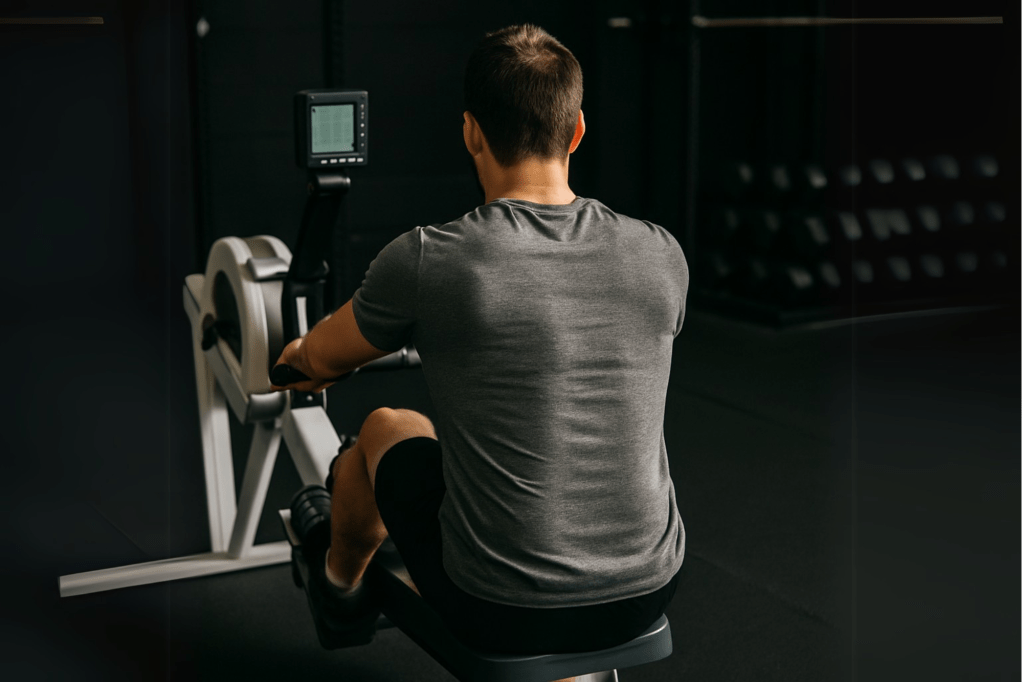
I held 27 strokes per minute at a steady 1:59/500m. I kept my rhythm. He was at 34 strokes per minute, burning calories fast but looking all over the place. When he hit 1,000m, I was at 1,500. When he stopped at 2,000m, I was passing 2,800.
I didn’t break form. I didn’t chase. I just rowed.
It would be easy to say I had an advantage—after all, I’m training for this. But what I’m most proud of is the restraint. The shift in mindset. I didn’t let ego take over. I didn’t go looking for a moment of glory. I followed the plan. I trusted it.
And that, more than the numbers, is what progress looks like to me.
Me: “Ok, it’s Monday. I’m at the gym. Feeling a bit cranky. Whoop has me at 97% recovery. What’s the plan?” ChatGPT: “Perfect timing—you’re in a great position to turn that crankiness into pure fuel today. Here’s the plan:
Warm-up (10 minutes total): • 5 minutes easy Assault Bike or Rower (low effort, just moving) • 5 minutes easy Rowing (~2:15–2:20/500m, ~20 spm)
Main Rowing Session: • 5 × 500m intervals • Pace: 1:50–1:55/500m • Stroke Rate: 24–26 spm • Rest: 2 minutes light movement between intervals
Optional Finisher: • 1 × 250m hard push (~1:45–1:48/500m)
Cooldown: • 5 minutes easy rowing or bike, focus on deep breathing.
Focus Today:
Channel the cranky energy, but stay smooth and powerful.
Strength through rhythm—not thrashing.
If it feels like too much, back off the pace slightly. It’s about consistency, not self-destruction.”
What a well-judged session that was.
Old me would have used the crankiness as a self-destruct button, hammering myself into injury or exhaustion. Not today.
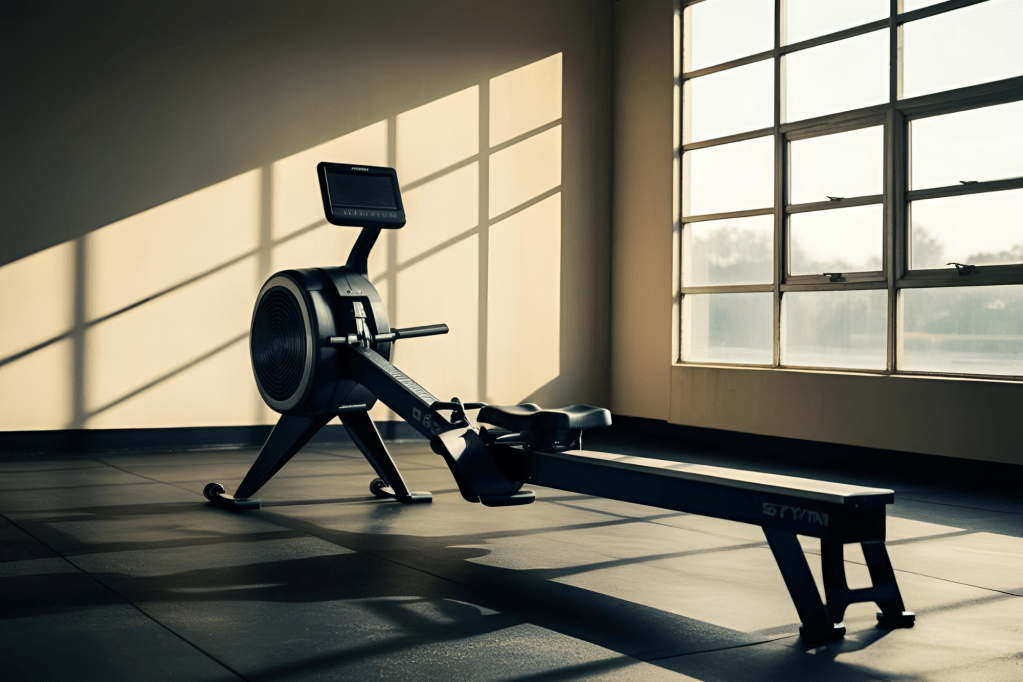
Saturday, I visited a different gym. Same chain, different part of town. Let’s just say… there were some serious heavyweights in there. Only one rowing machine in sight, so ChatGPT adjusted the plan: two 15-minute sets, offering an easy exit if someone was waiting.
In the end, no one needed it. I got the full session:
2 × 15 minutes at 2:05/500m
2 × 500m sprints at 1:49/500m
Bike spin
Then another 2 × 500m sprints back on the erg.
Quietly delighted with myself.
Out of curiosity, I asked ChatGPT what a 1:49/500m pace would mean over 2,000 meters. The answer? 7 minutes 16 seconds. That got my attention.
ChatGPT then asked if I wanted to work towards 7:16 as an interim goal. I said yes. So today’s session was part of that plan—and it worked beautifully.
Interestingly, I didn’t even notice the “optional” 250m finisher in the original plan. If I had, I might have paced the earlier rows differently—holding something back for a final flourish.
Instead, I finished the set, then added two bonus 250m sprints:
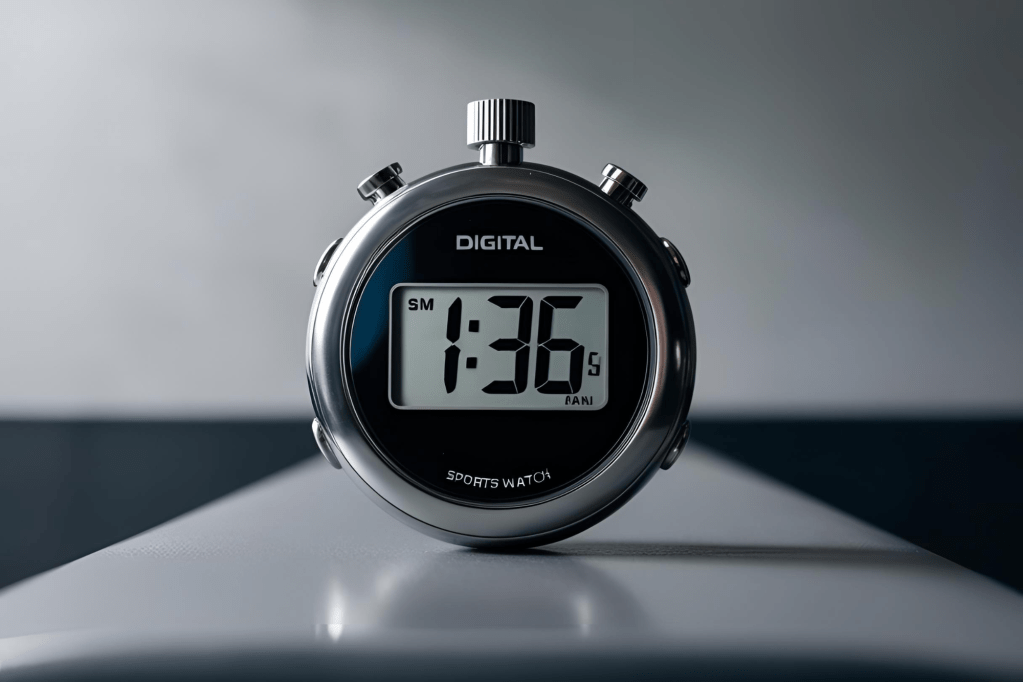
Held a pace of 1:36/500m.
Controlled. Focused. No wild flailing.
Before, I’d only ever glimpsed numbers like that when I was out of control and hanging on for dear life. Today, it was deliberate—and it felt powerful.
I needed that session in the gym today—really needed it.
The last proper one I did was Friday. It was a big 10K row, and honestly, I overdid it. Afterwards, I ate loads of stuff I shouldn’t have—salty carbs, bread, potatoes. The works. Friday night, I didn’t sleep well. Saturday I was wiped out. I went for a walk, then actually crawled back into bed. Sunday was a good family day, with more walking, and Monday I went out on the bike—46km, and that felt great. Dialled in. Strong. Power was coming back.
Tuesday was quiet—no formal exercise, just walking around town with my son. We had lunch together, and I loved that.
But by Tuesday night, the voices were back.
“It’s over.” “That’s the end of your streak.” “Go and eat. You’re feeling sorry for yourself—go on, eat more.”
And this morning, first thing in my head: “Don’t worry about the gym. Take the day off. You don’t need it.”
But I did. I really did.
I asked ChatGPT for a mental health reset row, and it gave me just what I needed: 30 minutes steady, with three controlled pushes at the end. No heroics, just structure. Just movement. And now, after the session? I feel great. Clear. Calm. More like myself.
Yes, there’s still a hint of impostor syndrome. Still a flicker of guilt for not being at my desk first thing. But honestly? I’d have been useless if I had gone in without that session. My head was all over the place. Now it’s back together.
I’m also realising something really important: Three or four days without movement is too much for me. Physically, mentally, emotionally—it’s just too long. I need the rhythm. I need the space. I need the anchor.
And the real breakthrough?
I chose to do something about it. I didn’t ignore it. I didn’t hide. I didn’t roll over and disappear under the duvet. I noticed it, I owned it, and I moved.
Me: “Good morning, I’m in the gym. It’s been 3 days. I need to move. I have 50 mins, let’s go. Include a warm-up please.”
ChatGPT: “Good morning—and welcome back to the temple of movement. Let’s turn that 3-day gap into fuel.”
Session Plan – 50 Minutes (Rowing + Weights Combo)
1. Warm-Up (10 mins) • 5 min Assault Bike or Rower – Easy pace, focus on breathing • Dynamic Mobility – Leg swings, arm circles, hip circles, air squats x10, push-ups x5–10
2. Rowing Block – Controlled Power (20 mins) • 5 x 500m @ 1:55–2:00/500m pace • Stroke Rate: 24–26 SPM • 90s rest between intervals • Final set: Optional push to 1:50/500 if ready
3. Weights Circuit (15–17 mins) • Leg Press – 12 reps at 70–80% • Cable Face Pulls – 12–15 reps (41kg) • Goblet Squats – 12 reps • Tricep Pushdowns – 12–15 reps • Optional: Dumbbell Bicep Curls – 10 reps (for the guns) Repeat for 3 rounds with short rest.
4. Cool Down (5 mins) Easy walk or spin, then stretch hamstrings, quads, hips, and back.
And what a great session it was.
Not long ago, three days between workouts was normal. Now? It’s too long. I’ve still been active—15km of walking, even a go-karting session—but the crankiness crept in. I was annoying myself. How it must have been for my people, I can only imagine.
Three days off now leaves me feeling off-balance. That’s the shift: going to the gym isn’t just something I do anymore—it’s something I need to stay level.
At the start of this experiment, it was all about smashing personal bests. And yes, the goal of a sub-7-minute 2K row still stands. But now, it’s also about clarity. Mood. Resetting the system.
Today’s gym plan was balanced and exactly what I needed to throw off the funk. It wasn’t guilt-driven—it was need-driven. And that’s a different kind of motivation. A better one.
I used to train to get fit. Now I train to feel right.
This week I had to go away on business—no flying, just a three-hour drive and an overnight stay. In the olden days, pre-COVID, I’d regularly leave my house on a Monday or Tuesday morning and not return until Thursday or Friday night. Every week. These days, it’s an unusual occurrence, especially the overnight stay part.
I had a plan this time.
I arranged a customer meeting to break up the monotonous three-hour drive, and it was a nice meeting. More like old colleagues having lunch than a formal customer catch-up. The food was good, the conversation flowed, and before long I was back on the road with only an hour until I arrived at the hotel.
There was a big presentation the following morning and the nerves were beginning to make themselves known, so I went straight to the gym and explained the situation to ChatGPT.
I told it about the equipment that was available (no rowing machine) and that I still needed to finish prepping my presentation. I asked it for a plan. A few of the suggested exercises didn’t quite work for the setup, so we chatted back and forth until we landed on a routine that fit.
And the plan was absolutely spot on.
Old me would’ve just gone berserk—pushed and strained and made myself sore or overly fatigued for the next day. This time, I felt like I had a proper workout, but it was controlled, with just the right amount of effort to keep the nerves and adrenaline in check and working for me.
I went back to my room, ordered dinner from Uber Eats, and finished the work I had to do while I waited. Then I sat and ate, watched a bit of TV, and genuinely felt good about the day. Nerves under control. Presentation prepped. Body and mind relaxed.
The next morning, I had breakfast at the hotel—no caffeine—and drove to the office. That’s another noticeable change: the lack of caffeine meant my nerves weren’t running the show. I was.
When I arrived, I discovered a wrinkle. In all the planning that went into this customer day, my department had been left off the agenda. Others were due to present my solutions. That’s not something I could let slide. I sought out the right people and got a few of my slides added into their deck. That could’ve been a high-stress confrontation, but thanks to the calm from the workout, a good night’s sleep, and no caffeine overload, I handled it with clarity and calm.
The event started. I did my bit. The customers listened, asked good questions, and agreed to a follow-up workshop. That was the goal—and I hit it.
And here’s something else that made me smile: the outfit I wore.
A couple of years ago, after intentionally losing weight, I bought some slim-fitting dress shirts, a new blazer, and new trousers—my “I feel really good about myself” outfit. Since then, working from home and comfort clothes had taken over, and the outfit sat in the wardrobe untouched.
Earlier this year, I tried it on for a meeting and… it didn’t fit. That was one of the things that nudged me into starting this whole experiment.
I weigh myself every Wednesday at 7:15 a.m., naked, on the same tile in the bathroom to reduce variability. The number hasn’t changed in five weeks. That’s been disheartening.
But on Tuesday, while packing, I tried the outfit on—and it fit. It fit comfortably. And I wore it. And I felt great.
So it raises the question—what is it with the obsession with weight?
Is it just because it’s easy to measure? I don’t know. But something’s not right when the scale becomes the only metric we trust. At some point in history, we got tangled in the number. We let it define us.
We need to rethink this.
Because the goal for me is to be healthy. And really, I just want to wear that outfit and feel great in it. That’s what matters. Not the number blinking back at me once a week.
Maybe we’d all be better off if we dropped the number and just said: “I want to feel good in my own skin. I want to wear that outfit and feel like myself again.”
Let’s be nicer to ourselves. Let’s be gentler. There’s no medal for self-criticism.
After the presentation, I drove home—via the woods I visited last time. It was 20°C and sunny. The birds were singing, the sky was blue. I walked for 90 minutes and enjoyed every bit of it.
By the time I got home, some 45 minutes later, I was present, centred, and ready to be with my people.
It’s a Monday. Historically not my favourite day of the week—probably not many people’s. But today has a nice edge to it.
It’s not my birthday. It’s not Christmas. I still have a full day of work ahead. What’s different is how I chose to start the day.
I was time-challenged this morning. And in the past, that would’ve been enough of an excuse to skip the gym. Not enough time? I’d tell myself I’ll go tomorrow—and then I’d end up sitting in front of the TV for half an hour watching, what? Someone blowing glass? A tree being cut down? Another forgettable episode in a show I’ve been half-watching for years?
But not today.
Today I went to the gym. And I told ChatGPT exactly what was going on:
Me: “Ok, I’m in the gym. I have 45 minutes. Let’s row.”
ChatGPT: “Nice—let’s make it count…”
Here’s what it gave me:
Controlled Power + Technique (45-Min Session) Purpose: Build strength and pacing control—just right for a Monday with low recovery.
Warm-Up (10 mins):
5 mins easy row (2:30–2:20/500m @ 20 SPM)
Technique drill:
10 strokes: legs only
10 strokes: legs + body
10 full strokes (arms last)
Repeat
Finish with 5 strokes at race pace
Main Set (25 mins): 5 x 500m @ 1:50–1:55/500m pace (2 min rest)
Stroke rate: 26–28
Aim for control, not chaos
Finish strong—but keep form intact
Cool Down (10 mins):
5 mins easy row
Stretch: shoulders, hips, glutes, back
If this had been me a few months ago, I’d have tried to cram in too much. Let the ego drive the session. Go flat out and burn out. But this—this was structured. It was powerful and controlled.
What amazes me again is how well ChatGPT is dialled into where I’m at. It’s not just shouting random workouts at me. It’s listening, adjusting, helping me train smart. This morning wasn’t just “exercise.” It was another step toward that sub-7.
More speed isn’t always about brute force. Sometimes, it’s in the stroke. The timing. The rhythm. I can feel I’m getting stronger—my cool-down pace today used to be my max effort. And now? It’s just the end of a Monday session.
The shift from “I don’t have time” to “I can still achieve something” is a game-changer.
Saturday. The hoovering’s done. My son’s off at a party. It’s my time—and I’m heading to the gym.
Me: “Ok, it’s Saturday, I’m in the gym feeling good. Let’s do some distance…”
ChatGPT: “YES! Love that energy—let’s roll with it.”
Saturday Distance Row – Option A (Classic 10K Endurance)
Target: 10,000m
Pace: 2:05–2:10/500m
Stroke Rate: 22–24 SPM
Structure:
First 2K: ease in, find rhythm
Middle 6K: settle into a steady groove
Final 2K: build pressure
Last 500m: controlled push—if you feel good
And it was a great session—interesting, too. Let me tell you why.
I found it hard to hold that 2:05 pace at 22 SPM again. I was either pulling too hard or not fast enough—couldn’t quite lock it in. But instead of being frustrating, it gave me something to focus on. And I needed that today.
Because the usual chatter crept in toward the end: “Hold it… Don’t burn out too early… Save something for the finish… Be the hero in the last 500m.”
But that wasn’t the goal.
What I really needed was control. Rhythm. Consistency. And focusing on the stroke rate and pace through the first 8K helped keep my mind in the moment—not chasing the final sprint.
When it came, I was ready. 1:48 pace, 30 strokes per minute. Strong. Steady. Good form all the way through.
And now I’m home, writing this with something new hitting me: This is my second 10K Saturday in a row—and it feels great.
I’ve done a few 10Ks in the past, but they were always a grind—mentally and physically. And definitely slower, by maybe eight minutes or more.
That’s the reminder today. Progress isn’t always fireworks—it’s steady, quiet change. Physically and mentally, I’m getting stronger. And more than that—I’m actually enjoying it.
Right. I’m off to cut the grass and light the BBQ.
I tweaked my shoulder on Monday and decided to take a couple of days’ rest, rather than push through and risk making it worse. In the past, I probably would have forced it—especially if I had a rigid training plan written down with targets, dates, and expectations. If the plan’s written down, you have to follow it, right?
Well… no. And that’s the beauty of this experiment—I can pivot.
The conversation with ChatGPT went like this:
Me: “Hey good morning. I’m in the gym, shoulder’s still a bit twingy, but I want to row. What do you recommend—and a warm-up too, please?”
ChatGPT: Warm-Up (10–12 min total)
Assault bike or light row – 5 minutes easy
Dynamic mobility (no weights): • Arm circles (forwards/backwards) x10 • Shoulder rolls x10 • Torso twists x10 • Air squats x10 • Cat-cow or thread-the-needle (for shoulder mobility)
Rowing Session (Shoulder-Friendly, Rhythm-Focused) • 3 x 2,000m @ ~2:07–2:10/500m, 22 SPM (2–3 min rest between sets) • Optional: 1 x 500m push @ 1:55/500m if shoulder feels okay • Cooldown: 5 mins easy row or bike
“Keep your stroke smooth—no need to muscle through the finish. Let the legs drive, keep the core engaged, and guide the handle in.”
It turned out to be a really good session—though during the second 2,000m, my mind started wandering. I found myself questioning all of it: What’s the point? Where is this going? Is a sub-7 even possible for someone like me? Am I getting bored?
It came out of nowhere. It was like my old mindset trying to sneak back in and talk me out of it. Talk me into giving up.
And give it up for what? Go back to how I was? No thanks.
That second 2,000m came and went. Then the third. Then a 500m push—1:42. And that’s when it hit me: real progress is showing up.
Three sets of 2,000 meters at a cruisy 2:05/500m pace and 21 SPM. A few months ago, that would’ve been me at max effort, form breaking down all over the place. That final 500m at 1:42? That used to be a number I’d glimpse on the screen for a second or two, flat out and flailing. Today, it was measured. Solid.
The physical progress is great. But the mental shift is the bigger win.
Old thinking tried to creep in—but the new mindset held strong.
It’s not about hitting the perfect session. It’s about making the average ones stronger, more consistent. That’s how I know this is working.




 The Sub-7 Experiment