Tag: fitness

  • Green Means Go

    Monday morning, another good session.

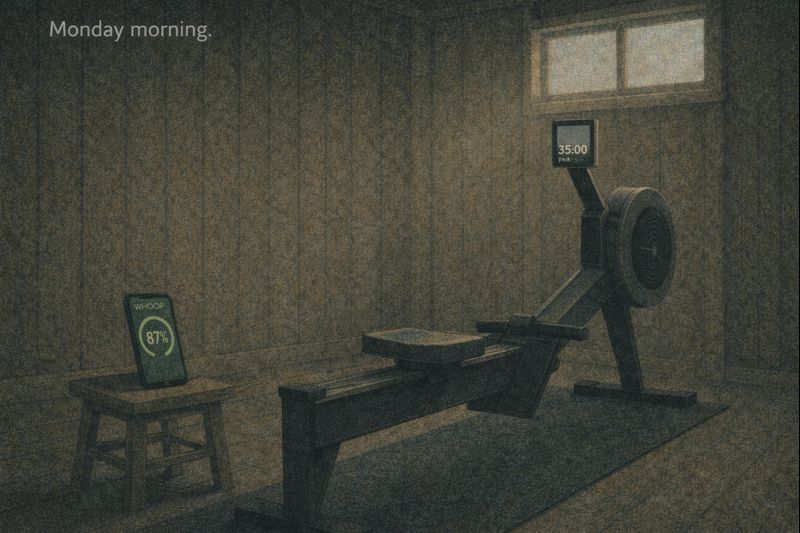
    WHOOP was green when I woke up, and green means go. So I went.

    I did a short warm-up, then 35 minutes on the rower at an average pace of about 2:04/500m, which worked out to roughly 8,500 metres. With the warm-up and cool-down, it comes in around 11k for the day.

    Nothing dramatic, no heroics. Just a solid, steady session and another brick in the wall.

    When I finish my sessions, I take screenshots of the WHOOP data and the ErgData app and feed them back into Coach ChatGPT. Today I noticed something new. It didn’t just say “good job.” It started to ask for specific changes in the data.

    My pace was where it had asked for it, if not a little quicker. What it picked up on was my stroke rate. It pointed out that I was moving a bit fast and that it would like to see the same pace but with a lower stroke rate.

    That probably doesn’t make much sense unless you are used to the action of rowing.

    Inside the rower is a flywheel that gives you the resistance on each stroke. On the recovery part of the stroke, that flywheel slows down, and how much it slows depends on the damper setting. The higher the damper, the more the flywheel slows, and the harder you have to work on each stroke to get it spinning again. To keep a 2:04 pace at a higher stroke rate, say 26–28 strokes per minute, you can “get away with” less power per stroke. To hold the same 2:04 at 22–24 strokes per minute, each stroke has to do more work.

    In simple terms, CoachGPT is asking me to slow the stroke rate down and put more power into each stroke. Get stronger, not just spin faster.

    I hadn’t really seen it nudge me like that before. That is good. It means the coach is starting to care about how I make the split, not just the number on the screen.

    This is The Sub-7 Experiment.
  • The Day I Ignored CoachGPT

    I’m afraid I didn’t listen to CoachGPT at all today.

    I knew I wanted to row, and I knew I wanted it to be tough. When I asked ChatGPT for a plan earlier, it came back with something sensible enough, but my head wanted a long, hard row for the sake of headspace, not optimisation.

    So that’s what I did.

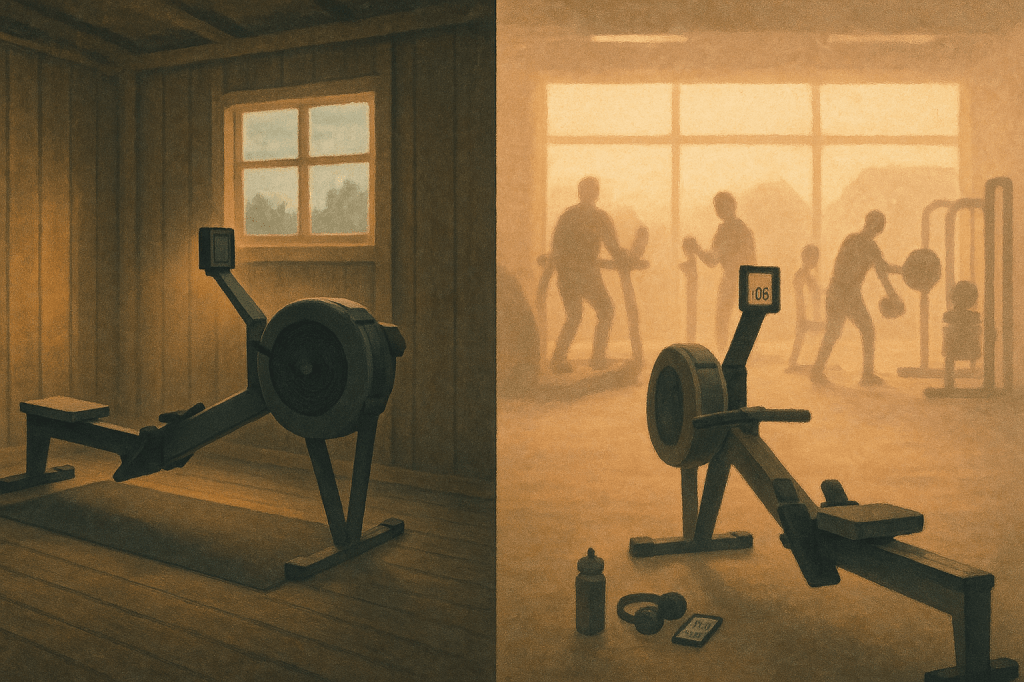
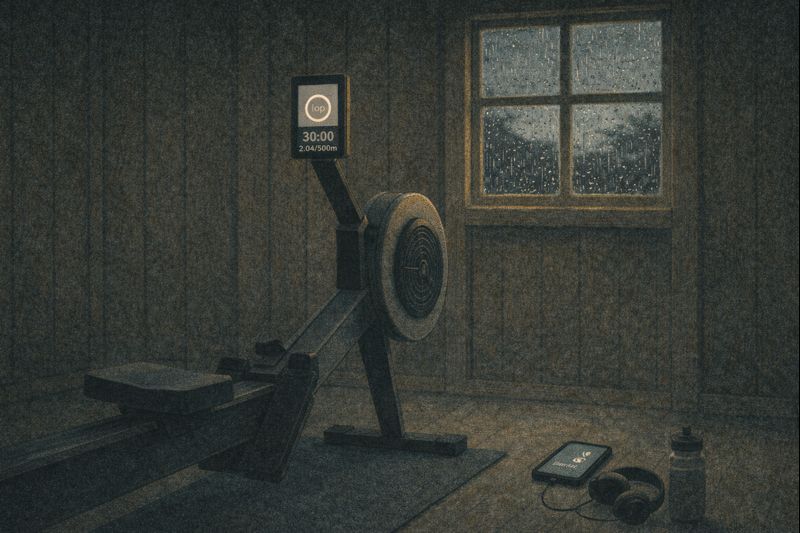
    It’s chucking down with rain outside. This is exactly why I wanted a rowing machine in the shed. With the way my head was this morning, there was no way I was going to get in the car, drive to the gym and do a session there. Walking across the garden to the shed felt possible. Driving across town did not.

    On the Concept2 PM5 you can connect your phone over Bluetooth and use the Concept2 app ErgData. There’s a feature in there called Real Time – basically a virtual 1,000 metre lap that anyone can join in real time if they’re logged in.

    I’ve used it on the last few longer rows, and I really like it. Today there were 36 people from around 20 countries on the same virtual loop. You don’t see their exact pace numbers, but you see if they’re coming past you or if you’re moving through them. There are also virtual pace boats going round, so if you want something to latch on to, you pick a boat and hang on. Alongside that you still get your own pace, stroke rate, distance and time. Plenty to chew on.

    Today’s session was:

    • 5 minute warm-up
    • 30 minutes on the virtual loop at an average pace of 2:04/500m
    • 250m all-out sprint
    • 5 minute warm-down

    I was moving, and it felt good.

    It wasn’t by the book. It wasn’t what the coach recommended. But I finished feeling great, and I needed that sense of control today – the feeling that I had chosen the hard thing and seen it through.

    This is The Sub-7 Experiment, and sometimes I’m the one steering.

  • The Rest Day That Paid Off

    I thought that having a rowing machine in the shed would mean I’d use it every day. That was the plan in my head: step out the back door, sit on the erg, job done.

    What’s actually happened with this new training regime is almost the opposite.

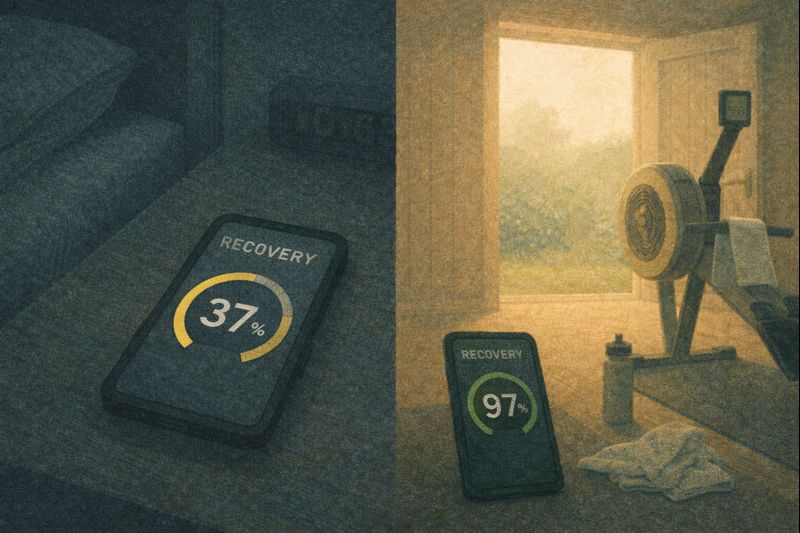
    Since I started feeding my WHOOP scores into Coach ChatGPT, there have been more recovery days than I expected. Yesterday was a perfect example. I woke up fully intending to do a decent session in the shed, or maybe even go to the gym. But my recovery score, according to Whoop, was 37%, and the advice from Coach ChatGPT was simple: take a recovery day.

    It felt wrong.

    In my head, I wanted to train. But this is the deal I’ve made with myself: if I’m going to use data and a coach, I have to actually listen. So I did. I gave myself the day off. My total strain for the day was only 4.4. Not much happened physically.

    Then came this morning.

    Recovery was 97%, the highest it’s been in a long time. Suddenly yesterday’s “non-session” made a lot more sense.

    With that green light, today’s plan was a decent workout on the rower in the shed: three 8-minute intervals with 2 minutes rest between them, each one slightly faster than the last. Warm-up first, cooldown after. It felt like a well-judged session, enough to make me work, not enough to bury me.

    I’ll admit, I’ve been wondering if I’ve made this whole thing too complicated. Copying WHOOP numbers into ChatGPT. Using the new app on the rower to program intervals, target pace, target stroke rate. It’s a few more moving parts than just “sit down and hammer it.”

    But I think this is just what happens with any new process. At first it feels clunky and over-engineered. Then you learn it, repeat it, and it becomes habit. Muscle memory. Copy, paste, adjust, row.

    Today was a good workout and a good lesson: sometimes the smart move is not to train, so that when you do train, you can actually go to work.

    This is The Sub-7 Experiment, and I’m still figuring it out.

  • Missing the Gym, Just a Little

    I have just walked back in from the shed after a good session on the rower.

    I am really starting to like this new version of ChatGPT. It feels like it remembers more of the coaching conversation as we go, which makes the whole thing feel more joined up. Today it had me doing 5 minute intervals, and it was a proper session. Enough to feel it, not so much that it wiped me out.

    What has surprised me is what I am starting to miss.

    I thought that once I had the rower in the shed, that would be it. Training at home, no commute, no waiting for machines, no distractions. And a lot of that is true. But I have realised I miss the people at the gym more than I expected.

    I am not a big talker there. It is usually just a quick hello to the staff on the desk, a nod to the regulars, and then everyone gets on with their own programme. Headphones in, sets to do, not much conversation. But there is still a sense of other humans being around you, all doing their thing. I did not think I would miss that, and yet I do.

    It is a small thing, but the nods and the “alright?” moments matter more than I gave them credit for.

    Rowing will always be the main thread. The shed is perfect for that. But I think I will still go to the gym now and then for strength work and, if I am honest, for that tiny bit of human connection. A different kind of fuel.

    Today’s row kept the body ticking over, but it also taught me something: I need both the quiet of the shed and the presence of other people now and then.

    This is The Sub-7 Experiment, and we are still learning.

  • The Sunday I Nearly Skipped

    And we are back. Sunday morning.

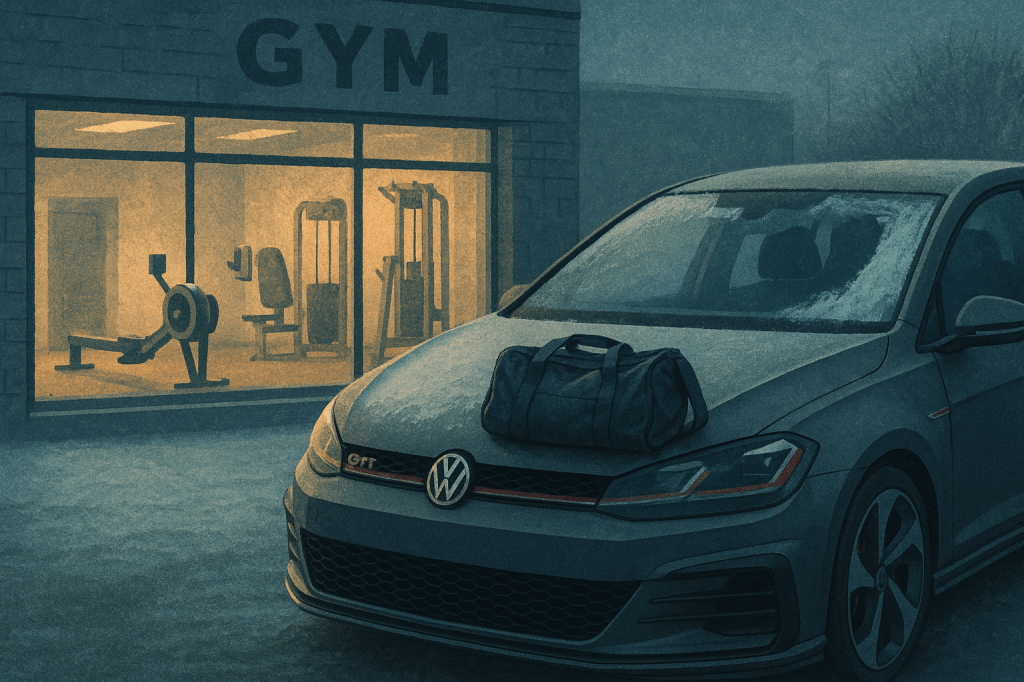
    There was ice on the car. The heating was on in the house. Everyone else was warm and cosy. It would have been very easy to stay in bed, put something on the TV and write the whole morning off as “rest.”

    Instead, I scraped the ice off the car, put my gym gear on and went.

    Same routine as the last few days: I took my WHOOP scores and fed them into ChatGPT. Recovery, strain, sleep, stress, all of it. This time the response was different. Instead of another rowing session, it came back with a strength and conditioning workout.

    The plan was very specific. Exact machines. Exact reps. Exact weights.

    There was only one problem. The weights it suggested were based on the numbers from a couple of months ago, pre-surgery, when I was training regularly and feeling stronger. I am not quite there yet.

    So I asked the obvious question: are you sure about those weights, given that we have not done this in a while?

    To its credit, Coach GPT backed off. It lowered the recommended loads to something more realistic, and in the end they felt pretty much perfect. Hard work, but not stupid.

    There was another small win before I even started. On Thursday I had left my heel wedges at the gym. I assumed they were gone. When I walked in this morning, the receptionist handed them back. Someone had found them and turned them in. A tiny thing, but it felt like a good sign.

    Session done, I finished on the rower with two 250 metre sprints. The first one was fast but messy. I got a bit carried away, my wedges slipped and my feet came out of the shoes with about 18 metres left. Almost there, not quite. The second sprint was much more controlled.

    I am counting all of this as prototyping for the wedges. When the rower finally arrives at home, I want that setup dialled in so I can just strap in and go.

    Right now the car thermometer says minus 0.5°C. It is still cold, but I feel great. I have a solid session in the bag, I am not wrecked, and the next job is to go home, rouse the rest of the house and get everyone out for a walk around the lake.

    Training done. Family next. A good Sunday.

    Another good session logged. This is The Sub-7 Experiment. And it continues.

  • Trusting the Data on a ‘Meh’ Day

    I have just come out of the gym after my first proper session in a while. Last week was a family trip to London, which was brilliant, but it knocked me out of my routine.

    This morning was one of those days where I really did not fancy going at all. WHOOP had my recovery in the yellow. Sleep was fine, stress and strain yesterday were nothing dramatic, but I still felt flat. It would have been very easy to decide that today was not a gym day and leave it at that.

    Instead, I tried the new approach I have been talking about. I took my WHOOP numbers and dropped them into ChatGPT. In return, I got a clear session plan with target figures that matched how my body was supposed to feel on a “medium” day.

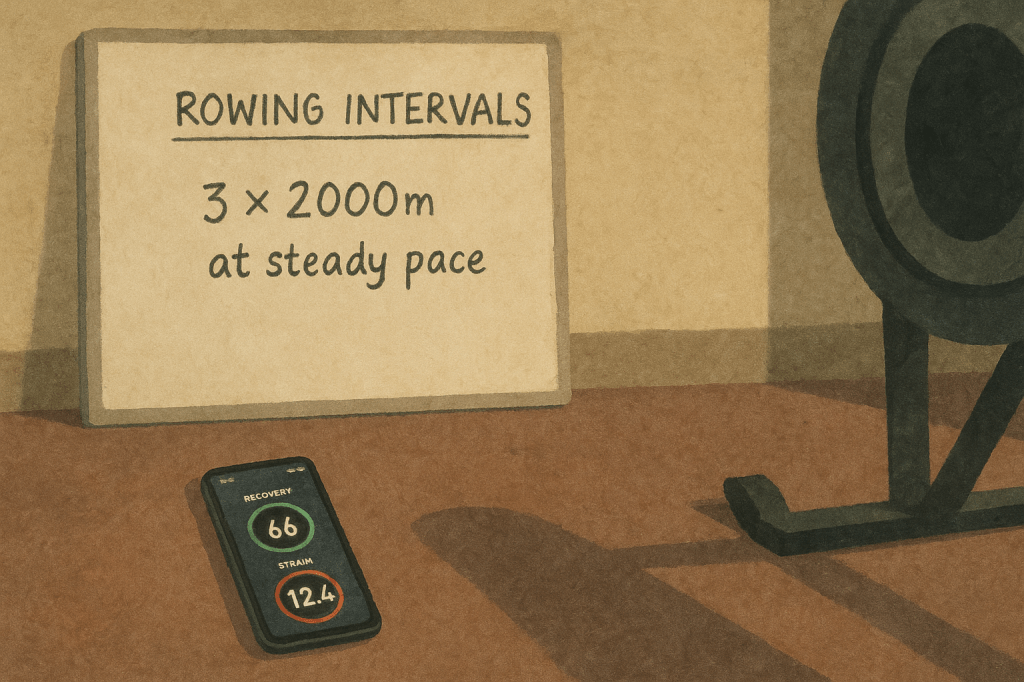
    The structure was simple. Five minutes of warm up at a set pace to get moving. Then three blocks of 2,000 metres on the rower, again at a set pace. Nothing heroic. Just long, steady, repeatable work.

    On paper it looked almost too easy, especially with that “you should probably train” yellow score. In reality it was exactly what I needed. Each 2,000 metres felt long and cruisy. Hard enough that I knew I was doing something, nowhere near the point of blowing up. By the end of the third block I felt like I had trained, but I did not feel broken.

    The bigger difference was in my head. I walked into the gym tired and not really in the mood. I walked out feeling lighter and quietly pleased with myself. The combination of WHOOP data and ChatGPT as coach gave me just enough structure to get over the hump of not wanting to start.

    It is early days for this experiment, but right now it has promise. If this is what a “didn’t want to go” day can look like, I am curious to see what happens on the days when I actually feel ready.

    This is The Sub-7 Experiment.

  • Rebuilding From the Heels Up

    July is over, and it was great to take a proper break, from tracking, measuring, and pushing. I didn’t count calories. I didn’t obsess over numbers. I just moved, ate well, and let things settle for a bit. And honestly, it was exactly what I needed.

    One of the biggest gifts of that downtime was the space to finally listen to my body, specifically, my right knee.

    The Knee

    For the past couple of months, I’ve had a nagging pain at the front of my right knee, especially after big rowing sessions. And I’ve just been ignoring it. Powering through. But July gave me the breathing room to pay attention, and to realise that I’ve probably been rowing wrong.

    If you’ve ever looked at the footplate on a rowing machine, there’s a movable part to adjust for foot length, a strap that goes across the widest part of your foot (for me, that’s the ball), a heel strap, and a raised piece that runs from the ball to under the toes.

    Every book and coach will tell you: push through the heels.

    But I wasn’t. I was pushing through my toes, without realising it. And that toe-heavy drive has been putting way too much pressure on the front of my knee. Now it makes sense.

    Relearning the Stroke

    So now, I’m retraining. Rewiring. Rebuilding.

    I’ve added heel wedges to the footplate to help me stay connected through the back of the foot. It feels completely alien. Like trying to walk only on your heels without ever rolling through your toes. It’s weird, disconnected, and it robs you of power.

    But it’s also starting to feel more right.

    Over the last few sessions I’ve been rowing with the power curve on display, focusing purely on form. And I think I’m starting to feel a bit of a breakthrough. My stroke feels a bit more connected. A bit more glute-driven. Like I’m finally pushing through the right muscles.

    I’m nowhere near breaking the 7-minute barrier right now, but I’m not starting from zero either. I’ve got a solid engine under the hood. This is about tuning it, making it run better, stronger, and more efficiently.

    The Bike

    On the cycling front, things are going well. The distances are creeping up, and I managed a solid 86km ride at the weekend with over 1,200 metres of climbing. That’s all prep for the 150km ride coming up in seven weeks.

    So yeah, July gave me space.
    And now August gives me the opportunity to build again, smarter this time.

    It might look a little different from before.
    But different might just be the thing that gets me there.

    This is The Sub-7 Experiment.

  • Between the Jiggly Bits and the Split Times

    I’m off on holiday tomorrow, and recently I’ve been disappointed with my shape. I mentioned it in an earlier blog, after all the hard work in the gym and the kitchen, I’d hoped I would look different from how I do.

    I can see my arms and shoulders are bigger and more muscular, but it’s my midriff that still looks much the same. Certainly when I stand in front of the mirror and jump up and down, I’m jiggling in areas I’d hoped would jiggle less. It’s harder to shift the jiggly bits as you get older.

    Even though I can now fit into clothes that were way too tight six months ago, I still feel it isn’t quite enough. But honestly, I’m so far from where I was when I started this. And that’s what really matters.

    Today I decided to do a 2K test. Just out of curiosity more than anything.

    The last month or so has mainly been strength training, with rowing as a warm-up and finisher. My main efforts have been rowing-focused weights. And very enjoyable it has been too.

    So today I strapped in, told ChatGPT what the plan was, and asked for a warm-up and pacing notes.

    The warm-up was thorough and took nearly 20 minutes. Then the test began.

    I was more controlled in the first 250 metres than last time, I could feel the practice of not going out too hard paying off, and it felt great.

    500 metres came and went, and I was still pulling well, still on target pace.

    At 1,000 metres, a voice in my head said, loudly, “You know what, you’re not going to make it. Might as well stop here at 1,000. Who’s going to know?”

    Well. I will. Me. The person who’s been turning up every day while you’ve been skiving off and lazing around. So shut up and let me get on with it.

    And I did get on with it.

    1,500 metres came and went. The pace was slowing, still okay, but definitely fading. Then with 300 to go, another voice came in. A more confident one, almost alien. It said, “Keep going. You can do a 7:15. Let’s go!”

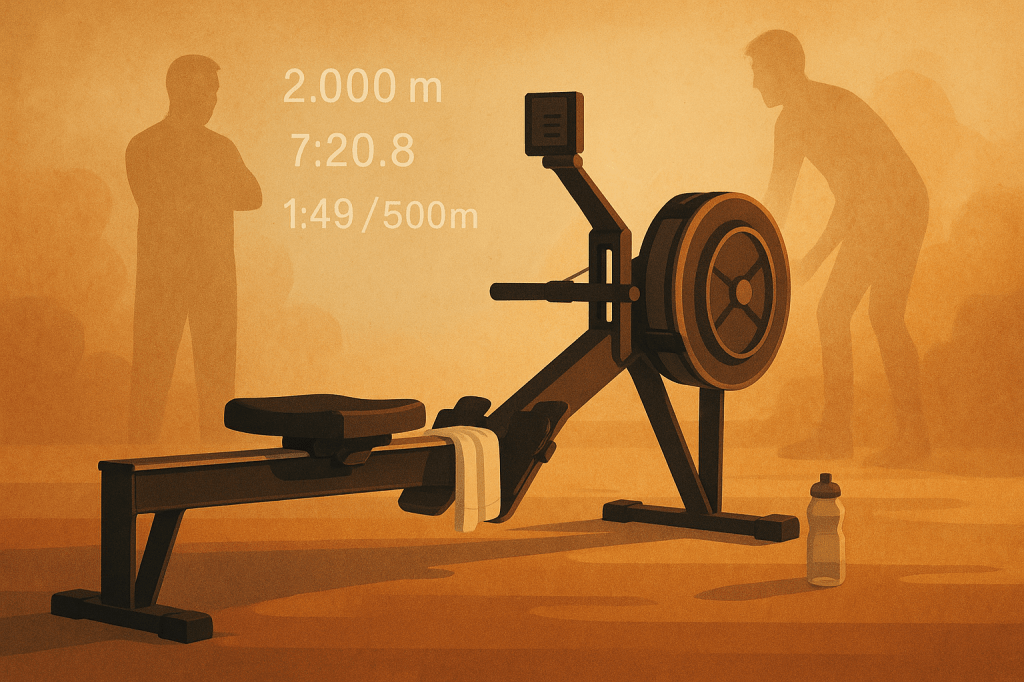
    At that point there wasn’t much left. My form was slipping. So I brought it back in line, dug in, and finished at 7:20.8.

    Two and a half seconds faster than last time.

    It wasn’t the ten-plus second leap I achieved in the previous test, but I’m still delighted with it.

    The learning from this training block is that weights alone won’t get me to the sub-7 2K, and neither will just rowing. The next block needs to be a mix of both disciplines.

    Holiday starts tomorrow. There’s a gym close by to help me stay grounded and present.

    Thanks for reading.

    This is The Sub-7 Experiment.

  • The Sub-7 Experiment: What I Didn’t See Coming

    When I first started this Sub-7 Experiment, the plan was simple, if ambitious: see if modern AI could help me train for and achieve a sub-7-minute 2,000-meter row on the erg. And that’s still the main goal. I still feel the need for progressive overload, for pushing myself, for having a clear target that gets me to the gym.

    But something else happened along the way. Something deeper. The experiment has evolved into much more than just a number on a screen. It’s become an unexpected anchor in my life, bringing with it a whole host of perks I never anticipated.


    Movement as a Mental Reset

    Initially, the goal was physical fitness, changing shape for a holiday. But quickly, I realised something else was at play. Movement, especially rowing, became my mental anchor. I’ve come to rely on it as a mental health row or a head leveller.

    When my head’s all over the place, after a long work drive or in the middle of something stressful, going to the gym isn’t just physical. It clears the fog. Even a walk in the woods on the way home from a tough meeting now brings me back to myself.

    ChatGPT, my digital coach, has helped me see these shifts more clearly. It often points out the real wins I’d otherwise miss.


    Busting the “Lazy” Myth

    For a long time, I called myself “inherently lazy.” It’s a story I’ve told myself for years. But this experiment has quietly dismantled that.

    I now know I’m consistent. Not just when it’s convenient, but when I’m tired, travelling for work, feeling flat, or battling the inner critic. The gym has gone from “something I should do” to “something I need.” It’s no longer about guilt. It’s about feeling right. That shift in motivation is huge.


    The Evolution of Identity

    The biggest surprise? A shift in how I see myself.

    I’ve lived with impostor syndrome for years, always asking: “Am I really this person?” But by showing up, pushing through, and reflecting, I’ve realised, yes, I am. And I deserve to be.

    It’s not about perfect sessions. It’s about making the average ones count. That’s the real change. I’m becoming comfortable with this version of me. I’ve never said that before. And that kind of self-acceptance is worth more than any split time.


    Beyond the Gym: Life Benefits

    The habits built in this experiment are bleeding into other areas of life.

    I’ve learned to set boundaries, like leaving my work phone in the car during walks. It means I show up properly at home instead of still being “at the office in my head.”

    I’m more mindful of hydration and how it affects mental clarity. And even though the scale doesn’t always move the way I want, I’m fitting into old clothes. I feel stronger, fitter, even if my body image takes time to catch up to reality. That reminds me: health isn’t a number. It’s how you feel in your skin.

    ChatGPT’s flexibility has been a game-changer too. When my shoulder’s acting up, or recovery’s low, or my mood’s off, the plan adapts. And that means I stay consistent, avoid injury, and keep moving. It’s about training smart, not stubborn.


    This is still the Sub-7 Experiment.
    But it’s about much more than rowing.

    It’s a framework for handling life. A journey of self-discovery.
    And a reminder that consistent, intentional movement can anchor you in a messy world.

  • Monday Progress and the Power of Consistency

    It’s Monday, and I woke up looking forward to going to the gym.

    I could still feel the weekend’s row and heavy sled session in my shoulders, but I had a feeling a good workout would loosen things up, and it did.

    I asked ChatGPT for a session, and it gave me the same one as last time. That threw me a little. I voiced concern about repeating the same structure too often, worrying that boredom might creep in, that I’d lose interest. But the response was simple and sound: consistency is key.

    I’ve read that before, and now I’m starting to understand it. Consistency builds form. Builds strength. It all stacks up. And it’s all moving me toward the real goal: breaking 7 minutes over 2000 meters on the rower.

    So, I did the session. Started with a 2000-meter warm-up row, moved into a full circuit on the weight machines, added sled work and core training.

    This time, I nudged a few weights up, nothing dramatic, a kilo here, five there, just enough for that subtle progressive overload. Enough for it to feel like I was working.

    I finished with two 250-meter sprints on the rower, both at speeds I used to dream about, which is very pleasing but what I also noticed as what used to be a stretch pace is now my warm-up and cooldown zone.

    The whole session felt strong, controlled, and satisfying.

    When I got home, I bought myself a couple of new t-shirts. The description said they’re cut to show off the arms and chest, but a bit kinder to the middle. A little vanity? Maybe. But also a reward. If I like them, I’ll wear them with pride. And if I don’t, no harm, they’ll sit quietly in the cupboard.

    This is The Sub-7 Experiment.