Tag: endurance

  • Never Race a Stranger in a Hotel Gym

    11 years ago this weekend I rode 100km in one day on my bike.

    It was the furthest I’d ever ridden and it was the first organised ride I’d ever completed. My mate Rich and I set out to do it together and it was a great day out.

    One thing that has stuck with me since that day was cycling next to an old boy who, to my untrained eye, could have been 70 years old. He looked like he’d stacked up a lot of experience in his time, and he was riding a Pinarello Dogma. For the uninitiated, that’s basically a superbike. Think Koenigsegg or McLaren. Probably the finest bike money could buy at the time.

    This old boy was cruising along. Not in a hurry, not even looking like he was breaking a sweat. Me and Rich were keeping up with him fine. There was a decent-sized group and we were all moving along the flat at around the same pace.

    Then we came to a hill.

    There was lots of downshifting and lots of effort as we started to climb… except for the old boy. He seemed to put in the exact same effort as he had on the flat and just glided away up the hill like it didn’t exist.

    Rich and I still talk about that. And that older gentleman is my inspiration for what I’m doing now. I want to be 75 and still riding my bike up hills like they’re not there. I still want to be able to sit on a rowing machine and go well for 60 minutes at a time. And I’d like to be doing it with my mate Rich.

    This weekend I had a little moment of my own.

    We were away as a family in a hotel in Kilkenny and I decided to go to the gym for a row. We’d already used the pool earlier in the day and I thought a spin on the rower would be a good way to finish off a day of walking around town.

    The row was great, although the machine was a bit old and graunchy. It really made me appreciate how lucky I am to have my own Concept2 in the shed.

    There was a group of younger lads in there, twenty-somethings, and I could see them clocking me. I was cruising along, 22 spm, controlled. They kept looking over and I could tell I’d become a bit of a “thing” for them.

    Then one of them strutted up to the rower next to me, made a big show of sitting down and strapping in, while his mates watched… and he went for it.

    Like a demon. Straight into 35 spm, out of control. On those big Technogym screens you can see everything, and I did just enough to stay ahead of him on speed and watts while keeping it at 22 spm.

    He tried and tried but couldn’t get in front.

    After a while he got more serious, tried to find a rhythm, started increasing his overall speed… and at that point I dropped my stroke rate to 19 spm and just pulled harder. The display showed 220 watts sustained for about three minutes at around 1:55 pace and he still couldn’t get near me.

    When he hit 1000 metres he stopped, got off, and went back to his mates shaking his head.

    And I loved it…!!!

    Hollow victory? Maybe. Should I know better? Definitely.

    But the moral of the story is this: watch out for the old dudes on the rower. They are quite likely to kick your ass.

    This is The Sub-7 Experiment.

  • A New Coach in the Room

    It feels like I have a new coach.
    You might remember that I’ve been asking ChatGPT to prepare workouts and coaching advice to help me row 2,000 metres in under seven minutes. That is the whole point of The Sub-7 Experiment. Can I use AI to help me achieve a fitness goal.

    When I first tried this, the model available to me was GPT 4.0 and it was good. I set up the role, gave it the context, kept the conversation alive, and each day I told it how I was feeling. It responded with the workout for that day. That simple rhythm worked well.

    Then 4.1 came along. The improvements were small but noticeable. It held context better, got confused less often, and could handle my slightly lazy and vague questions more easily. As with most tech, each release pushed things forward.

    Earlier this year GPT 5.0 arrived with a huge amount of hype. It was supposed to push ChatGPT into a whole new league. PhD-level reasoning. Better accuracy. A genuine step up.

    The reality was mixed.
    Yes, it produced better code for a different project I was working on. Yes, it had more “thinking” capacity and could reason more deeply without me having to explicitly tell it to think. That part was a massive improvement.

    But as a conversationalist it was a step backwards.
    It forgot things. It lost context. It got confused about tasks. The backlash was so strong that OpenAI reinstated version 4.1 as a choice because so many people preferred to keep using it. It felt like my coach had left the building.

    I worked around it with careful prompting, but it was frustrating. The Sub-7 Experiment relies on continuity and rhythm, and something was always slipping.

    Which is why it now feels like I have a new coach. GPT 5.1 has arrived and it feels different in a very good way. The tone is consistent. The help it offers is actually useful. It anticipates the next step instead of fumbling it. It feels like an upgrade in the true sense of the word.

    Let me explain why this matters.

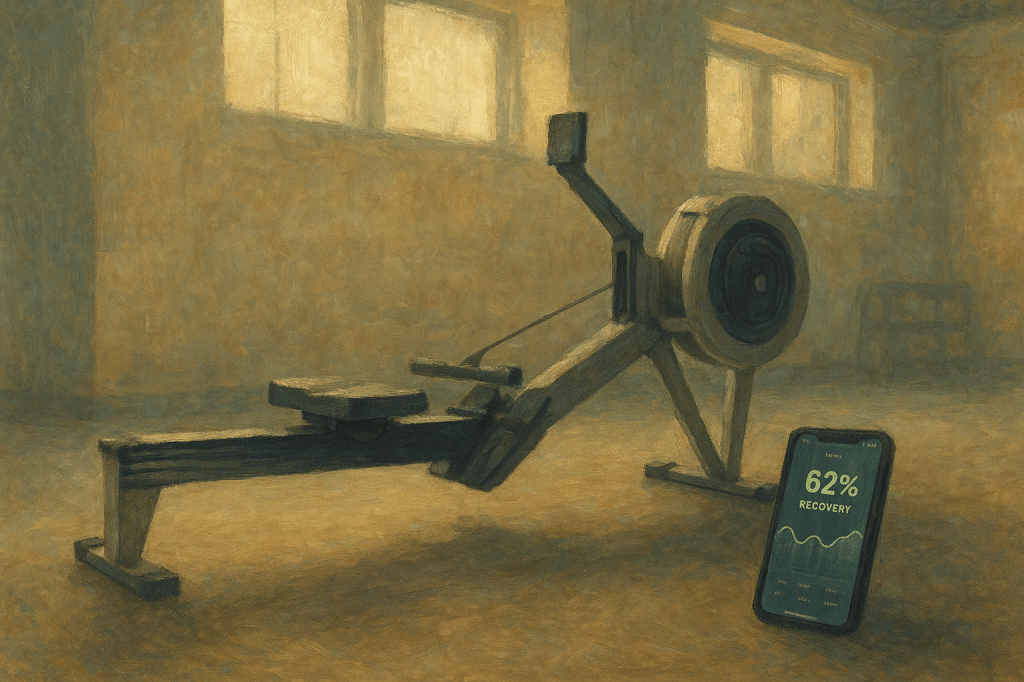
    I have a WHOOP device and I’ve used it for almost two years. Before ChatGPT became part of my training, WHOOP was my only guide. It sits on my wrist and picks up all sorts of measurements: heart rate, skin temperature, strain, sleep quality and plenty more.
    Every morning the app shows three dials. Yesterday’s strain, today’s recovery level, and last night’s sleep. When you start a workout you tell WHOOP what you’re doing and it gives you a target strain. When you hit it, the band vibrates and tells you to stop. Simple. Clever. And it worked well.

    But in the last few months I’ve been questioning the value.
    The subscription model has changed. The promise of free device upgrades for active subscribers has been replaced by an “uplift fee”. My renewal is in February and it will cost a lot more to keep going into my third year. And that makes me ask what I actually need it for.

    Most of the data WHOOP collects I don’t really use. I know how well I slept because I was there. What I actually value is recovery guidance and strain targets. And there are other devices out there that do similar things for a simple one-off cost. Polar Loop is one I’m looking at seriously.

    So I turned to ChatGPT 5.1 for help. Reviews. Recommendations. Thoughts based on my training. And one of the threads pointed out something obvious: I have not been using most of WHOOP’s data anyway. Not deeply. And the only thing that truly matters is the workout planning, which comes from CoachGPT.

    I asked if there was any way for ChatGPT to access WHOOP data directly. It said no, the APIs are not available yet. But then it made the suggestion that genuinely impressed me.

    It told me exactly which two screens in the WHOOP app to screenshot each morning. It told me to upload them, and it would analyse everything it needed: recovery, sleep, strain, HRV, and readiness. It would then produce a fully tailored workout for that day. And if it thinks I need a rest day, it will tell me that too.

    I have used this new process for the last few days and it is genuinely brilliant.
    Two screenshots. Upload. Instant plan. Clear reasoning. Exactly what it expects from me. Exactly what to avoid. Exactly how hard to push.

    And it works.
    The coaching is better.
    The structure is better.
    The whole system feels like something new.

    Well done, ChatGPT 5.1.
    This is The Sub-7 Experiment.
    Recovering using structured data.
  • A Tough Day Out, but I’m Glad I Did It

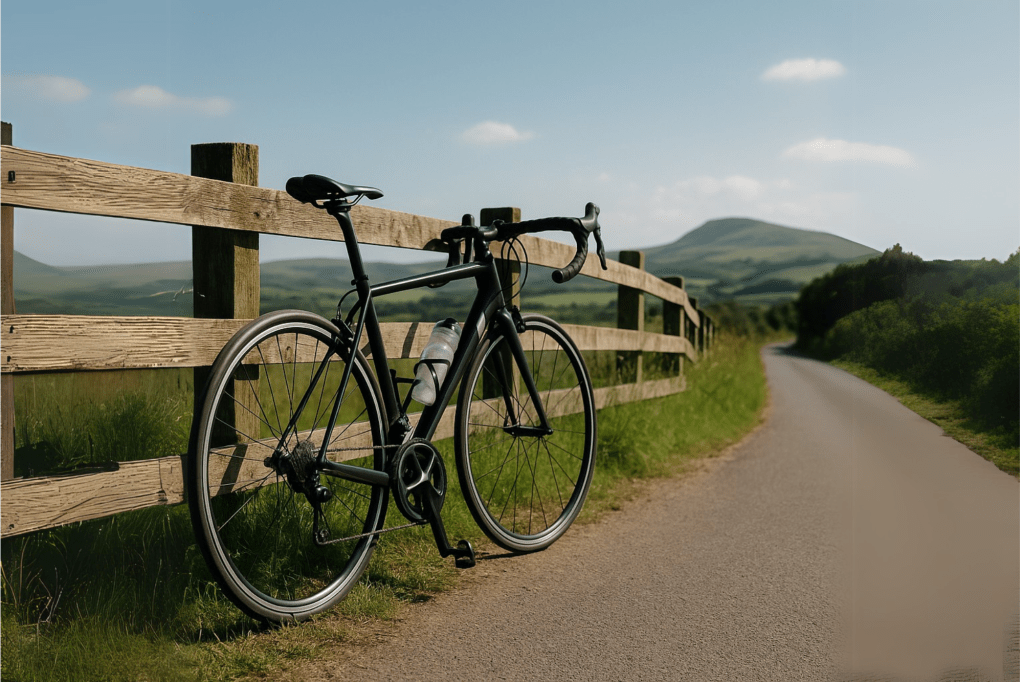
    Just back from a tough but rewarding ride; 75km out and back, with 1,220 meters of climbing. No loops, no shortcuts, just there and back, with a headwind all the way home. It was tougher than I remembered: the kind of ride that demands your full attention, your legs, and most of your patience.

    What made a real difference this time was the fueling. I spent yesterday making banana flapjacks and cheesy eggy rice cakes (shout-out to ChatGPT for the recipes and fuelling strategy). They worked. I didn’t feel nearly as wrecked as I normally do on a ride like this. I still had something left at the end. I probably could’ve used more water, but I stopped about two-thirds through yo top up my bottles and to see me home.

    The legs are well and truly cooked now, but in that good, earned way. Possibly not helped by Thursday’s 135kg leg presses, probably not the smartest prep, but lesson learned.

    This was my longest ride of the year, and while it wasn’t easy, I’m pleased with it. There’s satisfaction in pushing through, seeing that distance logged, and knowing you got it done.

    So that’s today’s entry in the Sub-7 Experiment—which, as I keep discovering, is about far more than rowing. It’s about effort. Growth. Trying. Failing. Learning. And showing up again tomorrow.