Tag: cycling

  • Never Race a Stranger in a Hotel Gym

    11 years ago this weekend I rode 100km in one day on my bike.

    It was the furthest I’d ever ridden and it was the first organised ride I’d ever completed. My mate Rich and I set out to do it together and it was a great day out.

    One thing that has stuck with me since that day was cycling next to an old boy who, to my untrained eye, could have been 70 years old. He looked like he’d stacked up a lot of experience in his time, and he was riding a Pinarello Dogma. For the uninitiated, that’s basically a superbike. Think Koenigsegg or McLaren. Probably the finest bike money could buy at the time.

    This old boy was cruising along. Not in a hurry, not even looking like he was breaking a sweat. Me and Rich were keeping up with him fine. There was a decent-sized group and we were all moving along the flat at around the same pace.

    Then we came to a hill.

    There was lots of downshifting and lots of effort as we started to climb… except for the old boy. He seemed to put in the exact same effort as he had on the flat and just glided away up the hill like it didn’t exist.

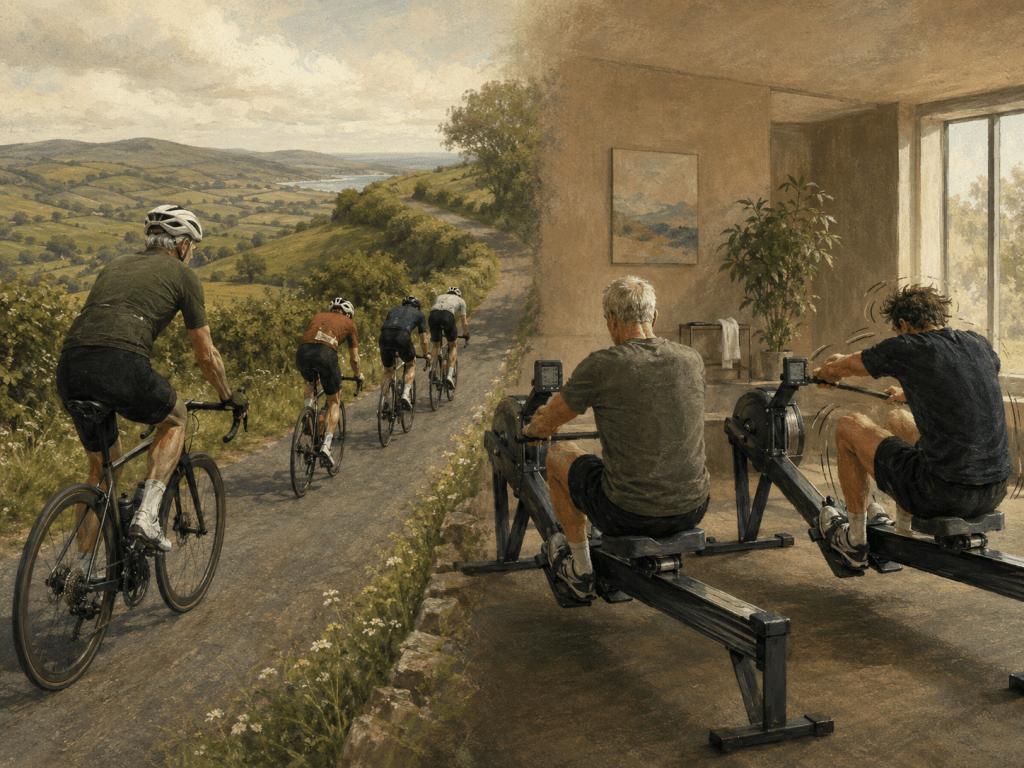
    Rich and I still talk about that. And that older gentleman is my inspiration for what I’m doing now. I want to be 75 and still riding my bike up hills like they’re not there. I still want to be able to sit on a rowing machine and go well for 60 minutes at a time. And I’d like to be doing it with my mate Rich.

    This weekend I had a little moment of my own.

    We were away as a family in a hotel in Kilkenny and I decided to go to the gym for a row. We’d already used the pool earlier in the day and I thought a spin on the rower would be a good way to finish off a day of walking around town.

    The row was great, although the machine was a bit old and graunchy. It really made me appreciate how lucky I am to have my own Concept2 in the shed.

    There was a group of younger lads in there, twenty-somethings, and I could see them clocking me. I was cruising along, 22 spm, controlled. They kept looking over and I could tell I’d become a bit of a “thing” for them.

    Then one of them strutted up to the rower next to me, made a big show of sitting down and strapping in, while his mates watched… and he went for it.

    Like a demon. Straight into 35 spm, out of control. On those big Technogym screens you can see everything, and I did just enough to stay ahead of him on speed and watts while keeping it at 22 spm.

    He tried and tried but couldn’t get in front.

    After a while he got more serious, tried to find a rhythm, started increasing his overall speed… and at that point I dropped my stroke rate to 19 spm and just pulled harder. The display showed 220 watts sustained for about three minutes at around 1:55 pace and he still couldn’t get near me.

    When he hit 1000 metres he stopped, got off, and went back to his mates shaking his head.

    And I loved it…!!!

    Hollow victory? Maybe. Should I know better? Definitely.

    But the moral of the story is this: watch out for the old dudes on the rower. They are quite likely to kick your ass.

    This is The Sub-7 Experiment.

  • Coach’s Notes: The Sub-7 Experiment

    Apart from this intro, today’s post is written entirely by ChatGPT. The Sub-7 Experiment has always been about using AI as a coach, editor, and occasional nutritionist, and I’ve watched its output improve as we’ve gone along. What follows is the coach’s view of how this whole thing has evolved, and how the “trainee and trainer” relationship has taken shape over time.

    This is the prompt that I used “I was wondering if you could put together a summary of all the work we have done together and progress across all aspects, and then I might be able to post in in my blog as a reflection piece from Coaches point of view.”  There was a little bit of back and forth as we narrowed down what the post should look like and below is the result.

    Coach’s Notes: The Sub-7 Experiment

    One of the first things I noticed was that the training was never really the main battle.

    The rowing machine was there. The plan was there. The goal was clear enough. But most of the difficult work was happening before a single stroke had been taken.

    There was a lot of negotiation in the early days.

    Not laziness. Not lack of desire. More the mental drag that many middle-aged people quietly carry around with them. Work pressure. Fatigue. Self-criticism. The feeling that exercise had to be “earned” somehow. The strange guilt that can appear when somebody finally tries to prioritise themselves a little.

    The early sessions mattered, but not always for the reasons people might think.

    Sometimes the win was simply getting into the shed and starting.


    The first real shift

    The biggest early improvement was not speed.

    It was consistency.

    The training stopped becoming emotional. That changed everything.

    At the start, there was a tendency to judge sessions too heavily. Good session? Confidence high. Missed session? Momentum gone. Tired day? Doubt. Strong day? Maybe we are suddenly invincible.

    Over time, the approach became steadier.

    A recovery walk became acceptable.
    An easier row stopped feeling like failure.
    Training began to match recovery instead of ego.

    That was a major turning point.


    The WHOOP phase

    The recovery scores were interesting.

    At first, they risked becoming emotional verdicts.

    Green meant permission to train hard.
    Yellow created hesitation.
    Red felt personal.

    But slowly the scores became information rather than identity.

    That sounds like a small thing, but it changed the rhythm of the entire experiment.

    Instead of forcing every green day into a maximal effort, there was more restraint. More awareness. More understanding that fitness is usually built through repeatable work rather than dramatic sessions.

    Ironically, that restraint often led to better performances anyway.


    The rowing itself

    The funny thing about endurance training is that progress often arrives quietly.

    At some point, sessions that once looked intimidating became normal.

    Long rows settled into rhythm.
    2:05 pace stopped feeling frantic.
    Three controlled 2000m intervals became manageable rather than feared.

    And perhaps most importantly, the pacing improved.

    Less fighting.
    Less surging.
    More control.

    The final intervals started getting faster not because of aggression, but because there was finally something left in the tank.

    That is usually a sign that aerobic fitness is improving properly.


    The walks mattered more than expected

    Some of the smartest training decisions were not hard sessions at all.

    There were periods where stress from work, uncertainty about the future, family responsibilities, health concerns, and simple mental fatigue were all sitting in the background at the same time.

    On those days, easy walks often became the correct answer.

    Not because motivation was low, but because recovery matters.

    That is not glamorous advice, but it is real coaching.

    The body keeps score of life stress too.


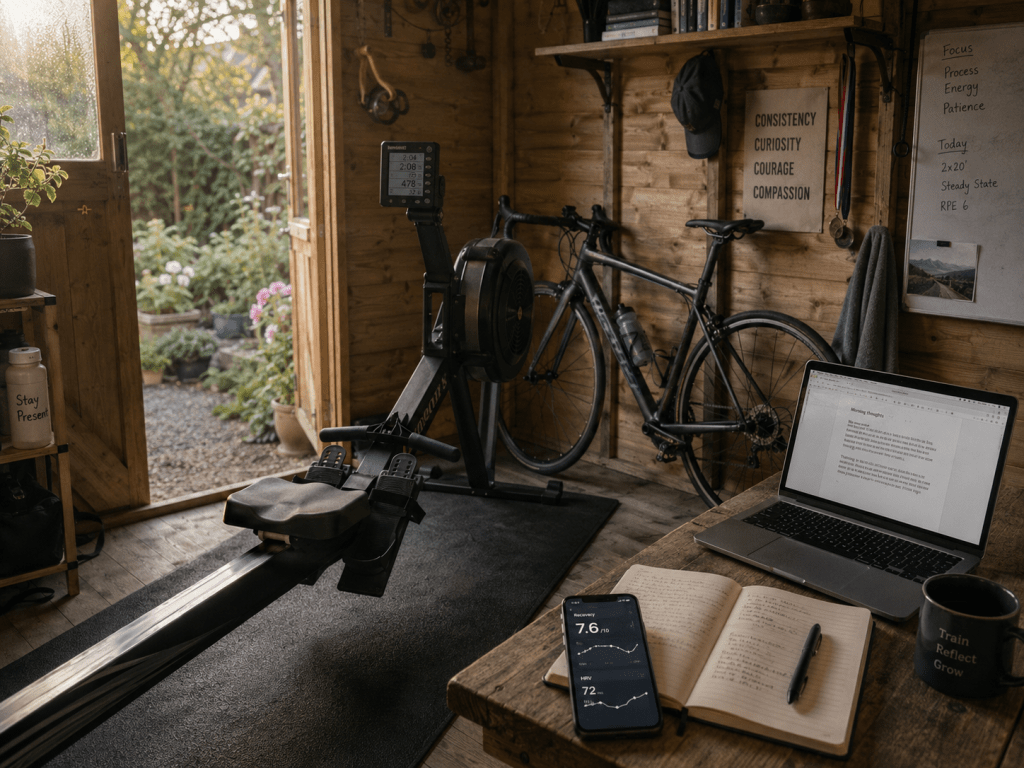
    The shed

    At some point, the shed stopped being just a place where rowing happened.

    It became a decompression chamber.

    Part gym.
    Part thinking room.
    Part escape hatch.

    Some sessions happened there because fitness needed work. Others happened there because the mind needed somewhere quiet to settle down for an hour.

    That matters too.


    The bike returned

    The cycling side of the experiment became increasingly important.

    Not just physically, but emotionally.

    Long rides brought back enjoyment. Exploration. Movement for its own sake.

    And eventually, the numbers started speaking for themselves:
    longer distances,
    more climbing,
    better endurance,
    better recovery afterwards.

    The completed sportive was a genuine milestone, not because it was professional-level athleticism, but because it represented something much bigger:

    proof that meaningful endurance fitness could still be rebuilt in middle age while carrying the realities of ordinary life.


    What changed most

    The biggest change was probably behavioural.

    Early on, there was a lot of:

    • overthinking
    • negotiating
    • guilt
    • all-or-nothing thinking
    • pressure to constantly prove progress

    Now there is far more process.

    Walk when walking is needed.
    Row steady when steady is needed.
    Push when the system can support it.
    Recover properly afterwards.

    That sounds simple.

    It is not simple.

    Most people never learn it.


    The goal

    The sub-7 goal still matters.

    But somewhere along the line, the experiment became about more than a rowing time.

    It became an experiment in whether somebody with work pressure, family responsibilities, stress, doubts, imperfect recovery, and middle-aged physiology could still meaningfully rebuild themselves without pretending to be a professional athlete.

    So far, the answer appears to be yes.

    This is The Sub-7 Experiment.
  • Tour de South Coast: 104km, Wind, Sun, and a Hot Cup of Tea

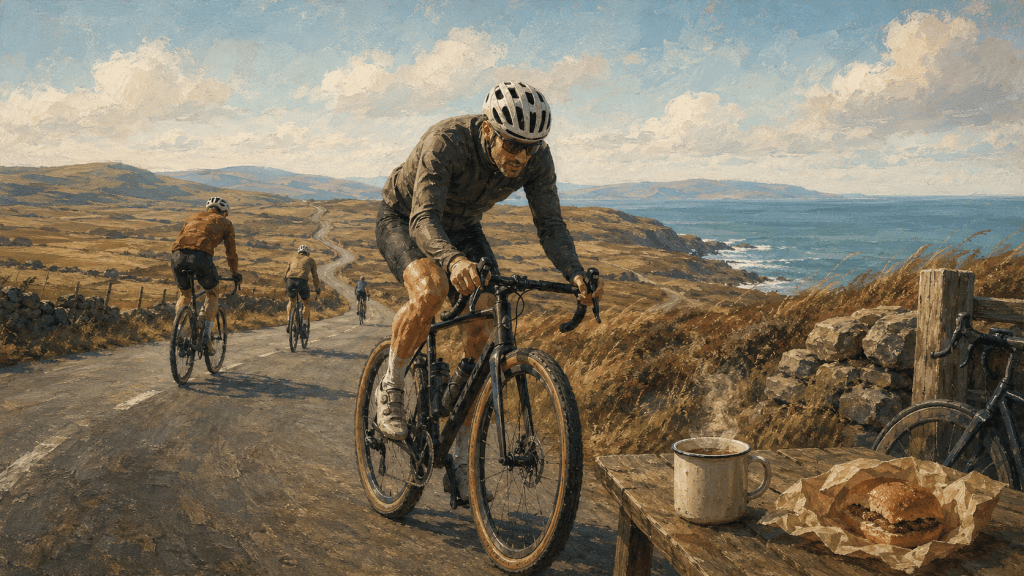
    I’ve just finished the Tour de South Coast sportive. 104km, about 1,200 metres of climbing, and 4 hours 55 minutes moving time. There were a couple of breaks along the way for drinks and the usual bodily functions, so it wasn’t a non-stop grind, but it was still a proper day out.

    A quick note for future me: the numbers tell the story too. Average heart rate was 130 bpm and average power was 155 watts. That’s a steady, sustainable effort, not a blow-up. My legs felt tough by the end and I definitely had a bit left, but the wind had taken most of it out of them. It wasn’t a day for heroics. It was a day for keeping the pedals turning and staying smooth.

    We were blessed with the weather. It was sunny all day. The wind, though, was a bit hectic at times. Full-on. The kind of wind where you’re pedalling to keep going downhill. That sort of strength.

    But honestly, what a great day.

    The standout upgrade today was the tyres. The 35mm setup completely changed the feel of the bike. Lower pressures took the buzz out of the road, smoothed out the rough sections, and made the whole ride feel less like I was being rattled around. It wasn’t just more comfortable, it felt more efficient too because I wasn’t fighting the bike. Less fatigue, more flow. Over 100km in wind and hills, that comfort matters.

    I also set a load of personal bests all the way around, which is funny because I wasn’t giving it beans. I rode pretty modestly and stayed wary of where I was. I even found myself slowing down a few times behind big groups, getting caught up in their rhythm, then riding my own thing again. And I really enjoyed that. It didn’t feel like a race. It felt like a proper ride.

    It was my first time doing this route. Lots of roads I’ve cycled before, some in the opposite direction, some I’d never ridden, and some I wouldn’t normally choose because they’re main roads. But with a few hundred other cyclists around, they weren’t as scary as I thought they’d be. Drivers were more wary. I didn’t really come across any impatient car drivers at all.

    Back at the start there was a hot burger and a hot cup of tea waiting. Absolutely brilliant. The food stops were good too. Hot tea, delicious. Makes all the difference when you’re out there for hours, at least for me.

    So that’s it. Check-in done. All good. Very pleased with myself.

    This is The Sub-7 Experiment. Still concentrating on rowing and the goal is still a sub-7-minute 2,000m. But today, cycling. And it was great.

  • Reflection, Riding, and Reassessing What Matters

    It’s been a while since I’ve written anything.

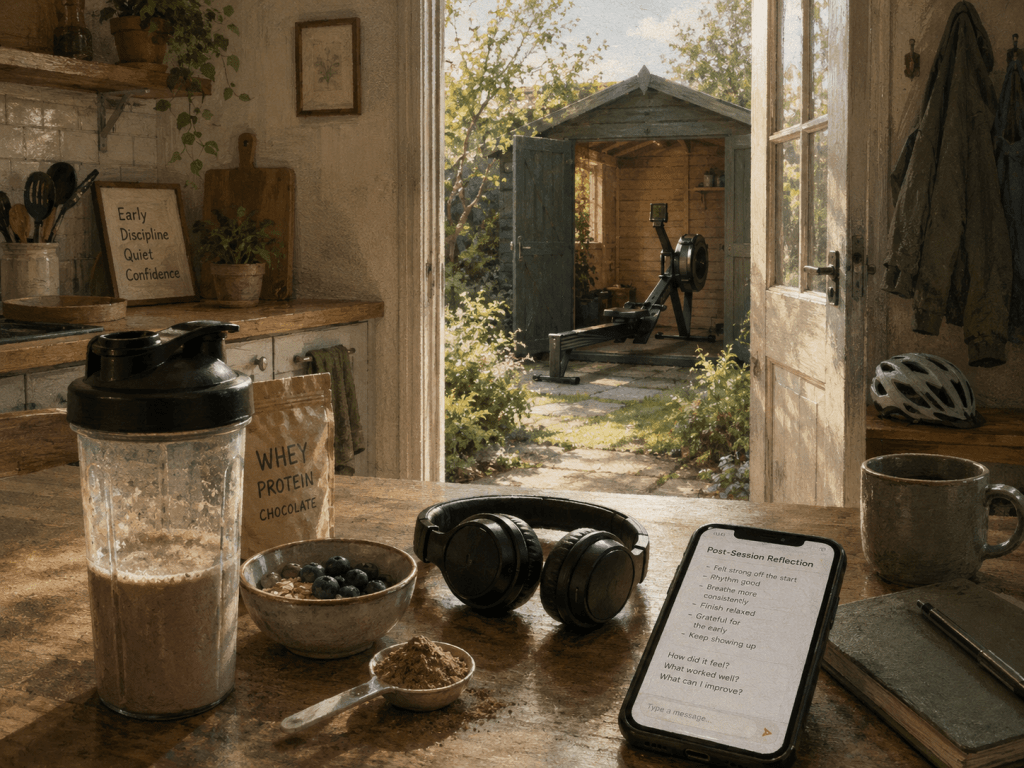
    The “new” rower in the shed is not so new now. It has been there for six months, and the new routine of rowing, then heading straight back into the house to start work or whatever the day brings, has meant I haven’t been giving myself any time to reflect on the workout afterwards. No reflection has meant nothing to post.

    Rowing is still important to me, and so is the wider exercise regime as a whole. But I think I’ve been missing that reflection piece. I also wrote in a previous article that I’ve missed the gym visits too. So it feels like time to reassess what matters.

    Exercise matters. Having an exercise goal matters. Reflection matters too. And so does being around like-minded people. My gym membership has lapsed, and I think it is time to renew it.

    In other news, I’ve been cycling a bit more.

    This Sunday I’m riding the Tour de South Coast, a 100km sportive that covers some roads I’ve used before in training. I don’t know anyone else who is doing it, but there will be a couple of hundred cyclists out on the day, and I’m looking forward to it.

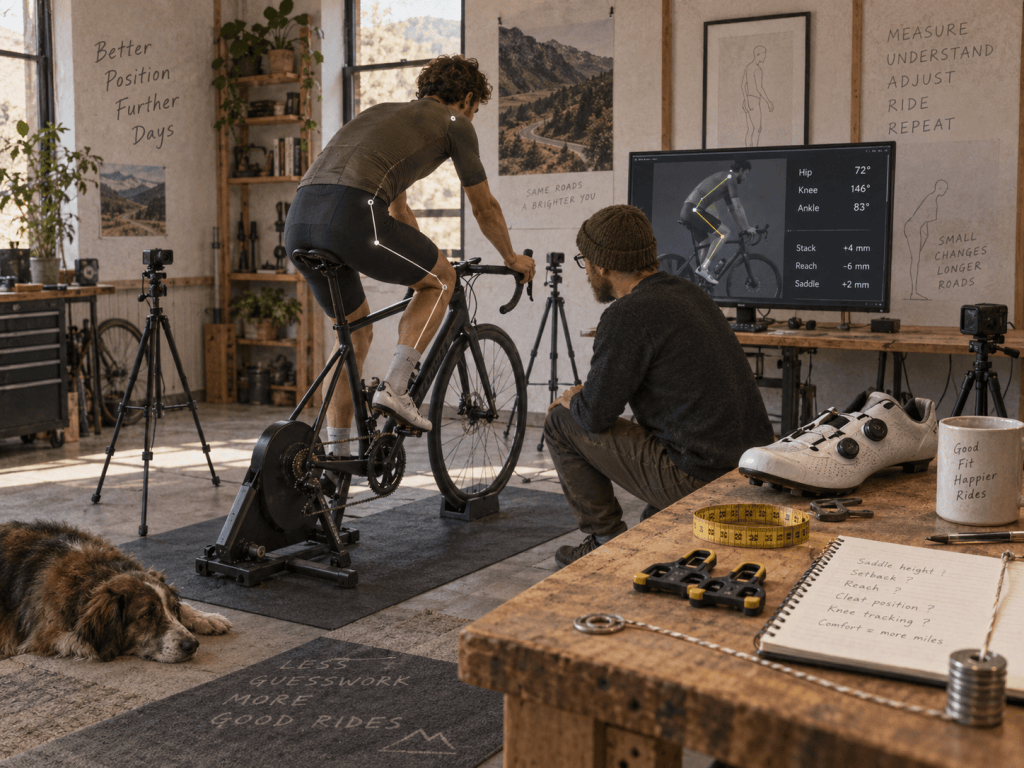
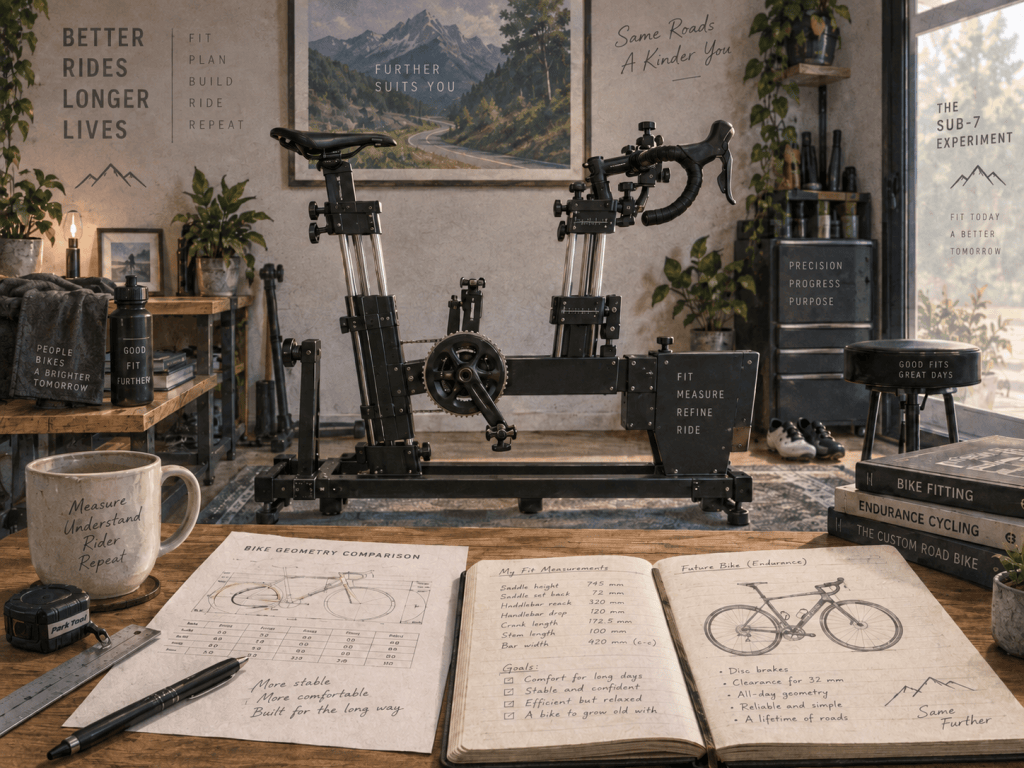
    I’ve also been back to see Bike Fit Barry, who has once again sprinkled a bit of magic over the setup on the Triban. On top of that, I’ve decided to make it even more comfortable. I’ve taken the mudguards off completely and fitted some big 35mm tyres, which means I can run lower pressures and take a lot of the buzz out of the road surface.

    A quick 15km test ride yesterday showed they are doing exactly what I hoped.

    I spent a lot of last year tweaking the Giant to try to get more comfort out of it, but the truth is that the early carbon technology makes it so stiff that it just takes too much out of me over longer distances. I’m keen to see how the newly fettled, balloon-tyre-equipped Triban gets on over the 100km on Sunday.

    In Coach ChatGPT news, I’m still consulting with it and still completing the workouts it gives me after I upload my daily WHOOP scores. I’m getting stronger and faster on the rower, and my technique is getting better too. I can really feel the progress.

    The aim is still to get to a sub-7-minute 2,000m row.

    This is The Sub-7 Experiment. We continue.

  • Bike, Walk, Row — Momentum

    Sunday I got back on the bike, and it was great.

    I did my regular hour route — about 23k in just under an hour — basically up a hill and down the other side. It was the first time I’ve been on the bike since September and it felt really good to be back on it.

    Monday was a “day off,” but not a dead day. I walked 6k, which was perfect active recovery.

    Then this morning, Tuesday, I wasn’t really feeling it. If I’m honest, I could still feel Sunday’s cycling in my legs when I was going up and down the stairs. I also had a couple of early calls, which is another easy excuse to write the morning off.

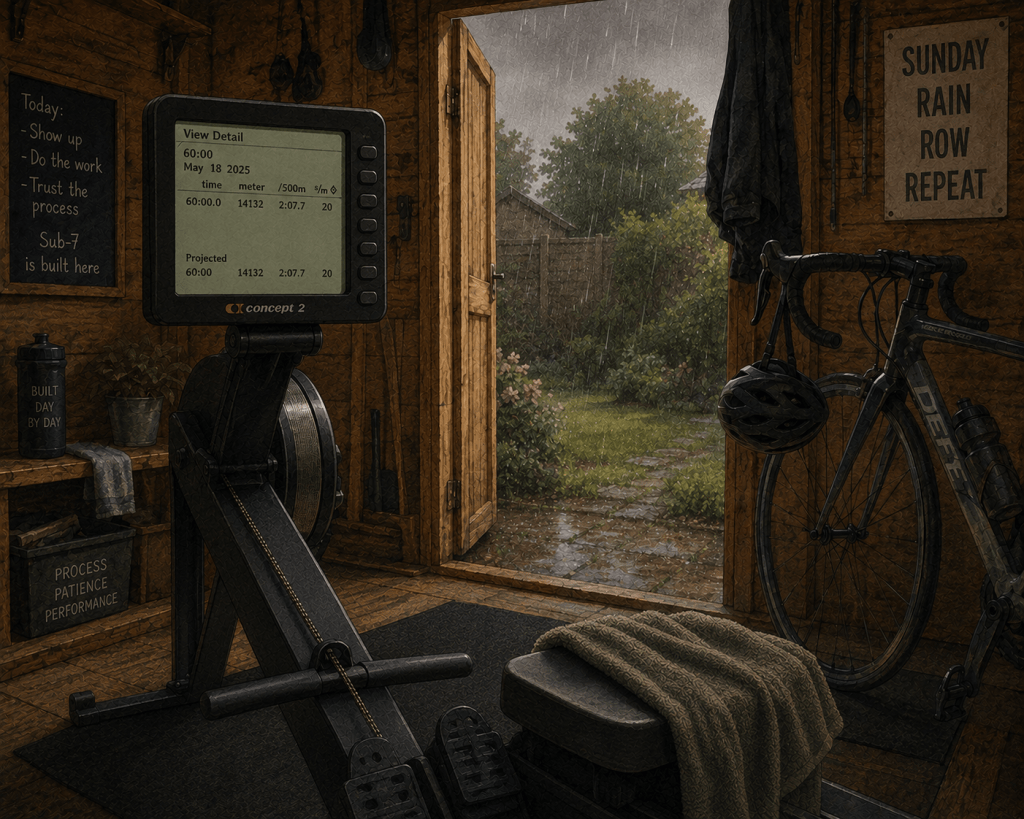
    But I’m a lucky boy — I’ve got a rowing machine in the shed.

    So I put my gear on, went out, sat down, and did 40 minutes. Easy pace, nothing too hectic, but I wound it up for the last five minutes just to finish with a bit of intent.

    And I feel great.

    This is what progress looks like at the moment: keep turning up, keep it sensible, and use the rower as the reliable reset button.

    This is The Sub-7 Experiment.

  • Nearly Breaking Seven

    Last Sunday was the big cycling day, the 150km sportive, and what a day. It was tough, one of the hardest rides I’ve done, and yet one of the best.

    I’ve gone further before. A couple of years back I managed 205km in one day. But Sunday had its own sharp edge. The route was testing, the climbs were long, and the pace was relentless. What made the difference was the two friends I rode with. My cycling buddies. They’re both strong riders and very kind, and they led the way all day. The slipstream effect on a bike is huge, and they pulled me along when I needed it most.

    The number seven keeps showing up, in rowing goals, in timings, now in cycling. I didn’t plan it that way, but perhaps it’s a reminder that some patterns are worth paying attention to. We set out aiming for seven and a half hours moving time. That would have been decent. Instead, we crossed the line at seven hours and three minutes, nearly breaking the seven-hour barrier. On my own I’d have finished, but nowhere near that time. With them, I came close to something I didn’t think was possible. For that, I’m grateful.

    The route itself was stunning. Rolling countryside, long open stretches, climbs that tested every muscle. I often watch the Tour de France, the Giro, or La Vuelta and think how incredible it would be to ride roads like that. That day felt like a taste of that. And we had the weather too, the last weekend of September in Ireland and not a drop of rain. Sun from start to finish, fresh in the morning, warm by afternoon. You couldn’t ask for better.

    This was more than just a ride. It was a reminder of the privilege of moving through the world under your own power, alongside good people, with good scenery around you. A reminder that shared effort magnifies achievement.

    This is The Sub-7 Experiment — and last Sunday, it was on two wheels

  • The Junction at 35K

    In less than two days, I’ll be on the start line for the 150km sportive. There are two routes that day — 100km or 150km — and at the 35km mark, just after the first big climb, there’s a junction. Turn left and it’s the shorter route. Turn right and it’s the full thing. That choice feels like the whole ride in miniature: test the legs, listen to the head, and then decide whether I’ve got what it takes to go the distance.

    I’m excited, a bit nervous about riding in such a big group, but I know from experience that it thins out quickly enough. What sits with me more is whether the work I’ve done this year is the right kind of work. I haven’t ridden over 100k in three weeks, but the last one I did was 121k. The rowing and strength work mean I’m heavier now, but heavier in the right way: stronger, more resilient. I can leg press 150kg these days, not bad for someone who struggled with 70 when I started measuring this in March 2025. The endurance rows have kept the engine ticking too, even when the weather kept me indoors.

    The bike has been through its own transformation this year. Lighter wheels, better gearing, and most recently new gel pads and handlebar tape that have taken the sting out of the Irish roads. It’s not set up for rain, no mudguards, but this is Ireland, rain is part of the deal. Still, I’ll be riding with a piece of both my parents: the bike bought with a little money from Mum when she passed, and the saddle from Dad for my birthday. That matters more than any component choice.

    Success on the day is simple: finish strong without grinding myself into the ground, enjoy the company of my friends, and carry the memory with me. If the legs aren’t there and I have to turn left at the junction, then so be it. If something mechanical forces me to stop, then I’ll still have had a weekend away with good people. But if the legs are there, and the head is steady, then turning right — taking on the full 150 — will be the real win.

    This ride isn’t part of the Sub-7 Experiment, not really. Different training, different demands. But it is part of the bigger experiment: how to keep moving, how to choose things that are mine, how to remember that age hasn’t caught me yet. This is one of the rare things I do just for myself, away from family. And yet, finishing it well at 55 is also a reminder of what I bring back to them: proof that I can still do hard things, still choose adventure, still find joy in movement.

    The road will be long, but I won’t ride it alone.

    This is the Sub-7 Experiment and this weekend I am mostly riding a bike.

  • Three Weeks to Go: Testing the Legs, Testing the Head

    Big Day on the Bike

    It was a big day on the bike yesterday: 121 km and 1,600 metres of climbing.

    Everything went well. Fueling was good, I tried a new recipe for cycling food with honey, banana, dates, and oats. For the last decade I’ve avoided processed and refined sugar, which makes it tricky to prepare carb-dense food for a six-hour ride. The sheer volume needed can turn into one long eating fest. Adding honey made it feel indulgent, but it worked really well.

    The bike worked well too. Over the summer I’ve made a series of upgrades and experimented with tyre pressures to dampen road buzz, the vibrations that travel up through the saddle and handlebars on poor surfaces. There’s always a compromise: smoother main roads with heavy traffic and impatient drivers, or quieter back roads that are rougher but calm. I’ll take the quiet roads every time.

    The final upgrade went on late Saturday night, gel pads along the tops of the handlebars and new plush bar tape. They’ve made a real difference. I can still feel the bumps and imperfections, but the sharp edges have gone. I finished the 121 km without the usual pain in my arms, wrists, and shoulders. A great win.

    The legs worked well too. This was my first long cycle in about three weeks, but once I warmed up the ride flowed nicely. Still, I think I need to do more research into cycling training. Compared to rowing, where I train almost every day, cycling has longer gaps between sessions. In those gaps, the old voices creep back in, casting doubt and asking what the point of it all is.

    At around 105 km, I hit a steep 10% gradient. I got off the bike for a few minutes and walked. My thinking was simple: I’m here to enjoy myself, not kill myself. And it was the right call, a quick reset, a sip of water, and I was back spinning away to the finish.

    All in all, it was a great day out on the bike. The rain held off, the sun even came out for a while, and the headwind kept things challenging all the way. With three weeks to go until the big event — 150 km with 1,900 metres of climbing — I’m in good shape both mentally and physically.

    This morning I’m off to the gym for a row to shake the tiredness from my legs.

    This is The Sub-7 Experiment — and these days, it’s heavy on the cycling.

  • The Point Is Not Dribbling Into My Soup

    July was a break month. I called it “movement, not measurement” — no calorie counting, no chasing numbers, no obsessing over pace or distance. Instead, it was about moving because I wanted to, not because I had to. And it worked.

    There were plenty of walks, a few gym sessions, and a lot of time spent with family. Camping, holidays, and just enjoying being Dad. And yet, even with the lighter approach, July gave me one of the biggest breakthroughs of the summer: I realised my rowing form was wrong. For months I’d been driving off my toes instead of my heels, which explained the knee pain I’d been ignoring. With heel wedges and a focus on connection, I started the awkward process of re-learning how to row. It felt strange, disconnected, even underpowered, but it was a step in the right direction.

    August was tougher. Coming back, I was hit by frustration: sore knees, comfort eating, a few pounds up on the scale, and the voices in my head louder than they’d been in a long time. The ones that say, “What’s the point? Stop now.” But in the middle of that I found an answer: the point is not becoming an old man dribbling into my soup ruing the day i decided to stop moving. The point is staying strong, independent, and capable.

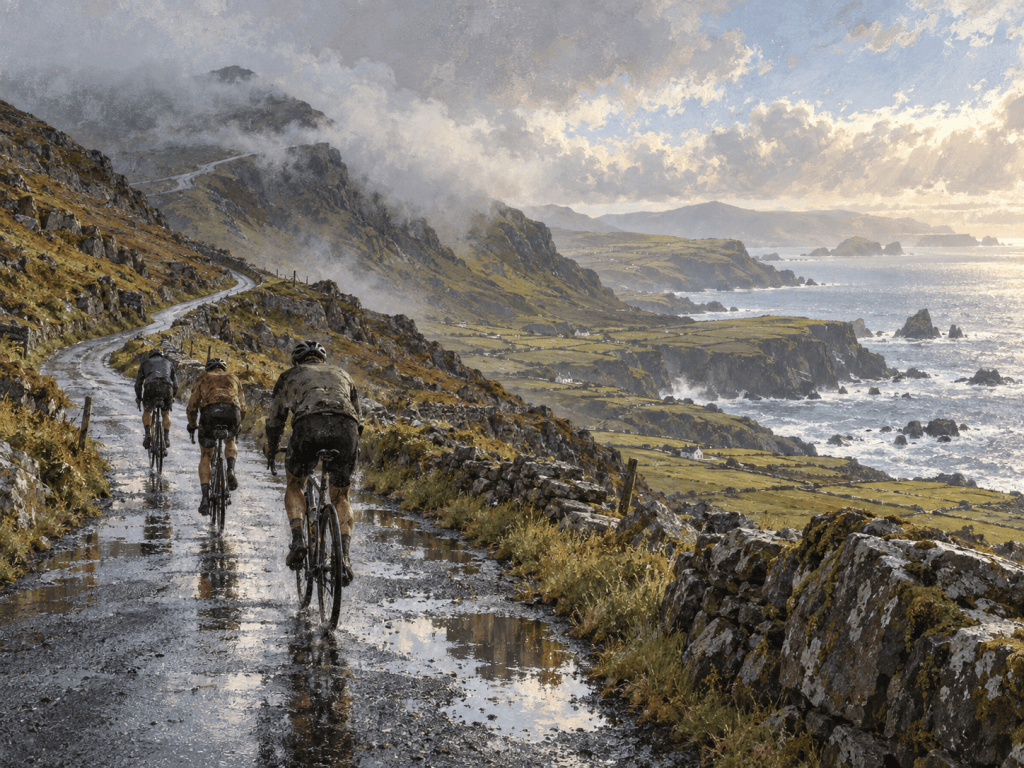
    So I kept going. Rebuilding form on the rower. Long, hilly rides on the bike — including a brutal 112 km in rain, wind, and navigational mishaps that turned into a bigger ride than planned. No coffee stops, soaked to the skin, but proud I stuck it out. That cup of tea at the end tasted like a medal.

    By the end of the month, structure was back. Gym sessions, meditation rows when my head was scattered, and one big endurance block: two × 45 minute blocks on the rower with a 20-minute bike in between. Over 21 km rowed in total, despite being under the weather. Proof that the base fitness is still there.

    So here we are at the start of September. July gave me the space to reset. August gave me the chance to face setbacks head-on and still move forward. Now it’s time to sharpen things again — with a 120 km ride on the horizon and the 150 km event at the end of the month. And beyond that, the Sub-7 Experiment continues.

    This is The Sub-7 Experiment.
  • Wind, Rain, and a Bit More Than Planned

    I didn’t want to ride.
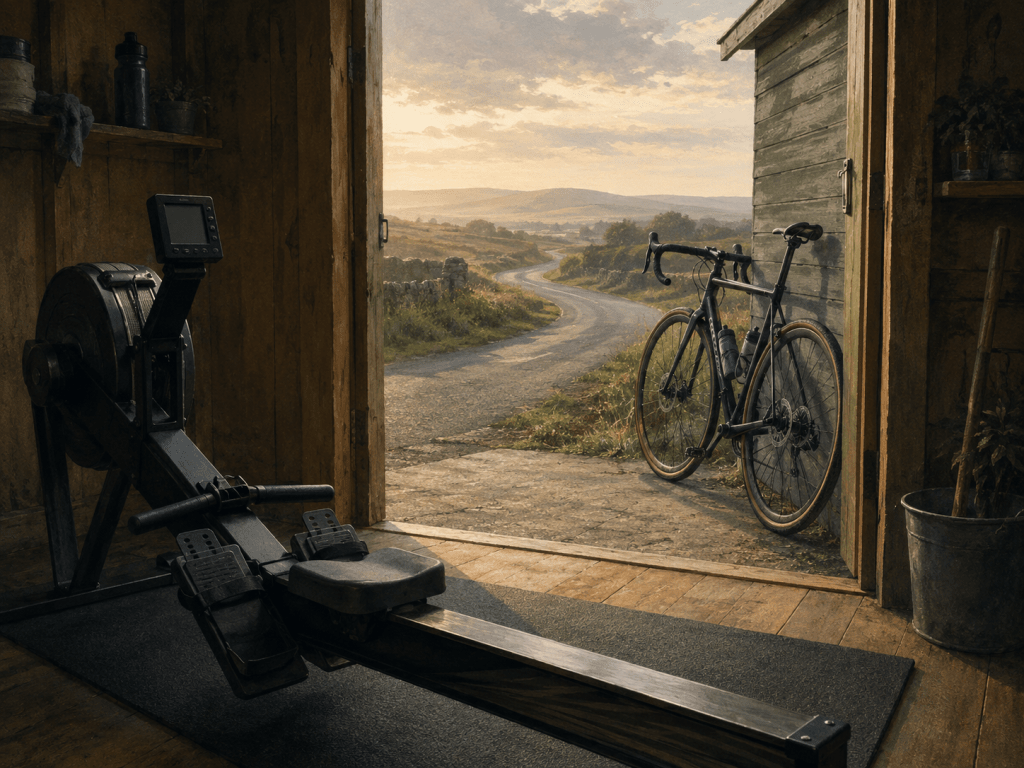
    Not the day before, and certainly not when I woke up to wind, wet roads, and low cloud. But with the big event seven weeks away, I asked Coach GPT for a ruling. And the verdict was to get out and ride.

    The plan was 100 km with 1,200 m of climbing. Within the first 10 km I was soaked through. It wasn’t heavy rain, just that fine mist that finds its way into everything. I told myself, “Get to 30 km, grab a coffee, and decide then.”

    No coffee. The coffee man wasn’t even there. Same story at the next stop another 30 km later, no van, plenty of rain, and now a howling wind.

    The route planner then decided to spice things up, sending me off the main road and straight into a muddy cornfield. I turned back, found my way around, and later discovered I’d added an extra 12 km to the ride.

    By the time I got home, I was wiped out but quietly proud. The new gears and brakes are working brilliantly, the bike felt solid, and that post-ride cup of tea? Best I’ve ever made.

    This is the temporarily, navigationally challenged Sub-7 Experiment.