Tag: Concept2 RowErg

  • Harder Than It Looks on Paper

    /i

    OK, that was a good session. I didn’t think it was going to be.

    My recovery, according to WHOOP, was down in the yellow at around 47%. Not terrible, not great. CoachGPT’s prescription for today was simple enough on paper: three 6-minute intervals at a pace between 2:02 and 2:05/500m, with a stroke rate of 22–24.

    I looked at it and thought, what’s the point? It didn’t sound like there was going to be much effort involved.

    Turned out I was wrong.

    I did my warm-up and then got into the first 6 minutes. Holding 2:02 at 22 strokes per minute is actually a fair bit of work. It ties straight back to what we were talking about the other day: lower stroke rate means you have to put more power into each stroke.

    By the end of the first 6 minutes I was puffing. I took the 2-minute rest, started the second 6-minute block, and I was definitely working by the end of that one too.

    The third set was the most interesting. I couldn’t find a rhythm at all to start with. I was either rowing too fast or too slow. Pace drifting, stroke rate drifting. It took me nearly half of that final 6-minute interval to settle into the groove of 22 strokes a minute at around 2:02/500m.

    Once I locked it in, it felt solid, but it was a much more intense session than it looked on paper.

    Feels good. Off to work now.

    This is The Sub-7 Experiment.
  • Green Means Go

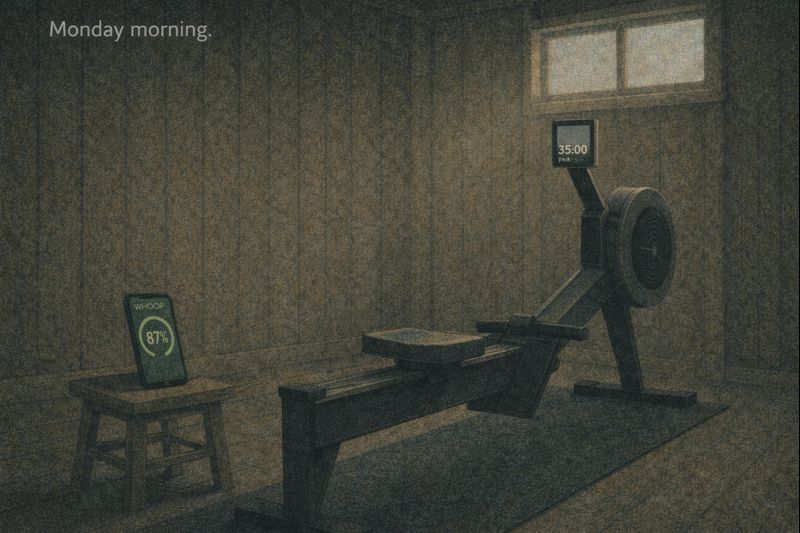
    Monday morning, another good session.

    WHOOP was green when I woke up, and green means go. So I went.

    I did a short warm-up, then 35 minutes on the rower at an average pace of about 2:04/500m, which worked out to roughly 8,500 metres. With the warm-up and cool-down, it comes in around 11k for the day.

    Nothing dramatic, no heroics. Just a solid, steady session and another brick in the wall.

    When I finish my sessions, I take screenshots of the WHOOP data and the ErgData app and feed them back into Coach ChatGPT. Today I noticed something new. It didn’t just say “good job.” It started to ask for specific changes in the data.

    My pace was where it had asked for it, if not a little quicker. What it picked up on was my stroke rate. It pointed out that I was moving a bit fast and that it would like to see the same pace but with a lower stroke rate.

    That probably doesn’t make much sense unless you are used to the action of rowing.

    Inside the rower is a flywheel that gives you the resistance on each stroke. On the recovery part of the stroke, that flywheel slows down, and how much it slows depends on the damper setting. The higher the damper, the more the flywheel slows, and the harder you have to work on each stroke to get it spinning again. To keep a 2:04 pace at a higher stroke rate, say 26–28 strokes per minute, you can “get away with” less power per stroke. To hold the same 2:04 at 22–24 strokes per minute, each stroke has to do more work.

    In simple terms, CoachGPT is asking me to slow the stroke rate down and put more power into each stroke. Get stronger, not just spin faster.

    I hadn’t really seen it nudge me like that before. That is good. It means the coach is starting to care about how I make the split, not just the number on the screen.

    This is The Sub-7 Experiment.

  • Back to Work

    That was a good workout.

    It felt like the first real, proper work towards the Sub-7 project for a long time. I did six 500 metre intervals, sitting pretty consistently around 1:52/500m. It felt like work – in a good way. Hard enough that I had to concentrate, not so hard that I was falling apart.

    After that I dropped the intensity and spent 15 minutes just cruising around the virtual loop, spinning the legs and letting the heart rate come down.

    Nothing dramatic to report. No breakthroughs. Just solid work.

    We’re on the right route. I think we always have been – it’s just that some phases feel easier than others.

    This is The Sub-7 Experiment.

  • The Day I Ignored CoachGPT

    I’m afraid I didn’t listen to CoachGPT at all today.

    I knew I wanted to row, and I knew I wanted it to be tough. When I asked ChatGPT for a plan earlier, it came back with something sensible enough, but my head wanted a long, hard row for the sake of headspace, not optimisation.

    So that’s what I did.

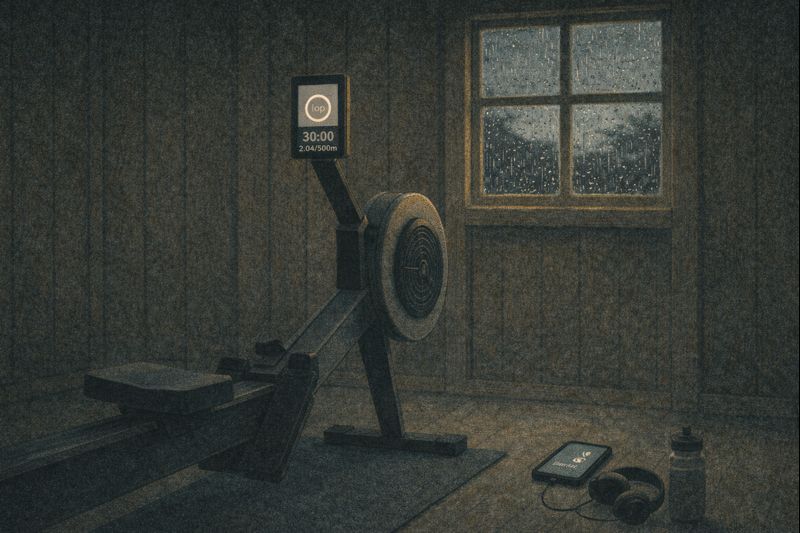
    It’s chucking down with rain outside. This is exactly why I wanted a rowing machine in the shed. With the way my head was this morning, there was no way I was going to get in the car, drive to the gym and do a session there. Walking across the garden to the shed felt possible. Driving across town did not.

    On the Concept2 PM5 you can connect your phone over Bluetooth and use the Concept2 app ErgData. There’s a feature in there called Real Time – basically a virtual 1,000 metre lap that anyone can join in real time if they’re logged in.

    I’ve used it on the last few longer rows, and I really like it. Today there were 36 people from around 20 countries on the same virtual loop. You don’t see their exact pace numbers, but you see if they’re coming past you or if you’re moving through them. There are also virtual pace boats going round, so if you want something to latch on to, you pick a boat and hang on. Alongside that you still get your own pace, stroke rate, distance and time. Plenty to chew on.

    Today’s session was:

    • 5 minute warm-up
    • 30 minutes on the virtual loop at an average pace of 2:04/500m
    • 250m all-out sprint
    • 5 minute warm-down

    I was moving, and it felt good.

    It wasn’t by the book. It wasn’t what the coach recommended. But I finished feeling great, and I needed that sense of control today – the feeling that I had chosen the hard thing and seen it through.

    This is The Sub-7 Experiment, and sometimes I’m the one steering.

  • The Rest Day That Paid Off

    I thought that having a rowing machine in the shed would mean I’d use it every day. That was the plan in my head: step out the back door, sit on the erg, job done.

    What’s actually happened with this new training regime is almost the opposite.

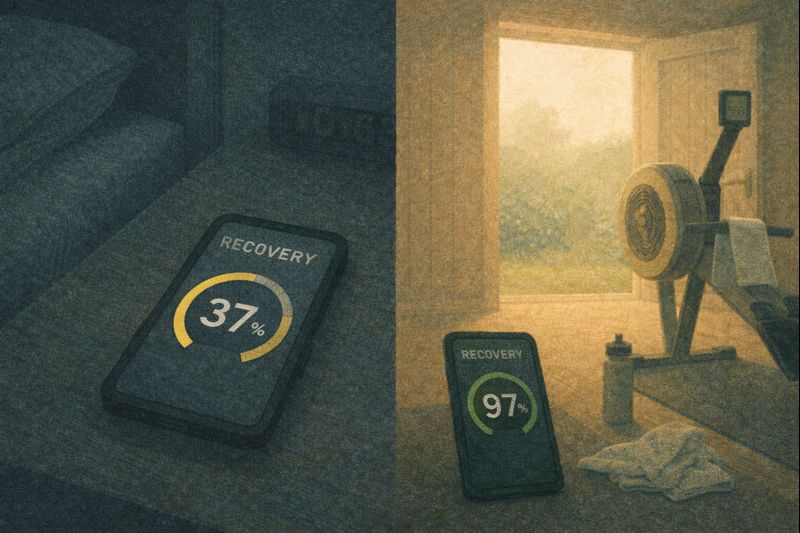
    Since I started feeding my WHOOP scores into Coach ChatGPT, there have been more recovery days than I expected. Yesterday was a perfect example. I woke up fully intending to do a decent session in the shed, or maybe even go to the gym. But my recovery score, according to Whoop, was 37%, and the advice from Coach ChatGPT was simple: take a recovery day.

    It felt wrong.

    In my head, I wanted to train. But this is the deal I’ve made with myself: if I’m going to use data and a coach, I have to actually listen. So I did. I gave myself the day off. My total strain for the day was only 4.4. Not much happened physically.

    Then came this morning.

    Recovery was 97%, the highest it’s been in a long time. Suddenly yesterday’s “non-session” made a lot more sense.

    With that green light, today’s plan was a decent workout on the rower in the shed: three 8-minute intervals with 2 minutes rest between them, each one slightly faster than the last. Warm-up first, cooldown after. It felt like a well-judged session, enough to make me work, not enough to bury me.

    I’ll admit, I’ve been wondering if I’ve made this whole thing too complicated. Copying WHOOP numbers into ChatGPT. Using the new app on the rower to program intervals, target pace, target stroke rate. It’s a few more moving parts than just “sit down and hammer it.”

    But I think this is just what happens with any new process. At first it feels clunky and over-engineered. Then you learn it, repeat it, and it becomes habit. Muscle memory. Copy, paste, adjust, row.

    Today was a good workout and a good lesson: sometimes the smart move is not to train, so that when you do train, you can actually go to work.

    This is The Sub-7 Experiment, and I’m still figuring it out.

  • No Excuses in the Shed

    WHOOP scores this morning showed recovery way down, sleep way down, and if there was a dial for enthusiasm, that would have been way down too. Previously I would have talked myself out of any exercise on a morning like this.

    But here’s the big change: I have a rower in the shed now. No excuses.

    So I put my gear on, stuck on some banging tunes and went out to the shed for a ChatGPT-approved workout: ten minutes at a reasonable pace, then 3 × 5 minute sets at around 2:05/500m.

    And it was great.

    It got rid of the funk and set me up to finally finish a work task that had been hanging over me all weekend.

    Brilliant.

    This is The Sub-7 Experiment.

  • The First Home 10K

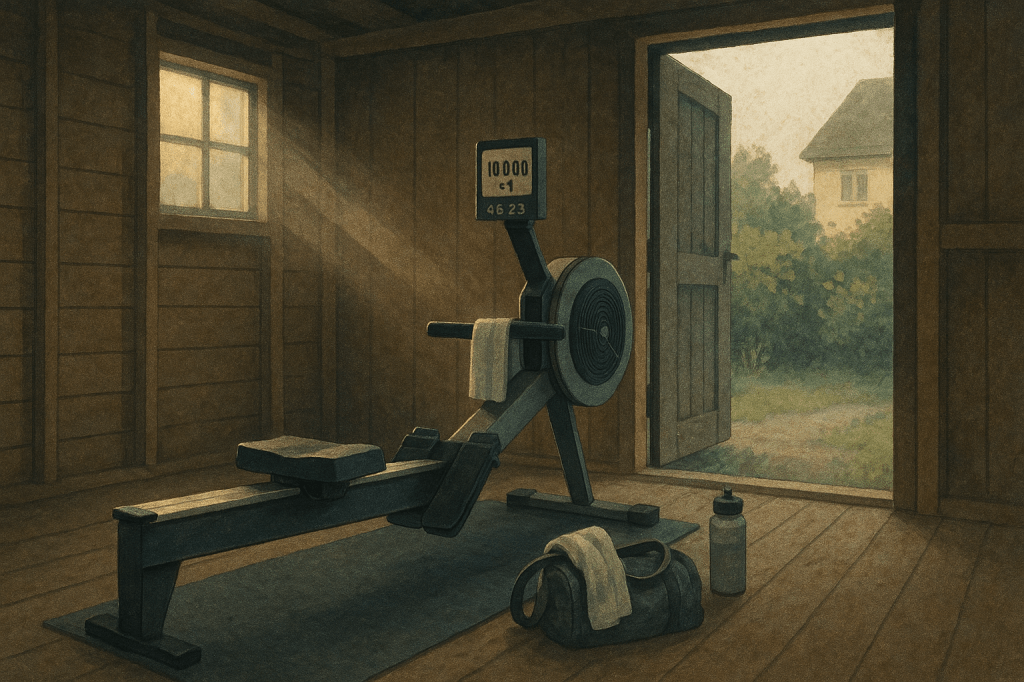
    I have just finished my first 10,000 metres on the home rowing machine and I feel great. Absolutely brilliant.

    There is something special about rowing on a brand new machine. This one feels smooth and buttery and just glorious compared to some of the tired commercial ergs I have used over the years.

    For the record, I did not listen to Coach GPT at all today.

    The sensible plan was a 30 minute fairly easy row. Instead, I set the monitor to 10,000 metres and got on with it. I kept things mostly steady but had a couple of big digs in there to get the blood properly flowing. It felt powerful and fun, not reckless.

    This whole setup still feels like a huge privilege to have a Concept2 in the shed, ready whenever I am.

    The best bit? When I am done, I do not have to drive home. I just step off the rower, open the door and walk across the garden.

    How cool is that?

    Another good session logged. This is The Sub-7 Experiment, and it continues.

  • The Shed Sessions Begin

    Today is a big day in The Sub-7 Experiment.

    Today was the first 30 minute row on my new Concept2 RowErg. In my shed.

    I am so excited to have this, and I recognise the privileged position I am in to be able to own my own machine. It is something I have dreamed about for a long time.

    No excuses not to row. No excuses not to move every day.

    Gym for strength work. Shed for rowing technique and pacing.

    I am delighted.

    This is The Sub-7 Experiment, and we have just changed gear.