Tag: bike

  • Nearly Breaking Seven

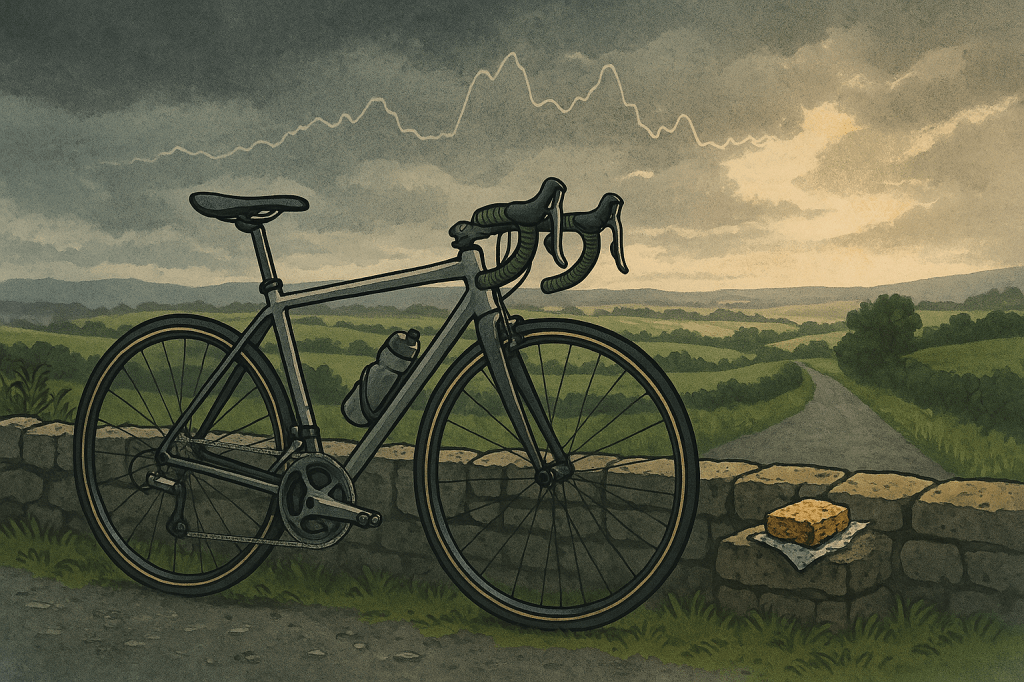
    Last Sunday was the big cycling day, the 150km sportive, and what a day. It was tough, one of the hardest rides I’ve done, and yet one of the best.

    I’ve gone further before. A couple of years back I managed 205km in one day. But Sunday had its own sharp edge. The route was testing, the climbs were long, and the pace was relentless. What made the difference was the two friends I rode with. My cycling buddies. They’re both strong riders and very kind, and they led the way all day. The slipstream effect on a bike is huge, and they pulled me along when I needed it most.

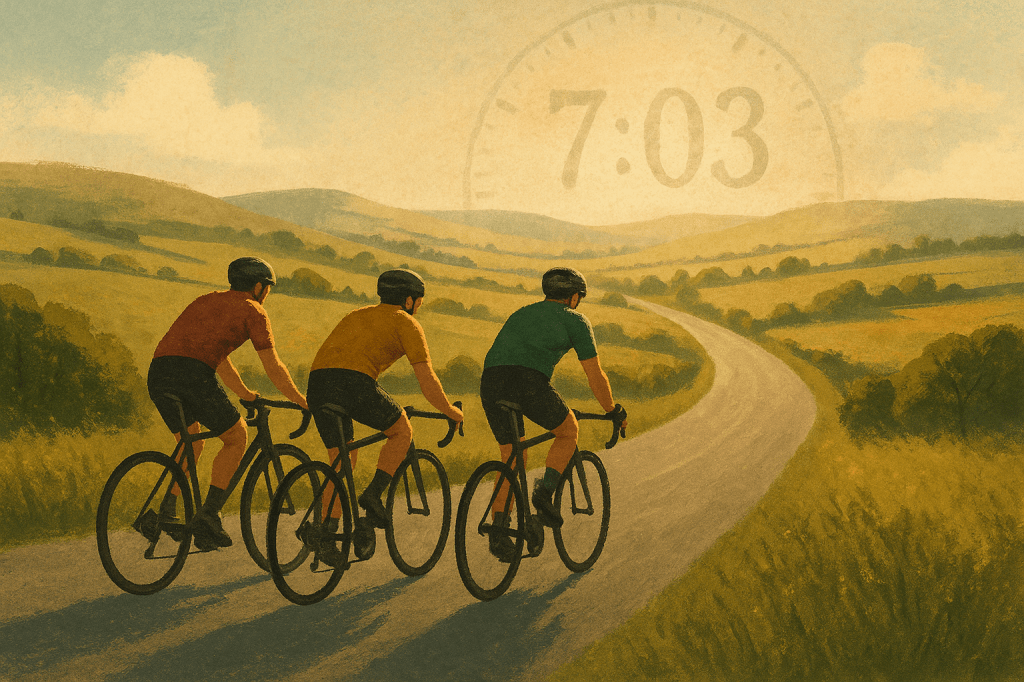
    The number seven keeps showing up, in rowing goals, in timings, now in cycling. I didn’t plan it that way, but perhaps it’s a reminder that some patterns are worth paying attention to. We set out aiming for seven and a half hours moving time. That would have been decent. Instead, we crossed the line at seven hours and three minutes, nearly breaking the seven-hour barrier. On my own I’d have finished, but nowhere near that time. With them, I came close to something I didn’t think was possible. For that, I’m grateful.

    The route itself was stunning. Rolling countryside, long open stretches, climbs that tested every muscle. I often watch the Tour de France, the Giro, or La Vuelta and think how incredible it would be to ride roads like that. That day felt like a taste of that. And we had the weather too, the last weekend of September in Ireland and not a drop of rain. Sun from start to finish, fresh in the morning, warm by afternoon. You couldn’t ask for better.

    This was more than just a ride. It was a reminder of the privilege of moving through the world under your own power, alongside good people, with good scenery around you. A reminder that shared effort magnifies achievement.

    This is The Sub-7 Experiment — and last Sunday, it was on two wheels
  • The Junction at 35K

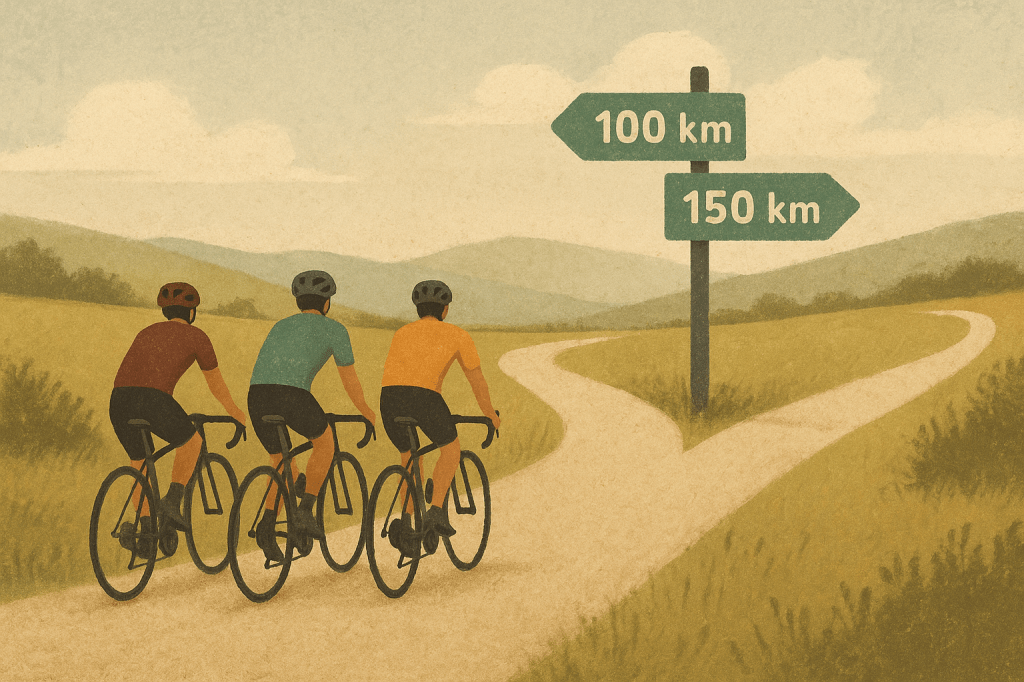
    In less than two days, I’ll be on the start line for the 150km sportive. There are two routes that day — 100km or 150km — and at the 35km mark, just after the first big climb, there’s a junction. Turn left and it’s the shorter route. Turn right and it’s the full thing. That choice feels like the whole ride in miniature: test the legs, listen to the head, and then decide whether I’ve got what it takes to go the distance.

    I’m excited, a bit nervous about riding in such a big group, but I know from experience that it thins out quickly enough. What sits with me more is whether the work I’ve done this year is the right kind of work. I haven’t ridden over 100k in three weeks, but the last one I did was 121k. The rowing and strength work mean I’m heavier now, but heavier in the right way: stronger, more resilient. I can leg press 150kg these days, not bad for someone who struggled with 70 when I started measuring this in March 2025. The endurance rows have kept the engine ticking too, even when the weather kept me indoors.

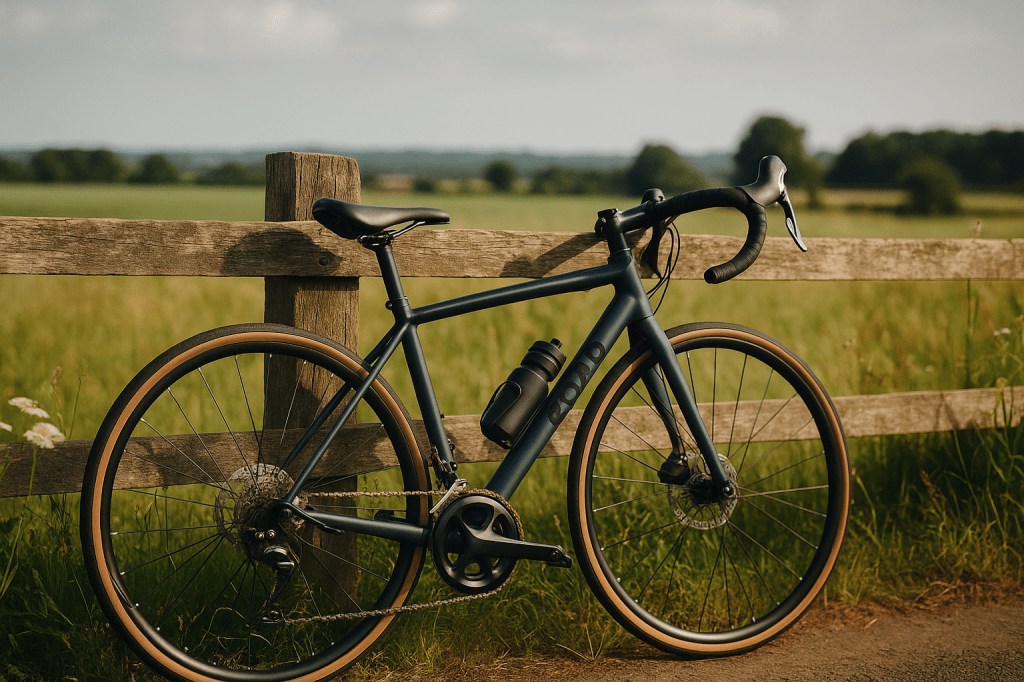
    The bike has been through its own transformation this year. Lighter wheels, better gearing, and most recently new gel pads and handlebar tape that have taken the sting out of the Irish roads. It’s not set up for rain, no mudguards, but this is Ireland, rain is part of the deal. Still, I’ll be riding with a piece of both my parents: the bike bought with a little money from Mum when she passed, and the saddle from Dad for my birthday. That matters more than any component choice.

    Success on the day is simple: finish strong without grinding myself into the ground, enjoy the company of my friends, and carry the memory with me. If the legs aren’t there and I have to turn left at the junction, then so be it. If something mechanical forces me to stop, then I’ll still have had a weekend away with good people. But if the legs are there, and the head is steady, then turning right — taking on the full 150 — will be the real win.

    This ride isn’t part of the Sub-7 Experiment, not really. Different training, different demands. But it is part of the bigger experiment: how to keep moving, how to choose things that are mine, how to remember that age hasn’t caught me yet. This is one of the rare things I do just for myself, away from family. And yet, finishing it well at 55 is also a reminder of what I bring back to them: proof that I can still do hard things, still choose adventure, still find joy in movement.

    The road will be long, but I won’t ride it alone.

    This is the Sub-7 Experiment and this weekend I am mostly riding a bike.

  • Three Weeks to Go: Testing the Legs, Testing the Head

    Big Day on the Bike

    It was a big day on the bike yesterday: 121 km and 1,600 metres of climbing.

    Everything went well. Fueling was good, I tried a new recipe for cycling food with honey, banana, dates, and oats. For the last decade I’ve avoided processed and refined sugar, which makes it tricky to prepare carb-dense food for a six-hour ride. The sheer volume needed can turn into one long eating fest. Adding honey made it feel indulgent, but it worked really well.

    The bike worked well too. Over the summer I’ve made a series of upgrades and experimented with tyre pressures to dampen road buzz, the vibrations that travel up through the saddle and handlebars on poor surfaces. There’s always a compromise: smoother main roads with heavy traffic and impatient drivers, or quieter back roads that are rougher but calm. I’ll take the quiet roads every time.

    The final upgrade went on late Saturday night, gel pads along the tops of the handlebars and new plush bar tape. They’ve made a real difference. I can still feel the bumps and imperfections, but the sharp edges have gone. I finished the 121 km without the usual pain in my arms, wrists, and shoulders. A great win.

    The legs worked well too. This was my first long cycle in about three weeks, but once I warmed up the ride flowed nicely. Still, I think I need to do more research into cycling training. Compared to rowing, where I train almost every day, cycling has longer gaps between sessions. In those gaps, the old voices creep back in, casting doubt and asking what the point of it all is.

    At around 105 km, I hit a steep 10% gradient. I got off the bike for a few minutes and walked. My thinking was simple: I’m here to enjoy myself, not kill myself. And it was the right call, a quick reset, a sip of water, and I was back spinning away to the finish.

    All in all, it was a great day out on the bike. The rain held off, the sun even came out for a while, and the headwind kept things challenging all the way. With three weeks to go until the big event — 150 km with 1,900 metres of climbing — I’m in good shape both mentally and physically.

    This morning I’m off to the gym for a row to shake the tiredness from my legs.

    This is The Sub-7 Experiment — and these days, it’s heavy on the cycling.

  • The Point Is Not Dribbling Into My Soup

    July was a break month. I called it “movement, not measurement” — no calorie counting, no chasing numbers, no obsessing over pace or distance. Instead, it was about moving because I wanted to, not because I had to. And it worked.

    There were plenty of walks, a few gym sessions, and a lot of time spent with family. Camping, holidays, and just enjoying being Dad. And yet, even with the lighter approach, July gave me one of the biggest breakthroughs of the summer: I realised my rowing form was wrong. For months I’d been driving off my toes instead of my heels, which explained the knee pain I’d been ignoring. With heel wedges and a focus on connection, I started the awkward process of re-learning how to row. It felt strange, disconnected, even underpowered, but it was a step in the right direction.

    August was tougher. Coming back, I was hit by frustration: sore knees, comfort eating, a few pounds up on the scale, and the voices in my head louder than they’d been in a long time. The ones that say, “What’s the point? Stop now.” But in the middle of that I found an answer: the point is not becoming an old man dribbling into my soup ruing the day i decided to stop moving. The point is staying strong, independent, and capable.

    So I kept going. Rebuilding form on the rower. Long, hilly rides on the bike — including a brutal 112 km in rain, wind, and navigational mishaps that turned into a bigger ride than planned. No coffee stops, soaked to the skin, but proud I stuck it out. That cup of tea at the end tasted like a medal.

    By the end of the month, structure was back. Gym sessions, meditation rows when my head was scattered, and one big endurance block: two × 45 minute blocks on the rower with a 20-minute bike in between. Over 21 km rowed in total, despite being under the weather. Proof that the base fitness is still there.

    So here we are at the start of September. July gave me the space to reset. August gave me the chance to face setbacks head-on and still move forward. Now it’s time to sharpen things again — with a 120 km ride on the horizon and the 150 km event at the end of the month. And beyond that, the Sub-7 Experiment continues.

    This is The Sub-7 Experiment.

  • From “Only Here” to “Already Here”

    I went for a ride on the bike yesterday—60km all in—and it felt great.
    What really struck me was the shift in mindset. I kept recognising where I was and thinking, “Oh, I’m here already” instead of “Oh, I’m only here.” Just a small difference in words and thoughts, but a massive one in terms of progress.

    I really gelled with the bike. Getting a proper bike fit and a new saddle was such a good call. Not just because I’m now physically connected to the bike, but because it actually saved me a load of cash.

    I’d been eyeing up new bikes—maybe a gravel bike, an “adventure” bike, or a racier road model. Something exciting.
    But the bike fit brought me back to the 11-year-old Giant I already own. And now? It feels like new. It’s as exciting to ride as I hoped it would be when I first bought it all those years ago.

    I probably could’ve gone further than 60km yesterday, but I surprised myself by deciding it was a good place to stop. I didn’t push past “great ride” into “slog”—and that feels like progress, too.

    I’ve got a 150km ride scheduled for September. In past long rides, I made rice cakes from a cycling nutrition book. To be honest, I couldn’t face them again. So before the ride, I asked ChatGPT for fuelling strategies and a few recipe ideas.

    I tried one of its banana oat bar suggestions, and aside from a few flavour tweaks and a more refined fuelling schedule, they worked really well.

    This is good.
    I’m pleased with how the bike is performing. I’m pleased with how I’m performing. And the rowing is complementing the cycling beautifully.

    It’s going to be a good summer—training to break the 7-minute rowing barrier and getting ready for that 150km.

    This is the Sub-7 Experiment.

  • Dialing in the Ride

    I’m lucky enough to own two bicycles.

    One is a ten-year-old carbon-framed beauty with super nice wheels—it looks great, rides fast, and I love it.

    The other? A budget-friendly bike from a well-known French sporting chain. I bought it as a winter bike—something I could slap mudguards on and ride in all weathers without worrying about it. I figured if I ever crashed, at least I wouldn’t be watching an expensive piece of carbon fiber shatter into a million pieces.

    Here’s the weird thing…

    According to Strava, I set more personal bests on the cheaper, heavier bike.

    Meanwhile, when I’m on the expensive one, I feel like I’m hammering it, but the numbers don’t reflect it. It didn’t make sense.


    The Bike Fit Revelation

    A good friend has been telling me for years to get a professional bike fitting.

    I resisted.

    To my untrained eye, it seemed like a case of paying someone to adjust my saddle height—something I could figure out myself with a bit of trial and error, right?

    Wrong.

    I finally gave in and booked a bike fitting. It was a fantastic experience.

    The morning started with:
    Body measurements—measured against the bike setup
    Injury history & pain assessment—what aches, imbalances, or old injuries might be affecting my riding?
    Mobility tests—walking up and down the studio while the fitter analyzed my gait and flexibility

    And that was before we even touched the bike.


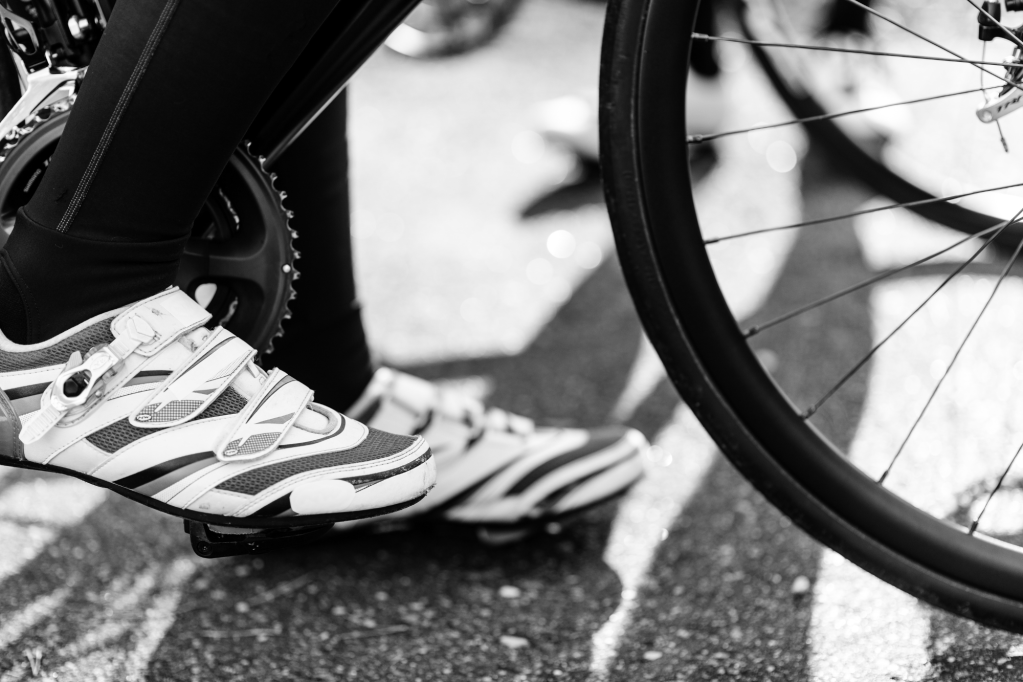
    Cleat Position: The Foundation of Everything

    Before we even looked at saddle height, we spent 30 minutes on my left shoe alone.

    Not just adjusting the cleat position but making sure that:
    ✅ I was comfortable on the pedals
    ✅ My foot placement allowed for optimal power transfer
    ✅ Everything felt natural and stable

    Then, I started pedaling.

    Cameras in front, behind, and from the side captured my riding position. These were plugged into a laptop where the fitter analyzed:
    Leg angles & hip tilt
    Arm position & reach
    Pressure distribution on the saddle

    Every tweak—seat height, fore/aft positioning, bar height, even tilt adjustments—was measured, discussed, and refined.

    One of the biggest changes? Moving the handlebars down.

    I’d always assumed, with my long torso and monkey arms, that I’d need the bars higher for comfort.

    Nope.

    Lowering the bars made a massive difference.


    Post-Fit Struggles: Where’s My Power?

    There was only one problem.

    Changing my position and connection to the bike made it feel like I had no power in my legs.

    This is expected. Even the pros experience this after a bike fit adjustment—the body needs time to adapt. The only solution?

    Get out and ride.


    Today’s Ride: Strange, but Good

    So that’s what I did.

    It was a beautiful spring morning—not too warm, not too cold, blue sky, crisp air. Perfect cycling weather.

    I did my usual 22K loop230m of climbing, 57 minutes total.

    It felt weird.

    But also really good.

    This was only my third ride since the fit, and already, I feel stronger, more comfortable, and more stable.

    One thing became clear—I have a massive leg imbalance.

    The fitter reckoned if I had a power meter, it would show a 25% / 75% power split left-to-right.

    The fix? Conscious effort.

    A tip from the fitter:
    🚴‍♂️ On climbs, count 20 pedal strokes per leg.
    🚴‍♂️ Focus on the left leg, then switch to the right.
    🚴‍♂️ Repeat.

    By actively engaging both legs, I should rebalance the power output.

    More saddle time will bring back the power.

    I hope.

    But today was a win.

    Great to be out.
    Great to do something different.

    This is The Sub-7 Experiment.