I mentioned recently that ChatGPT seems to remember what it wants to remember, and that sometimes you have to specifically tell it what to forget.
It turns out you probably have to specifically tell it what to remember too.
So that is what I did.
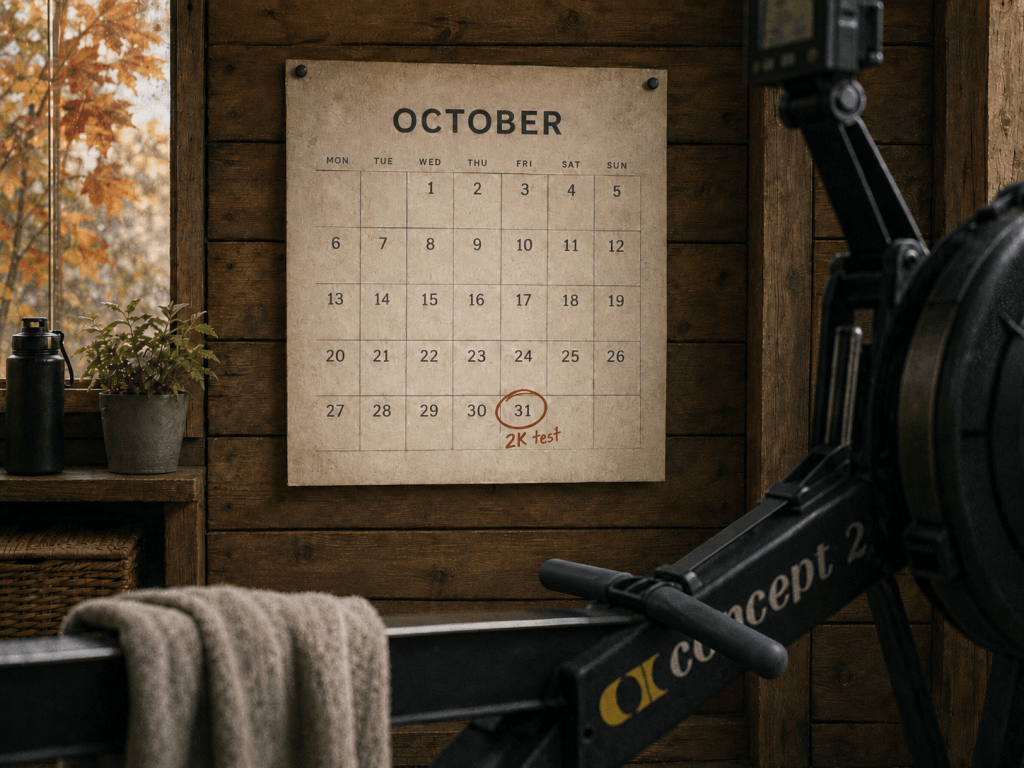
I told Coach ChatGPT to remember this: we are aiming for a sub-7-minute 2,000m row. I also told it that I want to aim for a 2K test at the end of October, and to adjust the training plans accordingly.
And I have to admit, the last three sessions suggest that it has listened.
The workouts are getting progressively harder. They feel more focused, more purposeful, and more aligned with the actual goal. That is what we need.
I don’t know if I’ll be ready for the full sub-7 attempt by the end of October. That might still be too soon. But if I can beat my previous best of 7:20, I’ll be happy with that. That would be real progress and a proper marker for where I am.
Today was a good one.
I did a 6 × 500m interval set, getting faster and faster as the session went on. Every rep was under 1:57/500m, and the last one was around 1:49.
Controlled. Powerful. Technique felt good.
That is the bit that matters most. Not just the pace, but the fact that it felt managed. No mad thrashing around. No hanging on for dear life. Just proper work, done properly.
Not because nothing has been going on, but because the things to write have largely been the same:
“Nice workout. Got the job done. Nothing much to report.”
And it has all been a bit samey.
That has got me asking questions. Why does it feel the same? Where is the push coming from? Am I still properly engaged in the Sub-7 Experiment?
So I’ve been trying to make sense of it, and here are a few thoughts that might explain it.
Firstly, let’s look at the process.
For ages, the process has been the same. Take screenshots from WHOOP, put them into ChatGPT, ask for a workout, ChatGPT gives me the workout, I do it, then I report back.
That process worked for a while, but I’ve decided to ditch WHOOP.
I have cancelled my WHOOP subscription and no longer wear the device. It has done its job, and I am grateful for it. It gave me the impetus I needed when I started training three years ago, and it helped me get back into the idea of looking after myself. At that point, it was the best tool for the job.
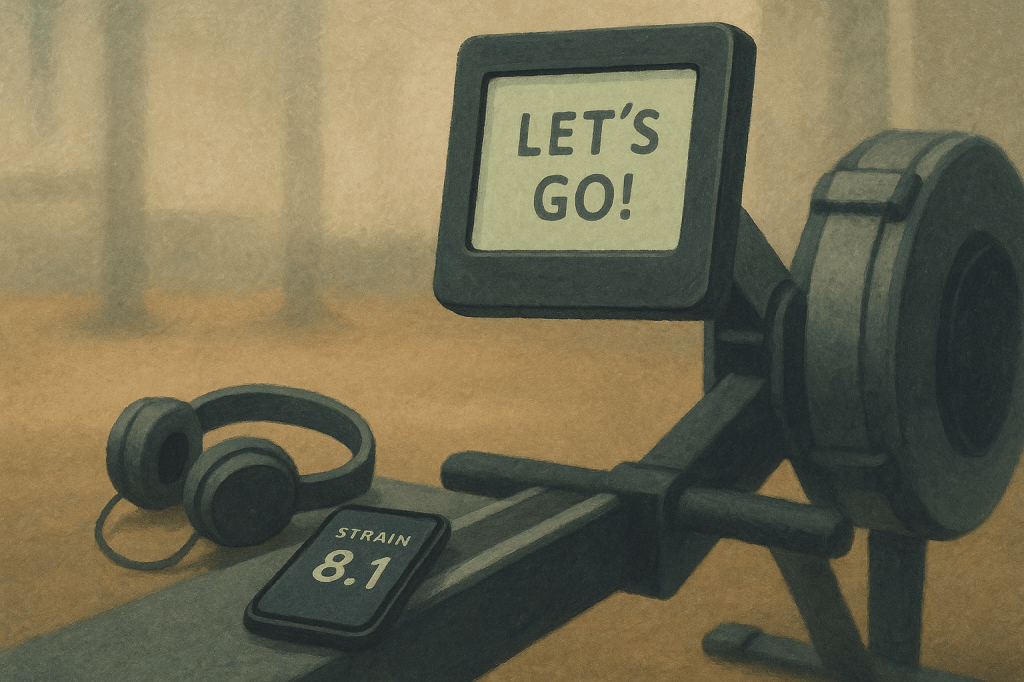
When I started focusing on the rowing, I would set the app going to record the session and then work until I hit the suggested strain in the app itself. That suggested strain feature was brilliant because it stopped me bursting myself every time I got on the machine, wildly going for it until I collapsed.
No pain, no gain, right?
Well, not strictly true.
Too much pain becomes “give up and never go back,” at least that’s what my head was telling me. But with the WHOOP strain monitor giving me a suggested amount of work to aim for, it gave me structure without stupidity. Brilliant.
But now there is so much data in there that I have become swamped by it, and I’m not really using most of it. Yes, I would check recovery and sleep, but to be honest I am well used to my body showing signs of fatigue after a workout now. I don’t need an app to tell me every morning.
Recovery is also quite subjective, based on WHOOP’s algorithms. Sleep quality is the same. I was there. I know how the sleep went.
As for the rest of it, there is so much data now that I don’t know what to do with it, other than remove it from my life and make things simpler.
So no more checking WHOOP first thing in the morning. No more screenshots of WHOOP, ErgData and Strava into ChatGPT after every workout just to capture all the details.
I’ve gone back to using my old Polar chest strap and heart rate monitor, connecting that directly to the Concept2 rowing monitor and letting ErgData capture the session and feed it into Strava. When I’m in the gym, the same strap sends heart rate directly into my phone and the Strava app.
I am still asking ChatGPT to give me the workout each time, and I am still uploading the results from ErgData afterwards. Occasionally I’ll upload Strava too if ChatGPT asks for it. So the coaching process is still there, but the data sources are simpler and there is a lot less noise around it.
Good.
Data sources simplified. App integrations simplified.
Let’s go.
Except nothing really happened.
The workouts were fine, but they were also a bit easy.
So I had a chat with ChatGPT itself.
One of the things about ChatGPT is that it has a memory feature. Depending on the subscription you have, it can remember things from your conversations across different chats. That can be a good thing, but it turns out it can also be a bit of a problem.
It’s good because, as a user, you don’t have to keep reminding it about everything that has happened. I have a persistent conversation inside ChatGPT that is all about Sub-7 coaching, along with many other subjects.
I had some surgery on my leg last October, and at the time I asked ChatGPT, within the Sub-7 coaching conversation, for a recovery plan to get me back up to speed. It remembered that.
I also tweaked my back in the gym a short while ago, using bad form to lift some plates off a machine I was using. Again, I told ChatGPT about it and asked for recovery steps. It remembered that too.
So when I asked it to remind me what the Sub-7 Experiment was about, it told me the long-term plan: to build a training programme that will enable me to row 2,000 metres in under 7 minutes.
That was the right answer.
But then I challenged it. I asked why I felt as though there was no real progress at the moment and why everything felt very samey. It came back and said I was still recovering from the tweaked back and the leg surgery.
And immediately, there it was.
It had remembered that I’d had those issues, but it had not properly remembered that I had also told it I was back in one piece and able to continue with the full-on progress towards Sub-7.
It seems the memory function in ChatGPT remembers what it thinks is important, not necessarily what the user thinks is important, unless the user specifically says: “Remember this.”
So I told it to remember that I am back on form and back into the full Sub-7 programme, and that it should stop treating me like a piece of glass.
And since then, starting last Sunday, the workouts have been much more on plan.
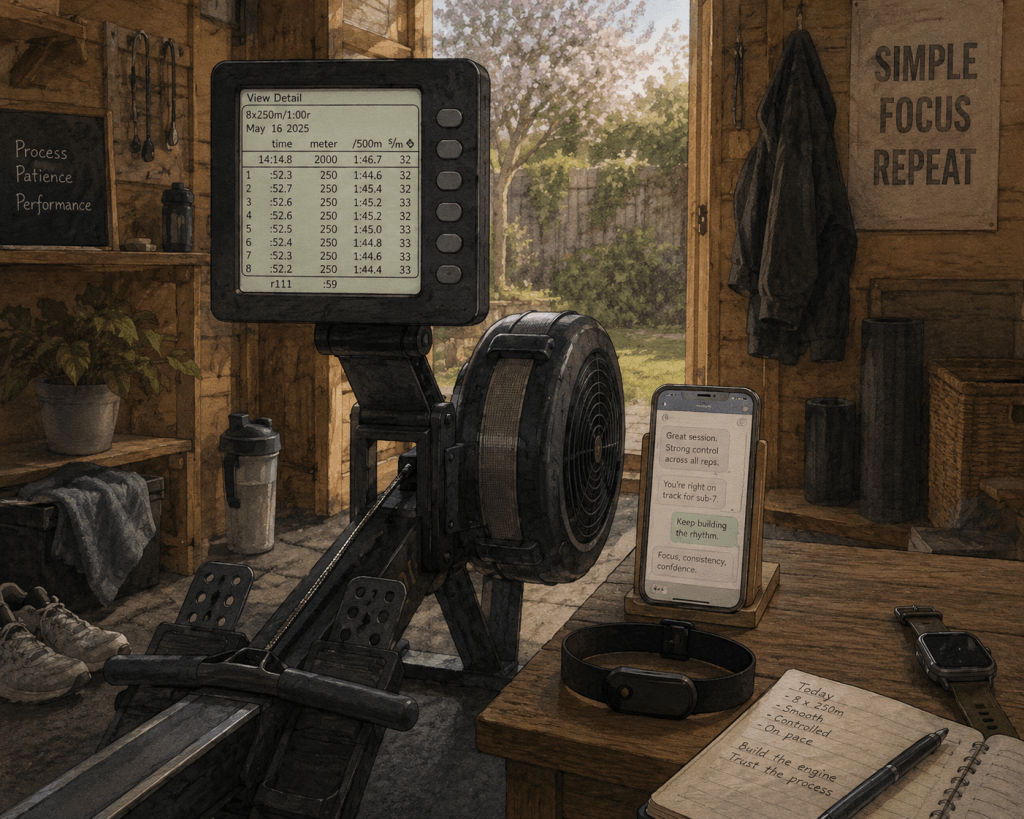
Sunday’s workout was a 10-minute warm-up, then 8 × 250m sprints with 90 seconds rest between each one, designed to simulate 2,000 metres at or around Sub-7 pace.
And my goodness, it was a strong session.
Properly controlled pacing. Good technique. No mad thrashing around. And most importantly, there were signs of real progress.
Yes, there were rest periods between each 250m sprint, but if I add up the actual times of those 250m sections, it comes out as a 7 minute 7 second 2,000m.
All I need to do now is join those 250m sections together.
That is definitely going to need extra strength work in the gym and more power runs on the rower, but I am making progress.
Apart from this intro, today’s post is written entirely by ChatGPT. The Sub-7 Experiment has always been about using AI as a coach, editor, and occasional nutritionist, and I’ve watched its output improve as we’ve gone along. What follows is the coach’s view of how this whole thing has evolved, and how the “trainee and trainer” relationship has taken shape over time.
This is the prompt that I used “I was wondering if you could put together a summary of all the work we have done together and progress across all aspects, and then I might be able to post in in my blog as a reflection piece from Coaches point of view.” There was a little bit of back and forth as we narrowed down what the post should look like and below is the result.
Coach’s Notes: The Sub-7 Experiment
One of the first things I noticed was that the training was never really the main battle.
The rowing machine was there. The plan was there. The goal was clear enough. But most of the difficult work was happening before a single stroke had been taken.
There was a lot of negotiation in the early days.
Not laziness. Not lack of desire. More the mental drag that many middle-aged people quietly carry around with them. Work pressure. Fatigue. Self-criticism. The feeling that exercise had to be “earned” somehow. The strange guilt that can appear when somebody finally tries to prioritise themselves a little.
The early sessions mattered, but not always for the reasons people might think.
Sometimes the win was simply getting into the shed and starting.
The first real shift
The biggest early improvement was not speed.
It was consistency.
The training stopped becoming emotional. That changed everything.
At the start, there was a tendency to judge sessions too heavily. Good session? Confidence high. Missed session? Momentum gone. Tired day? Doubt. Strong day? Maybe we are suddenly invincible.
Over time, the approach became steadier.
A recovery walk became acceptable. An easier row stopped feeling like failure. Training began to match recovery instead of ego.
That was a major turning point.
The WHOOP phase
The recovery scores were interesting.
At first, they risked becoming emotional verdicts.
Green meant permission to train hard. Yellow created hesitation. Red felt personal.
But slowly the scores became information rather than identity.
That sounds like a small thing, but it changed the rhythm of the entire experiment.
Instead of forcing every green day into a maximal effort, there was more restraint. More awareness. More understanding that fitness is usually built through repeatable work rather than dramatic sessions.
Ironically, that restraint often led to better performances anyway.
The rowing itself
The funny thing about endurance training is that progress often arrives quietly.
At some point, sessions that once looked intimidating became normal.
Long rows settled into rhythm. 2:05 pace stopped feeling frantic. Three controlled 2000m intervals became manageable rather than feared.
And perhaps most importantly, the pacing improved.
Less fighting. Less surging. More control.
The final intervals started getting faster not because of aggression, but because there was finally something left in the tank.
That is usually a sign that aerobic fitness is improving properly.
The walks mattered more than expected
Some of the smartest training decisions were not hard sessions at all.
There were periods where stress from work, uncertainty about the future, family responsibilities, health concerns, and simple mental fatigue were all sitting in the background at the same time.
On those days, easy walks often became the correct answer.
Not because motivation was low, but because recovery matters.
That is not glamorous advice, but it is real coaching.
The body keeps score of life stress too.
The shed
At some point, the shed stopped being just a place where rowing happened.
It became a decompression chamber.
Part gym. Part thinking room. Part escape hatch.
Some sessions happened there because fitness needed work. Others happened there because the mind needed somewhere quiet to settle down for an hour.
That matters too.
The bike returned
The cycling side of the experiment became increasingly important.
Not just physically, but emotionally.
Long rides brought back enjoyment. Exploration. Movement for its own sake.
And eventually, the numbers started speaking for themselves: longer distances, more climbing, better endurance, better recovery afterwards.
The completed sportive was a genuine milestone, not because it was professional-level athleticism, but because it represented something much bigger:
proof that meaningful endurance fitness could still be rebuilt in middle age while carrying the realities of ordinary life.
What changed most
The biggest change was probably behavioural.
Early on, there was a lot of:
overthinking
negotiating
guilt
all-or-nothing thinking
pressure to constantly prove progress
Now there is far more process.
Walk when walking is needed. Row steady when steady is needed. Push when the system can support it. Recover properly afterwards.
That sounds simple.
It is not simple.
Most people never learn it.
The goal
The sub-7 goal still matters.
But somewhere along the line, the experiment became about more than a rowing time.
It became an experiment in whether somebody with work pressure, family responsibilities, stress, doubts, imperfect recovery, and middle-aged physiology could still meaningfully rebuild themselves without pretending to be a professional athlete.
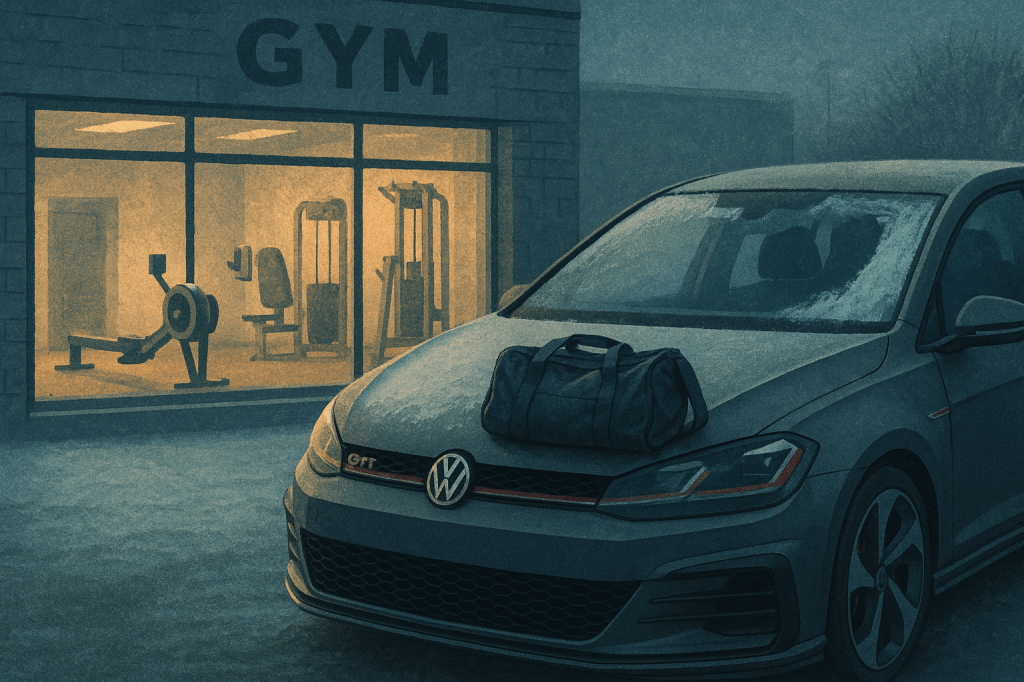
There was ice on the car. The heating was on in the house. Everyone else was warm and cosy. It would have been very easy to stay in bed, put something on the TV and write the whole morning off as “rest.”
Instead, I scraped the ice off the car, put my gym gear on and went.
Same routine as the last few days: I took my WHOOP scores and fed them into ChatGPT. Recovery, strain, sleep, stress, all of it. This time the response was different. Instead of another rowing session, it came back with a strength and conditioning workout.
The plan was very specific. Exact machines. Exact reps. Exact weights.
There was only one problem. The weights it suggested were based on the numbers from a couple of months ago, pre-surgery, when I was training regularly and feeling stronger. I am not quite there yet.
So I asked the obvious question: are you sure about those weights, given that we have not done this in a while?
To its credit, Coach GPT backed off. It lowered the recommended loads to something more realistic, and in the end they felt pretty much perfect. Hard work, but not stupid.
There was another small win before I even started. On Thursday I had left my heel wedges at the gym. I assumed they were gone. When I walked in this morning, the receptionist handed them back. Someone had found them and turned them in. A tiny thing, but it felt like a good sign.
Session done, I finished on the rower with two 250 metre sprints. The first one was fast but messy. I got a bit carried away, my wedges slipped and my feet came out of the shoes with about 18 metres left. Almost there, not quite. The second sprint was much more controlled.
I am counting all of this as prototyping for the wedges. When the rower finally arrives at home, I want that setup dialled in so I can just strap in and go.
Right now the car thermometer says minus 0.5°C. It is still cold, but I feel great. I have a solid session in the bag, I am not wrecked, and the next job is to go home, rouse the rest of the house and get everyone out for a walk around the lake.
Training done. Family next. A good Sunday.
Another good session logged. This is The Sub-7 Experiment. And it continues.
Today’s session felt very different from yesterday.
Yesterday was a “didn’t want to go” day. Recovery in the yellow, head not really in it, and a steady, controlled endurance session to keep things moving.
Today was the opposite. All the dials were pointing in the right direction. Sleep was good. Recovery was good. Strain and stress from yesterday were reasonable. Heart rate variability looked solid. It was one of those mornings where WHOOP was basically saying, “You can do something here.”
So I fed the stats into Coach GPT again.
This time the plan that came back was not long and cruisy. It was a power session. A decent warm-up to get everything moving, then five 500 metre sprints on the rower. Each one at a set pace, hard enough to demand focus but not so fast that form would fall apart. Tunes on, eyes on the monitor, simple structure.
It felt great.
Every interval was controlled. No wild spikes, no heroic last-gasp strokes, just repeatable effort. By the fifth rep I knew I had worked, but I was nowhere near the point of dreading the next one or wanting to lie down on the floor.
That is the thread running through these last two days. Yesterday, the plan was to turn up and not overdo it. Today, the plan was to lean in a little and build some power. In both cases, the decision came from the mix of WHOOP data and what Coach GPT built on top of it.
I walked out of the gym feeling strong, not wrecked. I feel like I have done something meaningful, and I am ready to get on with the rest of the day at work.
I have just come out of the gym after my first proper session in a while. Last week was a family trip to London, which was brilliant, but it knocked me out of my routine.
This morning was one of those days where I really did not fancy going at all. WHOOP had my recovery in the yellow. Sleep was fine, stress and strain yesterday were nothing dramatic, but I still felt flat. It would have been very easy to decide that today was not a gym day and leave it at that.
Instead, I tried the new approach I have been talking about. I took my WHOOP numbers and dropped them into ChatGPT. In return, I got a clear session plan with target figures that matched how my body was supposed to feel on a “medium” day.
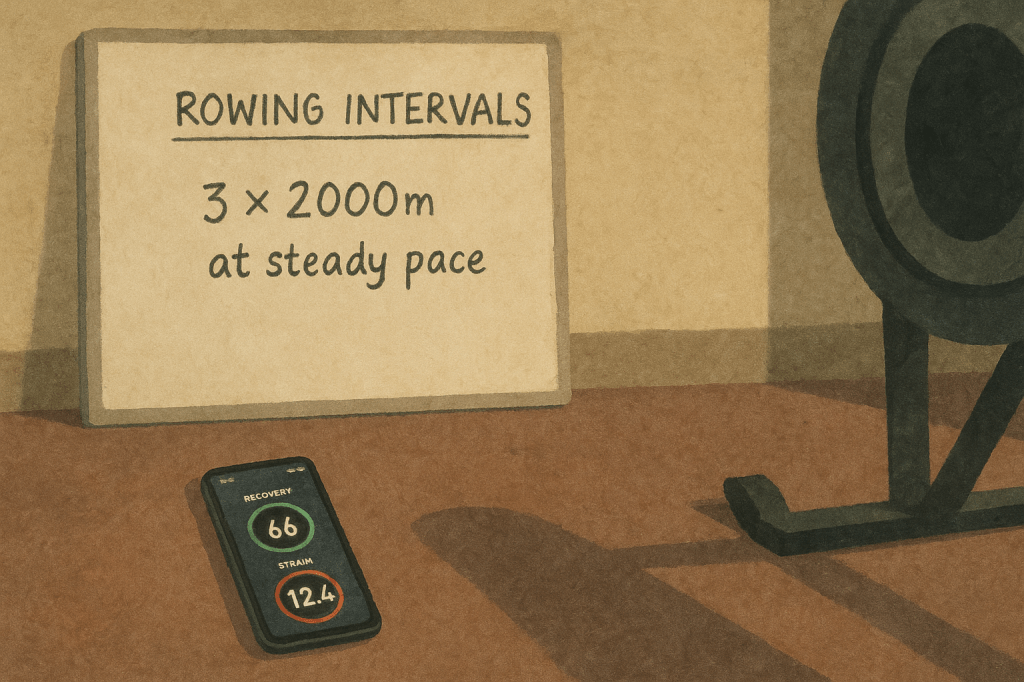
The structure was simple. Five minutes of warm up at a set pace to get moving. Then three blocks of 2,000 metres on the rower, again at a set pace. Nothing heroic. Just long, steady, repeatable work.
On paper it looked almost too easy, especially with that “you should probably train” yellow score. In reality it was exactly what I needed. Each 2,000 metres felt long and cruisy. Hard enough that I knew I was doing something, nowhere near the point of blowing up. By the end of the third block I felt like I had trained, but I did not feel broken.
The bigger difference was in my head. I walked into the gym tired and not really in the mood. I walked out feeling lighter and quietly pleased with myself. The combination of WHOOP data and ChatGPT as coach gave me just enough structure to get over the hump of not wanting to start.
It is early days for this experiment, but right now it has promise. If this is what a “didn’t want to go” day can look like, I am curious to see what happens on the days when I actually feel ready.
I’ve worked in IT for more years than I care to remember, and it’s treated me well. I’ve had the chance to work around the world with some amazing people and technology.
Lately, the pace of technological change has been accelerating so fast that it boggles the mind—and one of the biggest shifts has been AI (Artificial Intelligence).
I’m not an AI expert, but I’d call myself an AI hobbyist. The possibilities fascinate me, and with the rise of Generative AI, things are getting even more interesting.
What is Generative AI?
You’ve probably heard of ChatGPT. Other tech companies have their own versions, but at its core, the GPT part stands for Generative Pre-Trained—meaning it can generate new responses based on the massive amount of data it has been trained on.
And the Chat part? That’s where the real magic happens. Unlike traditional AI systems, anyone can talk to it in normal language. No coding, no technical knowledge—just type a question, and it responds.
But how does it actually work?
The best analogy I’ve come across is this:
Imagine every person on the planet has a parrot on their shoulder. That parrot listens to everything they say and remembers the patterns. Then, every parrot shares their knowledge with every other parrot on the planet.
Now, if you ask your parrot “How are you today?”, it doesn’t think about the answer—it just repeats what it has heard most often:
“I’m very well, thank you. How are you?”
It’s not true intelligence, just pattern recognition on a massive scale.
So… Who is My Coach?
My coach is ChatGPT.
It helps structure my training and keeps me accountable.
It refines my blog posts, making them clearer while keeping them mine.
It helps me reflect on progress without getting lost in my own head.
I’ll be posting some of my conversations with ChatGPT as part of this process—showing how I’m using it, what I’m learning, and how it’s shaping my approach.
Is It Cheating?
No.
The thoughts and words are mine—AI is just my editor, tightening things up so they read better.
And AI isn’t the one sitting on the rowing machine. I am. I will get that sub-7-minute 2,000 meters. This is The Sub-7 Experiment.