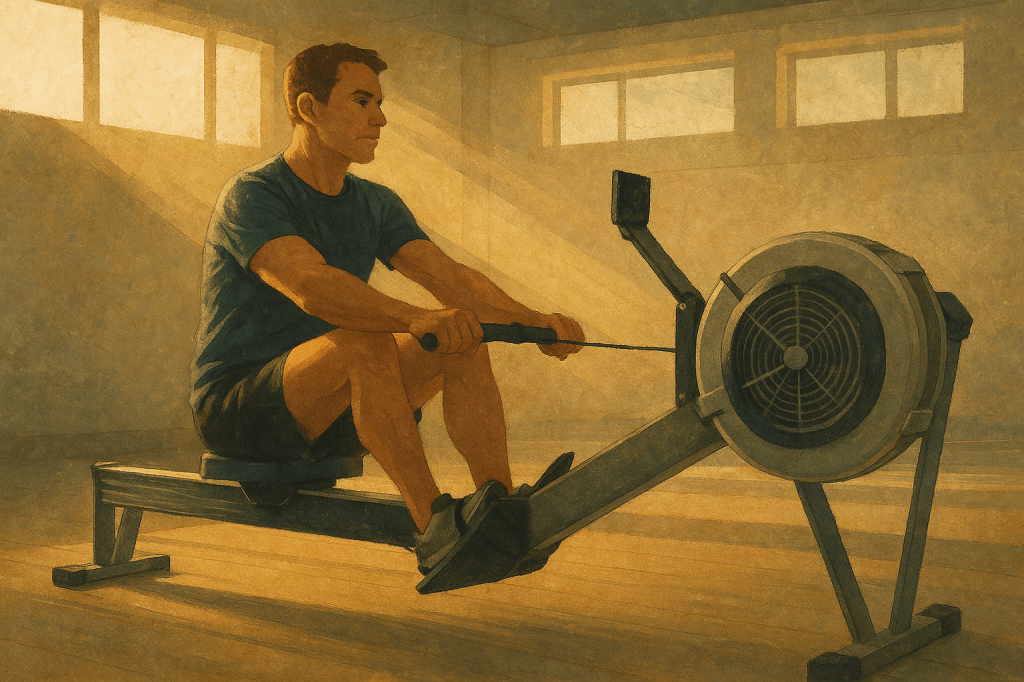
I have just walked back in from the shed after a good session on the rower.
I am really starting to like this new version of ChatGPT. It feels like it remembers more of the coaching conversation as we go, which makes the whole thing feel more joined up. Today it had me doing 5 minute intervals, and it was a proper session. Enough to feel it, not so much that it wiped me out.
What has surprised me is what I am starting to miss.
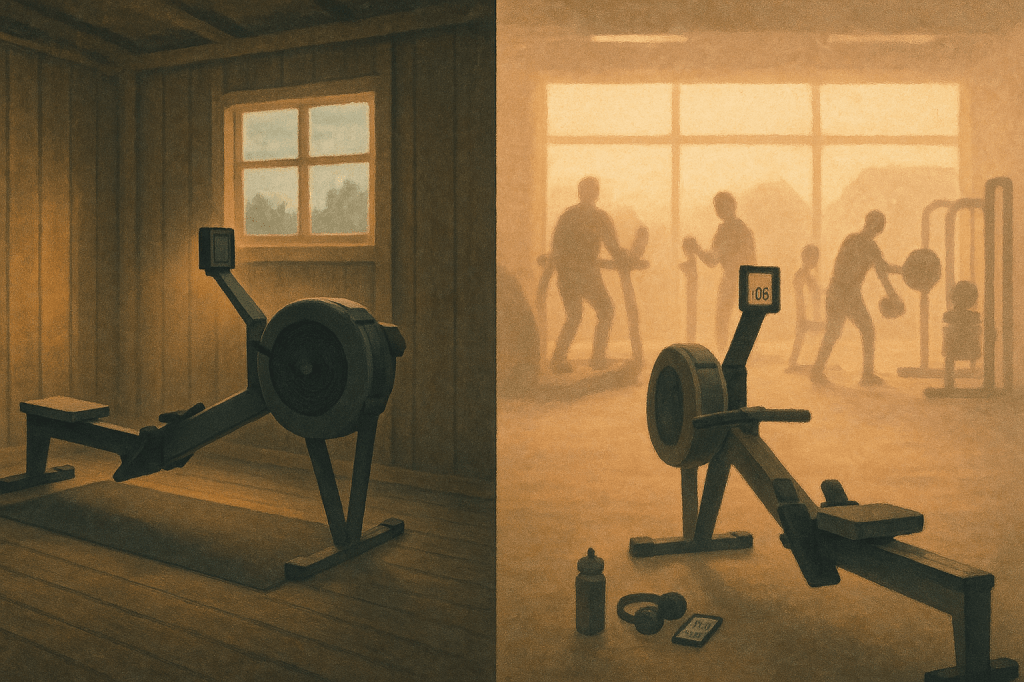
I thought that once I had the rower in the shed, that would be it. Training at home, no commute, no waiting for machines, no distractions. And a lot of that is true. But I have realised I miss the people at the gym more than I expected.
I am not a big talker there. It is usually just a quick hello to the staff on the desk, a nod to the regulars, and then everyone gets on with their own programme. Headphones in, sets to do, not much conversation. But there is still a sense of other humans being around you, all doing their thing. I did not think I would miss that, and yet I do.
It is a small thing, but the nods and the “alright?” moments matter more than I gave them credit for.
Rowing will always be the main thread. The shed is perfect for that. But I think I will still go to the gym now and then for strength work and, if I am honest, for that tiny bit of human connection. A different kind of fuel.
Today’s row kept the body ticking over, but it also taught me something: I need both the quiet of the shed and the presence of other people now and then.
This is The Sub-7 Experiment, and we are still learning.
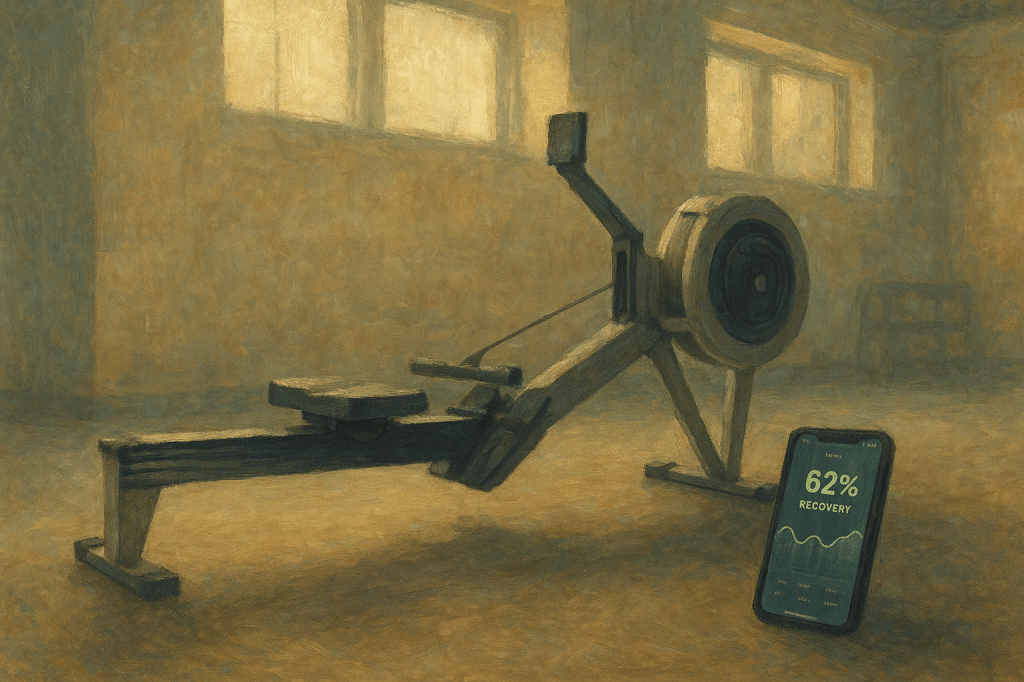
WHOOP scores this morning showed recovery way down, sleep way down, and if there was a dial for enthusiasm, that would have been way down too. Previously I would have talked myself out of any exercise on a morning like this.
But here’s the big change: I have a rower in the shed now. No excuses.
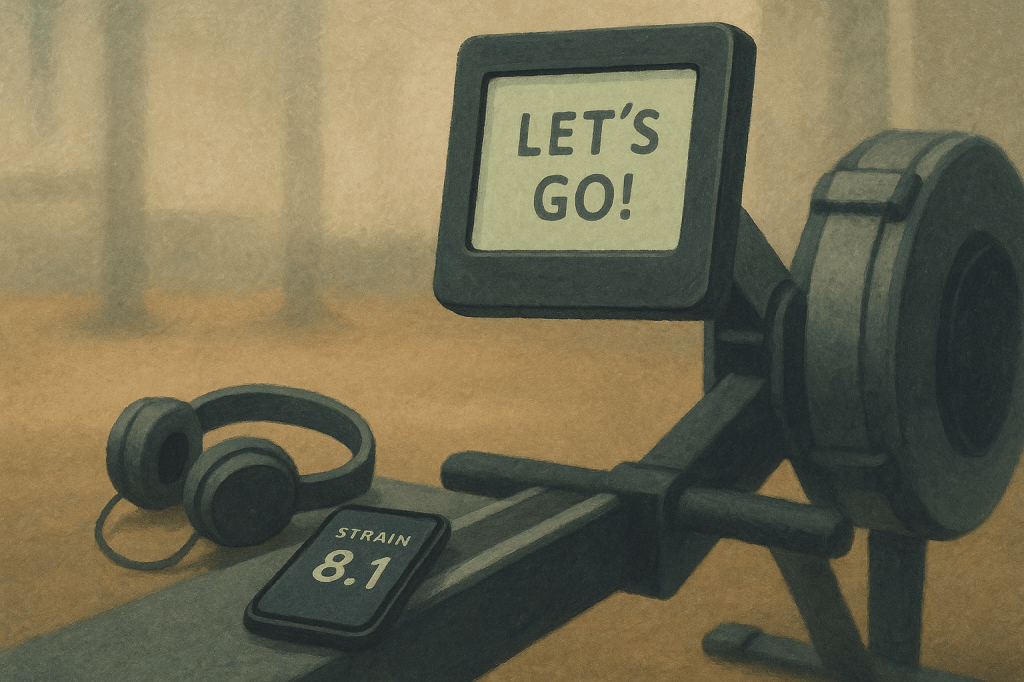
So I put my gear on, stuck on some banging tunes and went out to the shed for a ChatGPT-approved workout: ten minutes at a reasonable pace, then 3 × 5 minute sets at around 2:05/500m.
And it was great.
It got rid of the funk and set me up to finally finish a work task that had been hanging over me all weekend.
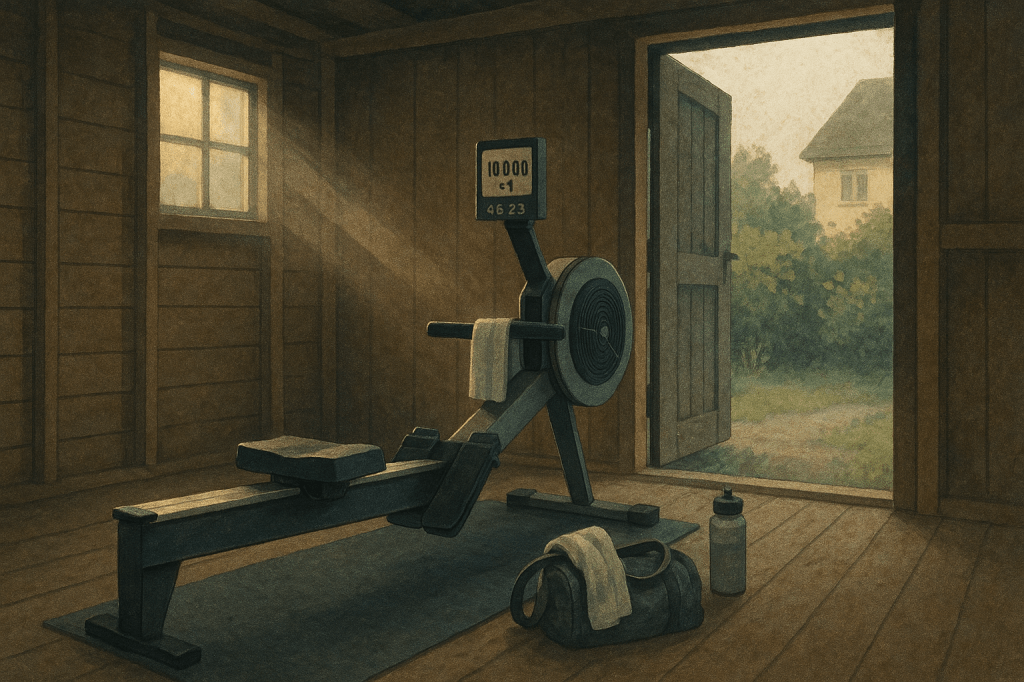
I have just finished my first 10,000 metres on the home rowing machine and I feel great. Absolutely brilliant.
There is something special about rowing on a brand new machine. This one feels smooth and buttery and just glorious compared to some of the tired commercial ergs I have used over the years.
For the record, I did not listen to Coach GPT at all today.
The sensible plan was a 30 minute fairly easy row. Instead, I set the monitor to 10,000 metres and got on with it. I kept things mostly steady but had a couple of big digs in there to get the blood properly flowing. It felt powerful and fun, not reckless.
This whole setup still feels like a huge privilege to have a Concept2 in the shed, ready whenever I am.
The best bit? When I am done, I do not have to drive home. I just step off the rower, open the door and walk across the garden.
How cool is that?
Another good session logged. This is The Sub-7 Experiment, and it continues.
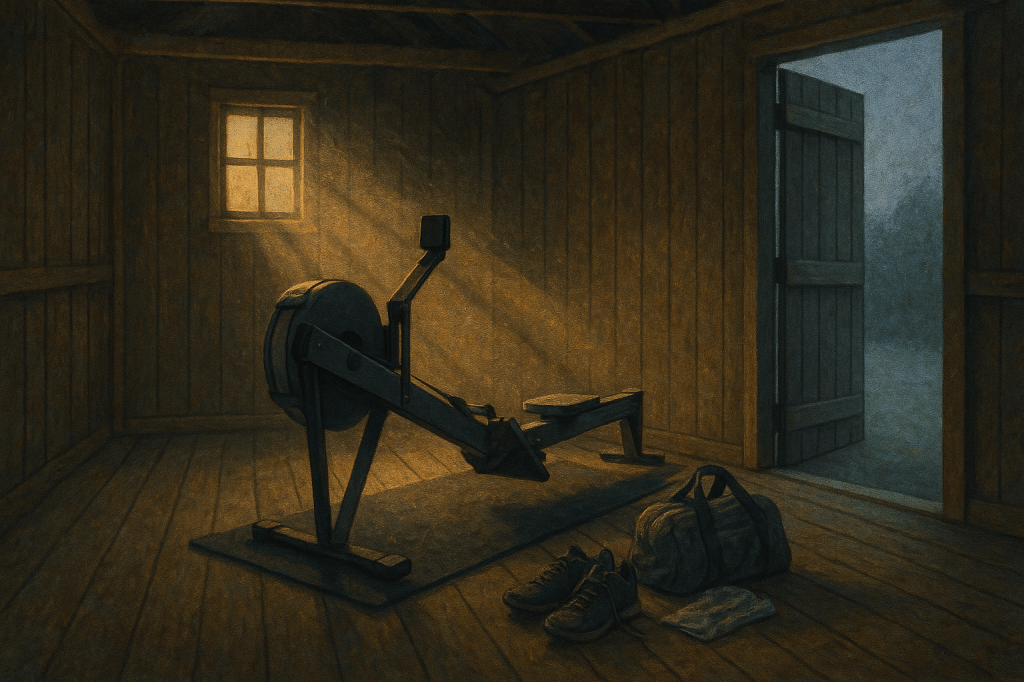
Today was the first 30 minute row on my new Concept2 RowErg. In my shed.
I am so excited to have this, and I recognise the privileged position I am in to be able to own my own machine. It is something I have dreamed about for a long time.
No excuses not to row. No excuses not to move every day.
Gym for strength work. Shed for rowing technique and pacing.
I am delighted.
This is The Sub-7 Experiment, and we have just changed gear.
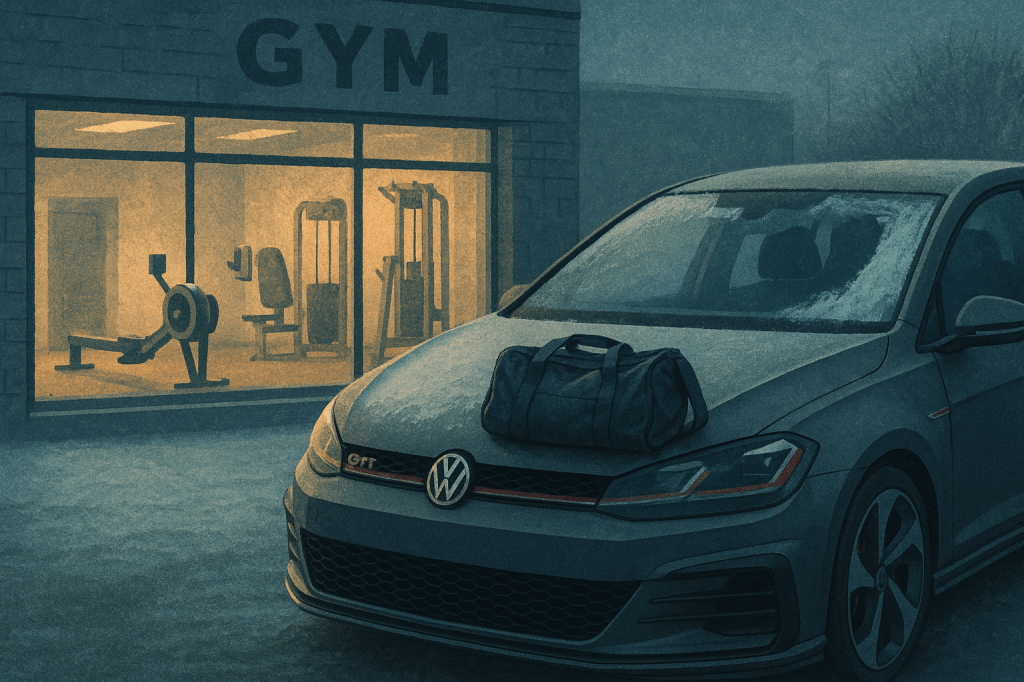
There was ice on the car. The heating was on in the house. Everyone else was warm and cosy. It would have been very easy to stay in bed, put something on the TV and write the whole morning off as “rest.”
Instead, I scraped the ice off the car, put my gym gear on and went.
Same routine as the last few days: I took my WHOOP scores and fed them into ChatGPT. Recovery, strain, sleep, stress, all of it. This time the response was different. Instead of another rowing session, it came back with a strength and conditioning workout.
The plan was very specific. Exact machines. Exact reps. Exact weights.
There was only one problem. The weights it suggested were based on the numbers from a couple of months ago, pre-surgery, when I was training regularly and feeling stronger. I am not quite there yet.
So I asked the obvious question: are you sure about those weights, given that we have not done this in a while?
To its credit, Coach GPT backed off. It lowered the recommended loads to something more realistic, and in the end they felt pretty much perfect. Hard work, but not stupid.
There was another small win before I even started. On Thursday I had left my heel wedges at the gym. I assumed they were gone. When I walked in this morning, the receptionist handed them back. Someone had found them and turned them in. A tiny thing, but it felt like a good sign.
Session done, I finished on the rower with two 250 metre sprints. The first one was fast but messy. I got a bit carried away, my wedges slipped and my feet came out of the shoes with about 18 metres left. Almost there, not quite. The second sprint was much more controlled.
I am counting all of this as prototyping for the wedges. When the rower finally arrives at home, I want that setup dialled in so I can just strap in and go.
Right now the car thermometer says minus 0.5°C. It is still cold, but I feel great. I have a solid session in the bag, I am not wrecked, and the next job is to go home, rouse the rest of the house and get everyone out for a walk around the lake.
Training done. Family next. A good Sunday.
Another good session logged. This is The Sub-7 Experiment. And it continues.
Today’s session felt very different from yesterday.
Yesterday was a “didn’t want to go” day. Recovery in the yellow, head not really in it, and a steady, controlled endurance session to keep things moving.
Today was the opposite. All the dials were pointing in the right direction. Sleep was good. Recovery was good. Strain and stress from yesterday were reasonable. Heart rate variability looked solid. It was one of those mornings where WHOOP was basically saying, “You can do something here.”
So I fed the stats into Coach GPT again.
This time the plan that came back was not long and cruisy. It was a power session. A decent warm-up to get everything moving, then five 500 metre sprints on the rower. Each one at a set pace, hard enough to demand focus but not so fast that form would fall apart. Tunes on, eyes on the monitor, simple structure.
It felt great.
Every interval was controlled. No wild spikes, no heroic last-gasp strokes, just repeatable effort. By the fifth rep I knew I had worked, but I was nowhere near the point of dreading the next one or wanting to lie down on the floor.
That is the thread running through these last two days. Yesterday, the plan was to turn up and not overdo it. Today, the plan was to lean in a little and build some power. In both cases, the decision came from the mix of WHOOP data and what Coach GPT built on top of it.
I walked out of the gym feeling strong, not wrecked. I feel like I have done something meaningful, and I am ready to get on with the rest of the day at work.
I have just come out of the gym after my first proper session in a while. Last week was a family trip to London, which was brilliant, but it knocked me out of my routine.
This morning was one of those days where I really did not fancy going at all. WHOOP had my recovery in the yellow. Sleep was fine, stress and strain yesterday were nothing dramatic, but I still felt flat. It would have been very easy to decide that today was not a gym day and leave it at that.
Instead, I tried the new approach I have been talking about. I took my WHOOP numbers and dropped them into ChatGPT. In return, I got a clear session plan with target figures that matched how my body was supposed to feel on a “medium” day.
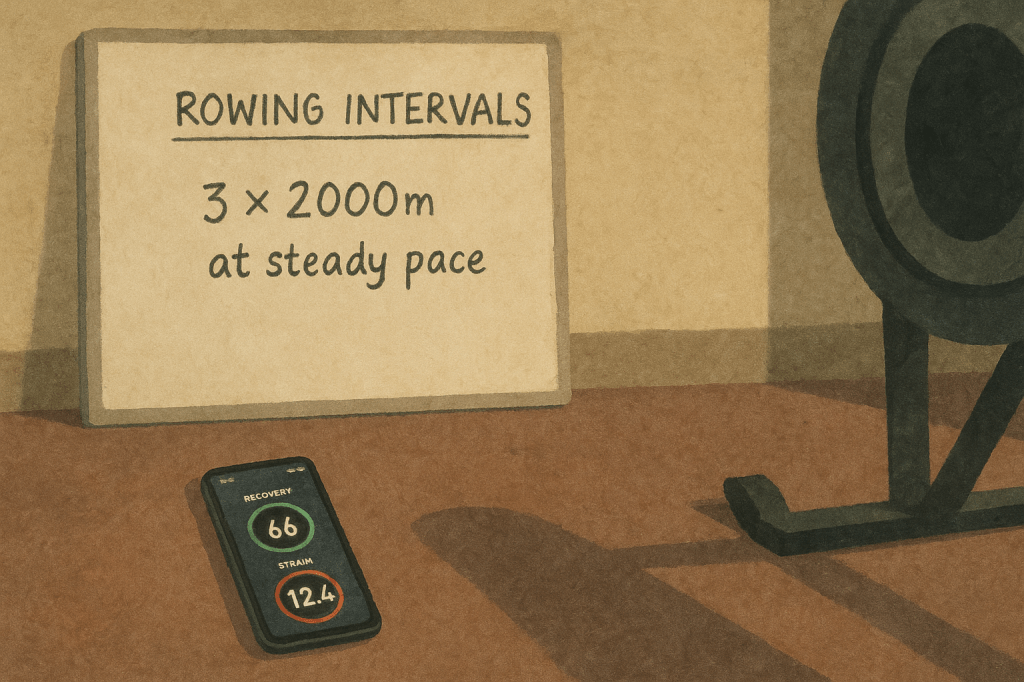
The structure was simple. Five minutes of warm up at a set pace to get moving. Then three blocks of 2,000 metres on the rower, again at a set pace. Nothing heroic. Just long, steady, repeatable work.
On paper it looked almost too easy, especially with that “you should probably train” yellow score. In reality it was exactly what I needed. Each 2,000 metres felt long and cruisy. Hard enough that I knew I was doing something, nowhere near the point of blowing up. By the end of the third block I felt like I had trained, but I did not feel broken.
The bigger difference was in my head. I walked into the gym tired and not really in the mood. I walked out feeling lighter and quietly pleased with myself. The combination of WHOOP data and ChatGPT as coach gave me just enough structure to get over the hump of not wanting to start.
It is early days for this experiment, but right now it has promise. If this is what a “didn’t want to go” day can look like, I am curious to see what happens on the days when I actually feel ready.
It feels like I have a new coach. You might remember that I’ve been asking ChatGPT to prepare workouts and coaching advice to help me row 2,000 metres in under seven minutes. That is the whole point of The Sub-7 Experiment. Can I use AI to help me achieve a fitness goal.
When I first tried this, the model available to me was GPT 4.0 and it was good. I set up the role, gave it the context, kept the conversation alive, and each day I told it how I was feeling. It responded with the workout for that day. That simple rhythm worked well.
Then 4.1 came along. The improvements were small but noticeable. It held context better, got confused less often, and could handle my slightly lazy and vague questions more easily. As with most tech, each release pushed things forward.
Earlier this year GPT 5.0 arrived with a huge amount of hype. It was supposed to push ChatGPT into a whole new league. PhD-level reasoning. Better accuracy. A genuine step up.
The reality was mixed. Yes, it produced better code for a different project I was working on. Yes, it had more “thinking” capacity and could reason more deeply without me having to explicitly tell it to think. That part was a massive improvement.
But as a conversationalist it was a step backwards. It forgot things. It lost context. It got confused about tasks. The backlash was so strong that OpenAI reinstated version 4.1 as a choice because so many people preferred to keep using it. It felt like my coach had left the building.
I worked around it with careful prompting, but it was frustrating. The Sub-7 Experiment relies on continuity and rhythm, and something was always slipping.
Which is why it now feels like I have a new coach. GPT 5.1 has arrived and it feels different in a very good way. The tone is consistent. The help it offers is actually useful. It anticipates the next step instead of fumbling it. It feels like an upgrade in the true sense of the word.
Let me explain why this matters.
I have a WHOOP device and I’ve used it for almost two years. Before ChatGPT became part of my training, WHOOP was my only guide. It sits on my wrist and picks up all sorts of measurements: heart rate, skin temperature, strain, sleep quality and plenty more. Every morning the app shows three dials. Yesterday’s strain, today’s recovery level, and last night’s sleep. When you start a workout you tell WHOOP what you’re doing and it gives you a target strain. When you hit it, the band vibrates and tells you to stop. Simple. Clever. And it worked well.
But in the last few months I’ve been questioning the value. The subscription model has changed. The promise of free device upgrades for active subscribers has been replaced by an “uplift fee”. My renewal is in February and it will cost a lot more to keep going into my third year. And that makes me ask what I actually need it for.
Most of the data WHOOP collects I don’t really use. I know how well I slept because I was there. What I actually value is recovery guidance and strain targets. And there are other devices out there that do similar things for a simple one-off cost. Polar Loop is one I’m looking at seriously.
So I turned to ChatGPT 5.1 for help. Reviews. Recommendations. Thoughts based on my training. And one of the threads pointed out something obvious: I have not been using most of WHOOP’s data anyway. Not deeply. And the only thing that truly matters is the workout planning, which comes from CoachGPT.
I asked if there was any way for ChatGPT to access WHOOP data directly. It said no, the APIs are not available yet. But then it made the suggestion that genuinely impressed me.
It told me exactly which two screens in the WHOOP app to screenshot each morning. It told me to upload them, and it would analyse everything it needed: recovery, sleep, strain, HRV, and readiness. It would then produce a fully tailored workout for that day. And if it thinks I need a rest day, it will tell me that too.
I have used this new process for the last few days and it is genuinely brilliant. Two screenshots. Upload. Instant plan. Clear reasoning. Exactly what it expects from me. Exactly what to avoid. Exactly how hard to push.
And it works. The coaching is better. The structure is better. The whole system feels like something new.
Well done, ChatGPT 5.1. This is The Sub-7 Experiment. Recovering using structured data.
And we’re back. Thirty minutes on the rower, steady pace, light resistance, just finding rhythm again. Nothing heroic, just movement with purpose.
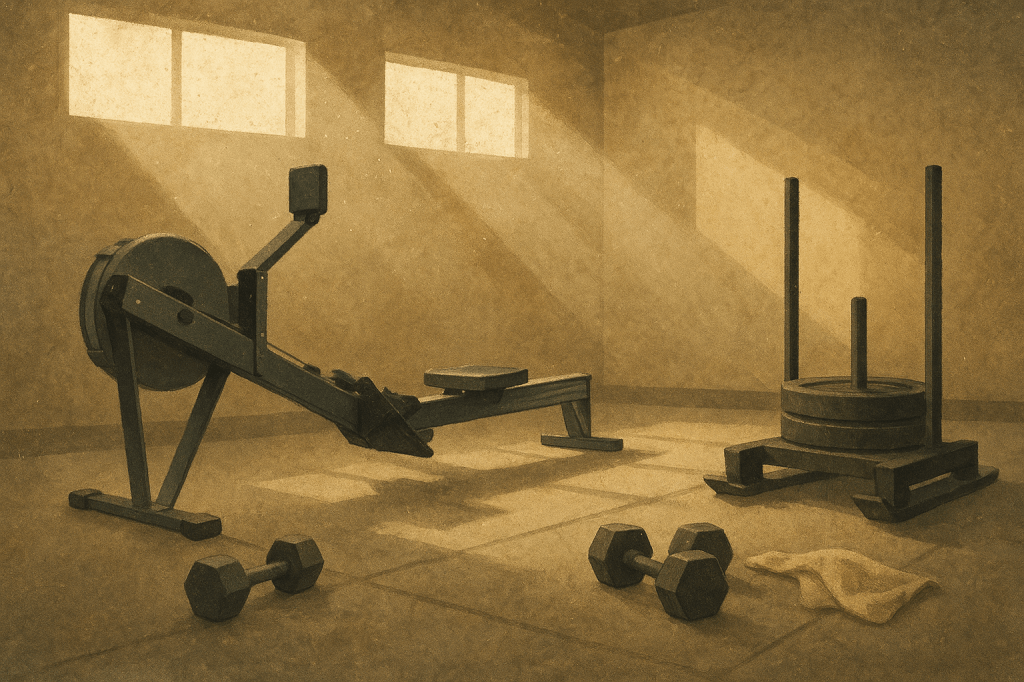
After that, some strength work: sled pushes at 80 kg, solid but controlled, then farmer’s and suitcase carries with 20 kg in each hand. Nothing fancy, just the foundations.
It feels good to move with intent again. Each session adds a little more confidence, a little more strength. The engine’s coming back online.
Tuesday, and it’s been a good couple of days. Yesterday I saw the doctor and got the all-clear after both procedures, signed off, back to normal life, and very happy about it.
So today I went to the gym, mostly to reconnect with the rowing machine and see where I’m at. Knocked out 7,000 metres in 31 minutes, lower intensity, low drag factor, but smooth and steady. The old me would’ve jumped straight back in and pushed too hard, too soon. This time, I’m not doing that.
Coach ChatGPT’s advice is still in my head: take it easy, rebuild properly. I might’ve gone a little harder than planned, but it felt great. The legs worked, the form felt good, and more importantly, the head was clear.
So, we’re climbing back into the fast lane, not quite there yet, but picking up speed. And that’s enough for today.
This is The Sub-7 Experiment — recovery mode disengaged.

 The Sub-7 Experiment