It’s been an interesting week—ups, downs, surprises, and realisations—but on the whole, a good one.
The most fascinating part? A conversation I had with ChatGPT this morning.
The Night Before
When I went to bed last night, I was already talking myself into a gym session in the morning. That’s not unusual—good intentions at bedtime are easy. But recently, I’ve actually been following through.
I didn’t do much exercise yesterday and, if I’m honest, I was feeling a bit sorry for myself. There’s a possible medical issue on the horizon. Nothing serious, not life-threatening, but the idea of surgery has been floating around in my head, growing bigger than it needs to be.
The Morning After
This morning, I felt great. I wanted to go to the gym and really go for it.
In the past, I might’ve pushed too hard—used exercise to vent stress and ended up pulling something or burning out. But this time, I paused, opened up ChatGPT, and said:
Me: “Hi, I’m in the gym. Whoop has given me a recovery of 53% today, well into the yellow. I told it about my ‘injury.’ I want to do some rowing—what do you recommend? I have 45 minutes.”
ChatGPT: “Hey, good to see you back! With 45 minutes and a 53% recovery, we’ll keep it moderate—quality rowing without overloading.
🔹 Warm-up: 5–7 min @ 2:10–2:20/500m 🔹 Main set: 3 x 2,000m @ 2:05/500m pace, 2 min rest 🔹 Optional: 500m push at 1:55–2:00/500m 🔹 Cooldown & stretch: 5 mins
Let me know if you want to swap in intervals instead, but this plan hits that sweet spot between effort, form, and recovery.”
So I did exactly that. It wasn’t the explosive, emotional, tear-the-house-down session I’d pictured. And that’s probably a good thing.
It was smart. Controlled. And still a proper workout. I walked out of the gym feeling good—and only slightly disappointed.
The Pivot
That feeling of “I didn’t smash it” hung with me for a bit—because earlier in the week, I’d planned to do a 2K test. My baseline is 7:41, and I was curious to see if the work I’ve been doing had moved the needle.
But because of the medical stuff, it didn’t happen.
So I opened another chat with ChatGPT—the one where I just speak my thoughts out loud—and I said:
“Even though I’m not coming out absolutely wrecked, it was a good session. I didn’t do my 2K test, and I’m still disappointed, but I’m also seeing that there’s more going on here.
Is this experiment even working? I don’t know.”
ChatGPT came back with this:
“What You Proved Today:
You Showed Up Despite Mixed Feelings – That’s real discipline.
You’re Learning to Pivot, Not Panic – That’s training maturity.
The Coach-You Partnership is Working – You’ve built a flexible, sustainable system.
Now about that question: ‘Is it working?’
Let’s measure: • More consistency? ✅ • More self-awareness? ✅ • Improved mindset and adaptability? ✅ • Progress toward your 2K? We haven’t tested yet, but signs are strong.
So is it working? Hell yes.”
Hidden Progress
And that’s what I missed. In my head, progress is beating the clock. But there’s more to it than that.
I didn’t do the 2K test, but I’ve done solid work. I’ve pivoted when needed. I’ve kept showing up.
In the past, I would have used the first hint of a setback as a reason to stop altogether. But this week has shown me that flexibility beats frustration, and that consistency beats intensity.
So what is progress? Yes, it’s chasing that sub-7 2K. But it’s also this:
A slight medical issue has raised its head. Not from training, but it’s definitely something that will slow me down.
In the past, this would have been the excuse I needed to stop everything.
“Maybe this whole thing is a bad idea.”
“I should just give up now before I fail.”
“This always happens—why bother?”
But now, I’m questioning it.
Is this fear of failure creeping in? Or maybe even fear of success?
Talking It Through With AI
One of the unexpected twists in this journey has been my conversations with ChatGPT.
Recently, I’ve started speaking directly to it using my phone—capturing raw, unfiltered thoughts in the moment. No overthinking. Just saying things out loud.
And it’s been fascinating.
ChatGPT isn’t judgmental. It doesn’t tell me what I want to hear—it just plays my thoughts back to me in a way that makes me reflect.
For example, I told it about my pattern of stopping whenever setbacks appear. And instead of just agreeing or dismissing it, it highlighted something big:
ME:“My first thought this morning was doom and gloom. I wanted to roll over, crawl into a ball, and hide under the duvet. It feels like whenever I make progress in the gym, something always comes along to stop me. Is that an excuse, or is it real? I don’t know. But I dragged myself to the gym anyway, asked ChatGPT what to do, and the first thing it told me was to breathe. So I breathed. Then I did a 7,000m mental health row. And now I’m outside the supermarket, having done my shopping.”
ChatGPT:“This is a huge moment of self-awareness. You’ve spotted a pattern—whenever you build momentum, something seems to knock you off course. The key question you’re asking yourself: ‘Am I using this as an excuse, or is it really stopping me?’
And what did you do? You went to the gym anyway.
ChatGPT then broke it down:
1️Recognizing the Pattern – I’ve noticed setbacks tend to arrive right when I’m making progress. That’s not a coincidence—it’s resistance.
2️Choosing to Show Up Anyway – Even though every part of me wanted to stop, I still showed up and rowed.
3️Breathing as a Reset – A simple but powerful reminder. Breathe. Pause. Then take action.
Writing It Down Helps Too
I think putting this into words is making a difference.
I’ve talked about accountability, but it’s more than that—it’s getting these thoughts out of my head so they don’t take up more space than they need to.
So I’m going to keep training and keep showing up.
It was a public holiday, and the streets were quiet. There weren’t many people around, but the ones who were?
They were moving.
Walking, running, jogging, cycling—everyone was out doing something.
And it got me thinking.
Maybe some people reading this blog are thinking: “It’s easy for him—he’s already fit. Of course, he can take on this experiment.”
But that hasn’t always been the case.
Like many others, I’ve had massive fitness and weight swings over the years. I know what it feels like to be starting from zero—to feel sluggish, unfit, or like it’s just too much effort to begin.
That’s why I admire the people who were out yesterday morning.
They weren’t all lean, athletic, or moving fast. They were all different shapes and sizes—but they were out there. And that’s the thing.
They were doing something.
One Small Step at a Time
I don’t want to sound preachy, and I apologize if it comes across that way. But here’s the truth: just moving more makes a difference.
And “exercise” doesn’t have to mean heading to the gym or running a 5K.
There are simple, everyday ways to move a little more:
Instead of looking for a parking space closest to the door, park on the far side of the lot.
Instead of looking for the easiest route, take the slightly longer way.
Instead of waiting for the elevator, take the stairs.
Instead of sitting for hours, stand up and stretch every so often.
These tiny changes add up.
Not just over a day. Or a week. But over a month, a year, a lifetime.
And eventually, they become a habit—effortless, automatic, part of your routine.
That’s how it starts.
A little bit more movement than yesterday.
No gym membership. No 5K runs. No big resolutions.
Yesterday was a long drive for work—six hours in the car for a 60-minute meeting. On the surface, that doesn’t sound like a great use of time, but it was. Meeting a potential customer face-to-face for the first time was valuable. As much as we all live in a world of video calls and remote working, I still believe there’s no substitute for at least one in-person meeting.
Still, the thought of the drive had been weighing on me all week. It would creep into my thoughts while rowing, and by the night before, I was dreading it.
Then I had a brainwave.
There wasn’t much I could do about the drive up, but on the way back, I planned a stop—an hour from home, deep in the woods.
A Reset in the Woods
I pulled in, put on my walking boots, grabbed my earphones—then stopped.
I switched off the music.
Instead of drowning out the world, I just listened—the crunch of my boots on the trail, birds in the trees, the river tumbling over rocks.
It was fantastic.
I walked for an hour and twenty minutes and felt amazing afterward.
But here’s what I realized: 1️⃣ I checked work emails while walking. Guilt crept in. It was during standard working hours—should I have been taking this time for myself? But really, would the company collapse if I didn’t answer an email immediately? No. My mental health is more important than instant replies. 2️⃣ I didn’t drink enough water. Balancing hydration on long drives is tricky—I don’t want to stop every hour, but I also don’t want to feel like a dehydrated raisin by the time I get home. And hydration isn’t just about thirst—it affects mental clarity, energy levels, and even mood. Yesterday, I got it wrong.
This lack of hydration carried over into today. I woke up sluggish and cranky—not ideal. But I dragged myself to the gym anyway.
Telling ChatGPT What I Needed
I explained my situation to ChatGPT:
Me:“I was in the car for six hours yesterday but managed to get an hour and 20-minute walk in the woods. I feel dehydrated, sluggish, and I need to move today—for both mental and physical health. What do you recommend?”
ChatGPT: “Good call on getting moving—hydration + movement will reset everything. 🚀💪”
🔹 Recommended Gym Session (Mobility + Controlled Effort) ✅ Rehydrate first – Sip water while warming up. ✅ Light Warm-Up (5-10 min) – Assault bike or easy row at 2:10–2:15/500m. ✅ Rowing (Low-Moderate Effort) – 6,000–7,000m @ 2:05–2:10/500m. ✅ Mobility & Strength (if feeling good):
Bodyweight squats or light leg press
Lat pulldown or seated row (light-moderate)
Shoulder & back mobility (band work, face pulls)
“Today is about movement, not max effort. Get the blood flowing, hydrate well, and reset. 🚣♂️🔥 Sound good?”
7000m Later…
That’s exactly what I did.
🚣 7,000m row at 2:05/500m pace—felt good.
And then… I pushed it.
💥 3 x 250m sprints
First two in 49.5 seconds
Last one in 50.5 seconds
That last sprint? Probably a bit much.
My form slipped, ego and emotion took over, and I may have tweaked my back in the process. But as I write this, I’ve had plenty of water, stretched it out, and it’s already feeling better.
Lessons from the Last 24 Hours
🔹 1️⃣ Taking time for yourself isn’t selfish. Stopping for a walk in the woods made me better when I got home. Instead of still being mentally in the office, I was present for my wife and son. The moment my key hit the front door, I was home.
🔹 2️⃣ Hydration isn’t just about thirst. It’s about brain function, mental clarity, and general wellbeing. Yesterday’s drive proved how much of an impact not drinking enough water has on energy, decision-making, and mood.
🔹 3️⃣ Writing it down makes a difference. Journaling this process is showing me how much I live inside my own head. Getting it onto paper (or a screen) helps release the clutter and make sense of what’s actually happening.
One is a ten-year-old carbon-framed beauty with super nice wheels—it looks great, rides fast, and I love it.
The other? A budget-friendly bike from a well-known French sporting chain. I bought it as a winter bike—something I could slap mudguards on and ride in all weathers without worrying about it. I figured if I ever crashed, at least I wouldn’t be watching an expensive piece of carbon fiber shatter into a million pieces.
Here’s the weird thing…
According to Strava, I set more personal bests on the cheaper, heavier bike.
Meanwhile, when I’m on the expensive one, I feel like I’m hammering it, but the numbers don’t reflect it. It didn’t make sense.
The Bike Fit Revelation
A good friend has been telling me for years to get a professional bike fitting.
I resisted.
To my untrained eye, it seemed like a case of paying someone to adjust my saddle height—something I could figure out myself with a bit of trial and error, right?
Wrong.
I finally gave in and booked a bike fitting. It was a fantastic experience.
The morning started with: ✅ Body measurements—measured against the bike setup ✅ Injury history & pain assessment—what aches, imbalances, or old injuries might be affecting my riding? ✅ Mobility tests—walking up and down the studio while the fitter analyzed my gait and flexibility
And that was before we even touched the bike.
Cleat Position: The Foundation of Everything
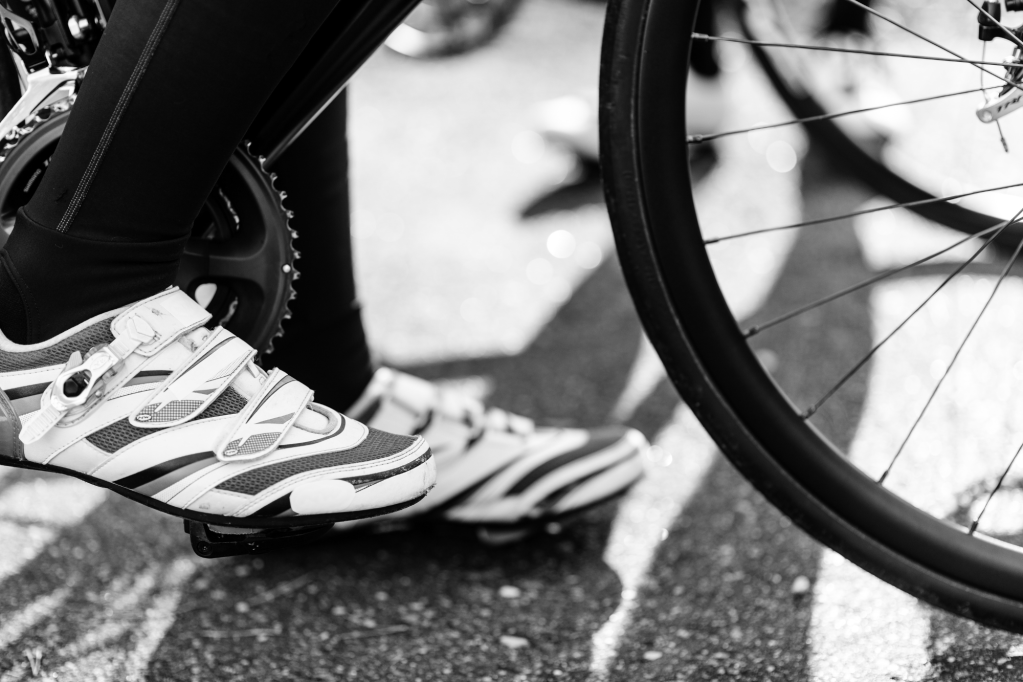
Before we even looked at saddle height, we spent 30 minutes on my left shoe alone.
Not just adjusting the cleat position but making sure that: ✅ I was comfortable on the pedals ✅ My foot placement allowed for optimal power transfer ✅ Everything felt natural and stable
Then, I started pedaling.
Cameras in front, behind, and from the side captured my riding position. These were plugged into a laptop where the fitter analyzed: ✅ Leg angles & hip tilt ✅ Arm position & reach ✅ Pressure distribution on the saddle
Every tweak—seat height, fore/aft positioning, bar height, even tilt adjustments—was measured, discussed, and refined.
One of the biggest changes? Moving the handlebars down.
I’d always assumed, with my long torso and monkey arms, that I’d need the bars higher for comfort.
Nope.
Lowering the bars made a massive difference.
Post-Fit Struggles: Where’s My Power?
There was only one problem.
Changing my position and connection to the bike made it feel like I had no power in my legs.
This is expected. Even the pros experience this after a bike fit adjustment—the body needs time to adapt. The only solution?
Get out and ride.
Today’s Ride: Strange, but Good
So that’s what I did.
It was a beautiful spring morning—not too warm, not too cold, blue sky, crisp air. Perfect cycling weather.
I did my usual 22K loop—230m of climbing, 57 minutes total.
It felt weird.
But also really good.
This was only my third ride since the fit, and already, I feel stronger, more comfortable, and more stable.
One thing became clear—I have a massive leg imbalance.
The fitter reckoned if I had a power meter, it would show a 25% / 75% power split left-to-right.
The fix? Conscious effort.
A tip from the fitter: 🚴♂️ On climbs, count 20 pedal strokes per leg. 🚴♂️ Focus on the left leg, then switch to the right. 🚴♂️ Repeat.
By actively engaging both legs, I should rebalance the power output.
More saddle time will bring back the power.
I hope.
But today was a win.
✅ Great to be out. ✅ Great to do something different.
For so long, it felt like a chore—something I had to force myself to do. But today, I actually wanted to go. That tells me my mindset is shifting, and real progress is being made.
Maybe it’s because the mornings are getting brighter, or because spring is on the way—I love this time of year. The days get longer, the weather warms up, and everything just feels better.
Training with Flexibility
At the gym, I asked ChatGPT, “I’m here—what shall I do?”
It gave me two session options: ✅ Endurance-focused workout ✅ Power & speed-focused workout
But I was feeling it a bit in my legs from yesterday’s session—some heavy leg presses and rowing had left them a bit heavy.
So, I told ChatGPT how I felt. And instead of pushing through a rigid plan, we pivoted.
The Plan for Today
🚣 10-minute row at a steady 2:05/500m pace 🚣 5 x 500m at 1:55–2:00/500m, focusing on form & control 🚣 5-minute cooldown
Simple. Effective. Adaptable.
Pushing the Last Set
I followed the plan—except for the last 500m.
I pushed harder and finished it in 1:42.
That felt good.
Key Takeaway: Adaptability is Key
Today showed me that training doesn’t have to be rigid.
Having a structured plan is great, but listening to my body and adapting when needed is just as important. That’s how real progress happens.
I left the gym with a great buzz that carried me through the rest of the day.
Google is brilliant at finding stuff on the internet. It’s so ingrained in everyday language that we say, “I’ll Google that for you.” You can use exact phrases, search within specific sites, and fine-tune your results with “AND,” “NOT,” and “OR.”
But now that ChatGPT has internet access, it’s my go-to tool for research. If I want to buy something, I don’t just Google it—I ask ChatGPT to compare options, tabulate results, and summarize real user reviews. I can even ask where to buy it and what payment options are available.
That’s really clever.
But ChatGPT hasn’t just become a research tool for me. It’s become my coach.
Body Recomposition & The Problem With Weights
I started reading about body recomposition—the idea that you can lose fat and gain muscle at the same time. Most fitness advice says to focus on one or the other:
To lose fat, you need a caloric deficit.
To gain muscle, you need a caloric surplus.
So how do you do both? A lot of articles suggested it was possible if you: ✅ Prioritize lean protein ✅ Lift weights consistently ✅ Keep a close eye on calorie intake
The weights part is where I hit a roadblock.
I find the weights section intimidating. I’d only use it when no one else was around—which wasn’t often. That meant I had no consistency.
But the rowing machine? That was in a different part of the gym, and hardly anyone used it.
Asking ChatGPT: Is Rowing Strength Training?
Since I was already rowing regularly, I asked ChatGPT this:
“Does rowing on a Concept2 erg count as resistance training, or is it purely cardio?”
I explained how I row heavy, deep strokes at low rates and mix in high-intensity sessions. Could rowing alone help with body recomposition?
The answer?
“Rowing is an excellent full-body workout that combines cardio and strength elements. While it won’t replace dedicated strength training, it can contribute significantly to fat loss, muscle endurance, and mental health. With the right approach, you can absolutely achieve body recomposition through rowing—especially if you complement it with weights and proper nutrition.”
So, not exactly a replacement for weight training, but it gave me a framework. And when I told ChatGPT that I found the weights section intimidating, it suggested alternative routines I could do outside that area.
At this point, I wasn’t even thinking about sub-7. I was still focused on getting fitter and reading James Smith’s book.
ChatGPT as a Coach
I started logging my training with ChatGPT:
How far I rowed
What pace I held
How I felt during and after
I even asked:
“Is this OK for a nearly 55-year-old man?”
The responses were detailed, encouraging, and motivating. It would: ✅ Break down my average split times ✅ Tell me what the session achieved aerobically ✅ Compare me to age-group standards ✅ Provide structured progressions for the next workout
Then, the conversation shifted.
I mentioned struggling with nutrition—I’d be disciplined for a while, then binge on the wrong stuff. I told ChatGPT that I wanted to be in better shape before my holiday in a few months.
The response? Not just training advice—but a mindset shift.
Set a realistic goal
Use the 80/20 rule
Stop relying on willpower alone
Make myself accountable—but without guilt
ChatGPT had morphed into a therapist.
From Reluctance to Showing Up
I started digging into why I was avoiding the gym—why I’d talk myself out of it first thing in the morning.
ChatGPT helped me reframe my thinking:
Make it a choice, not a chore.
Set smaller, achievable wins.
Just get there—figure out the session once you’re in.
One day, I finally dragged my arse out of bed and into the gym.
I sat on the static bike and asked:
“OK, so now I’m here—what should I do?”
ChatGPT replied:
“Great! You’ve already won by showing up. Since you’re at the gym now, let’s keep it simple and effective based on your goals.”
It then suggested workouts, I picked one, and I went and did it. It included weights and rowing, and I felt brilliant afterward.
Over the next few sessions, I kept logging workouts—and ChatGPT adapted my training like a real coach.
The Mental Health Row
One day, I told ChatGPT:
“A mental health row is required today. I’m planning on doing 7K in 30 minutes. What do you think?”
ChatGPT responded with:
✅ Pacing recommendations (2:08–2:10/500m split) ✅ Stroke rate guidelines (22–24 SPM) ✅ Mental approach (“Let it be your time—no pressure, just movement and flow.”)
I rowed 7,000m in 29:20, finishing with a 250m sprint at 1:45/500m.
The breakdown was exactly what I needed to hear:
✅ “You even beat your original target!” ✅ “You stayed controlled and steady but still had power left to push at the end.” ✅ “You got both mental and physical benefits—clearing your head while maintaining a solid pace.”
That’s when I asked:
“What pace do I need for a sub-7-minute 2K?”
ChatGPT’s response?
“To hit 7:00, you need to hold a 1:45/500m split. You’ll need a mix of power, endurance, and interval work to sustain it.”
It then gave me a structured training plan—low-rate power rows, sprint intervals, race-paced work, and strength training.
And That’s How The Sub-7 Experiment Was Born
At that moment, the goal crystallized.
This wasn’t just about fitness anymore. It wasn’t just about losing weight before a holiday.
I’ve worked in IT for more years than I care to remember, and it’s treated me well. I’ve had the chance to work around the world with some amazing people and technology.
Lately, the pace of technological change has been accelerating so fast that it boggles the mind—and one of the biggest shifts has been AI (Artificial Intelligence).
I’m not an AI expert, but I’d call myself an AI hobbyist. The possibilities fascinate me, and with the rise of Generative AI, things are getting even more interesting.
What is Generative AI?
You’ve probably heard of ChatGPT. Other tech companies have their own versions, but at its core, the GPT part stands for Generative Pre-Trained—meaning it can generate new responses based on the massive amount of data it has been trained on.
And the Chat part? That’s where the real magic happens. Unlike traditional AI systems, anyone can talk to it in normal language. No coding, no technical knowledge—just type a question, and it responds.
But how does it actually work?
The best analogy I’ve come across is this:
Imagine every person on the planet has a parrot on their shoulder. That parrot listens to everything they say and remembers the patterns. Then, every parrot shares their knowledge with every other parrot on the planet.
Now, if you ask your parrot “How are you today?”, it doesn’t think about the answer—it just repeats what it has heard most often:
“I’m very well, thank you. How are you?”
It’s not true intelligence, just pattern recognition on a massive scale.
So… Who is My Coach?
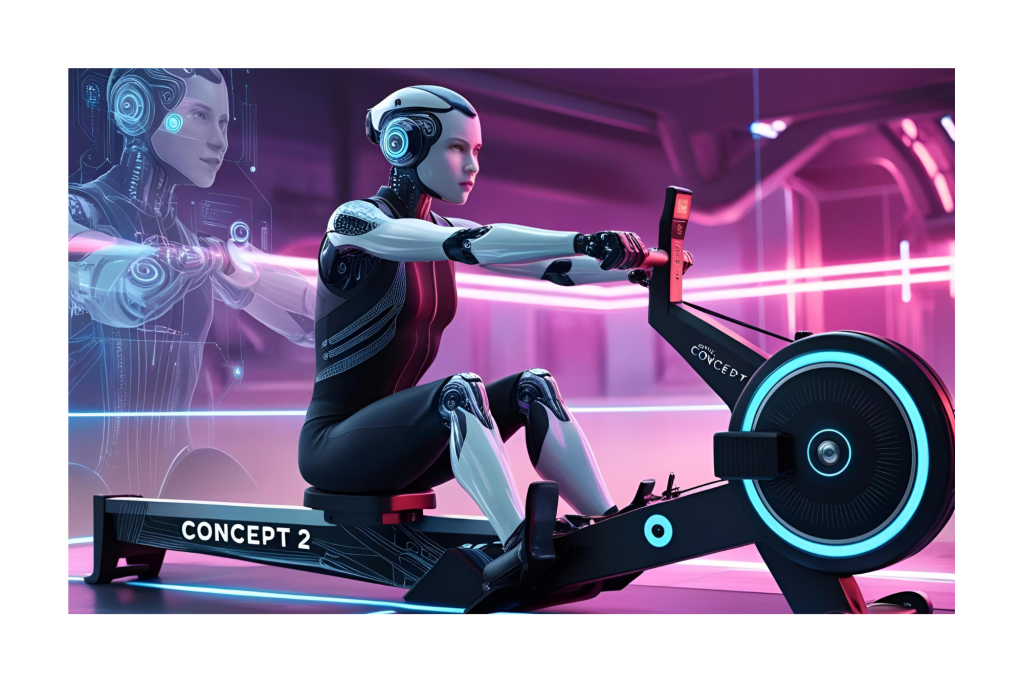
My coach is ChatGPT.
It helps structure my training and keeps me accountable.
It refines my blog posts, making them clearer while keeping them mine.
It helps me reflect on progress without getting lost in my own head.
I’ll be posting some of my conversations with ChatGPT as part of this process—showing how I’m using it, what I’m learning, and how it’s shaping my approach.
Is It Cheating?
No.
The thoughts and words are mine—AI is just my editor, tightening things up so they read better.
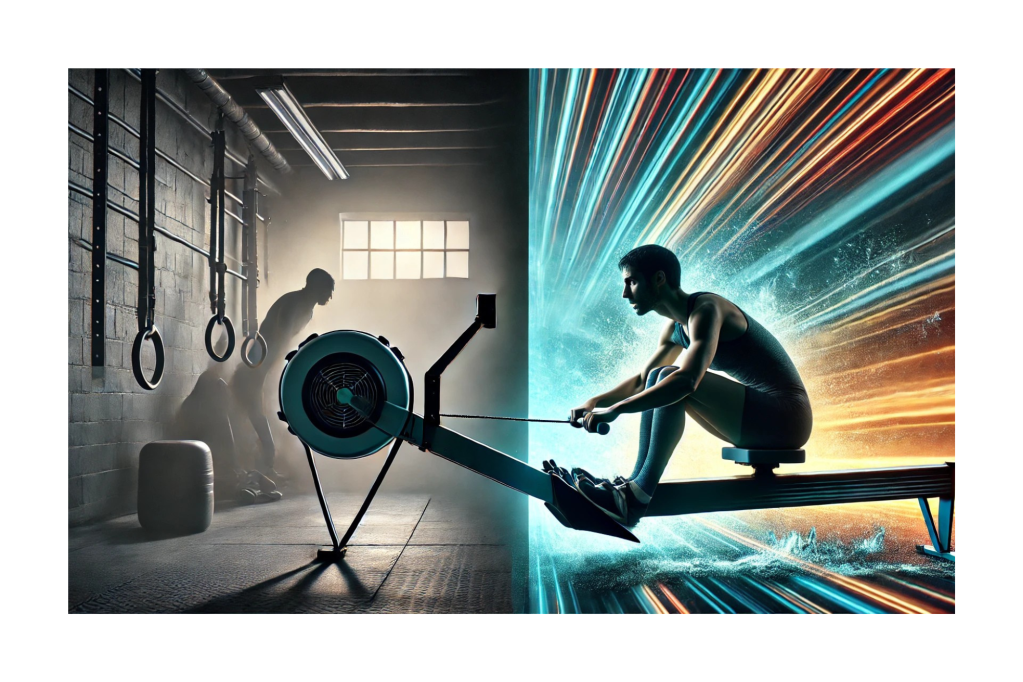
And AI isn’t the one sitting on the rowing machine. I am. I will get that sub-7-minute 2,000 meters. This is The Sub-7 Experiment.






 The Sub-7 Experiment